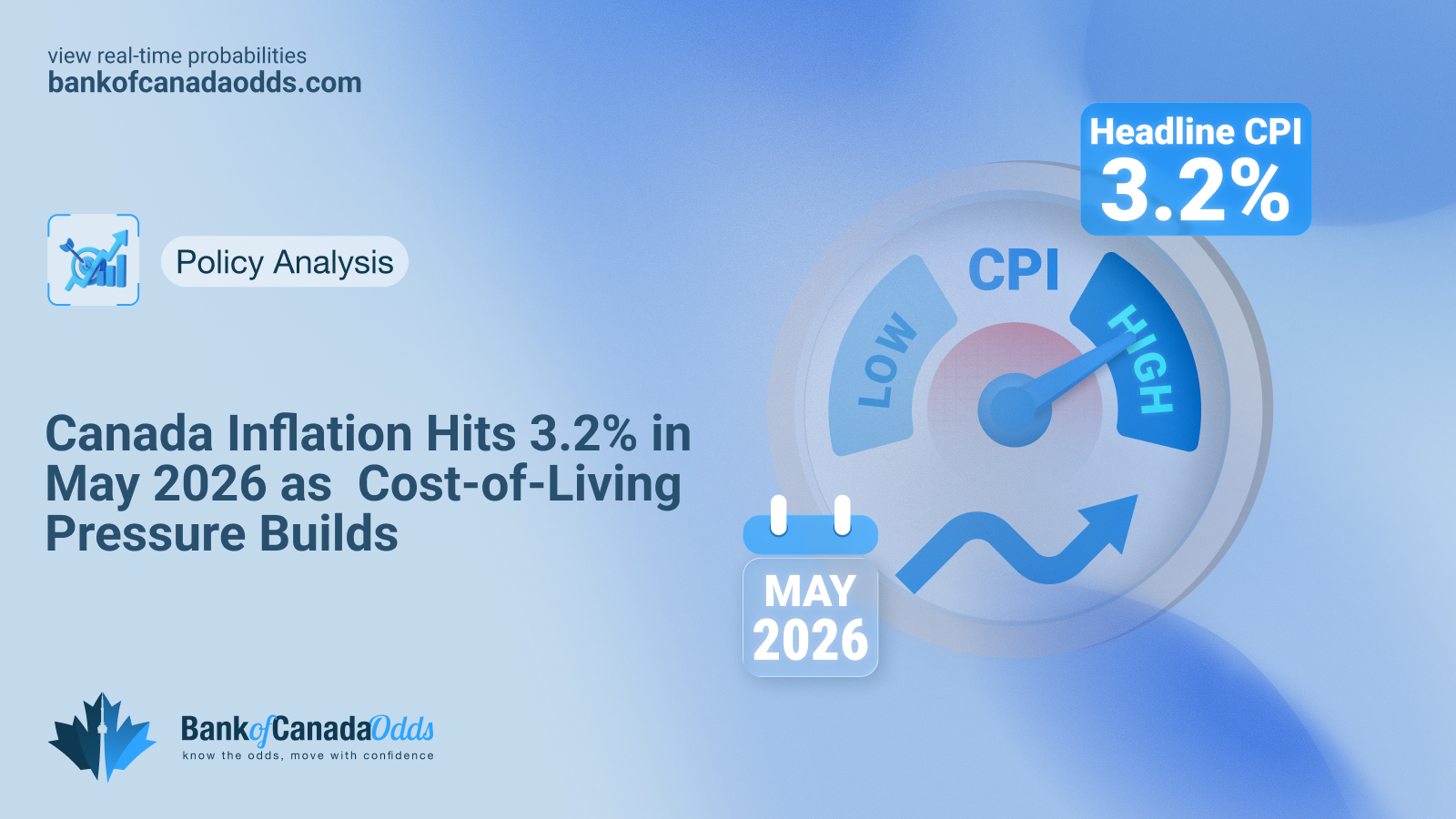
Inflation in Canada has fallen significantly from its 2022 peak, allowing the Bank of Canada to begin lowering interest rates. However, inflation remains above the central bank’s 2% target, with the latest CPI reading coming in at approximately 3.2%.
Yet many Toronto residents continue to feel as though inflation remains much higher than official statistics suggest.
Part of the explanation may be that while national inflation has moderated from its post-pandemic highs, a growing number of municipal taxes, fees, and levies have increased at a pace that exceeds inflation.
Inflation vs. Municipal Cost Increases
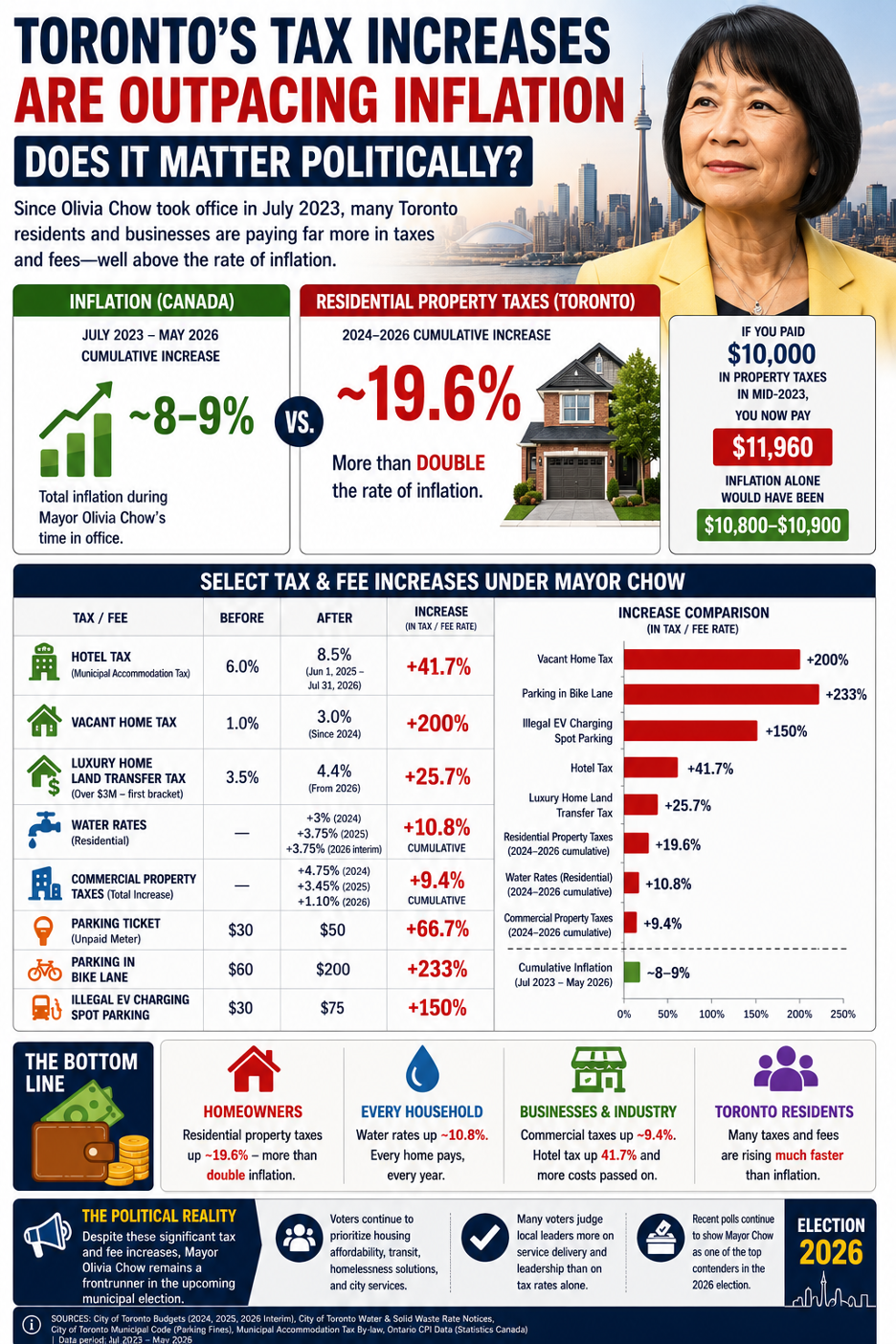
Since Olivia Chow became Mayor of Toronto in July 2023, cumulative Canadian inflation has been approximately 8-9%.
Over the same period, several major Toronto taxes and fees have risen significantly:
- Residential property taxes: approximately +19.6% cumulatively
- Municipal Accommodation Tax (hotel tax): +41.7%
- Vacant Home Tax: +200%
- Residential water rates: +10.8%
- Unpaid parking meter fine: +66.7%
- Bike lane parking fine: +233%
- EV charging space parking fine: +150%
While some of these measures target specific behaviours rather than serving as broad revenue tools, the combined effect is that many Toronto residents and businesses are experiencing cost increases that exceed the national inflation rate.
For homeowners, the difference is particularly noticeable. Property taxes have increased at more than double the pace of cumulative inflation since mid-2023. For businesses, higher commercial taxes, water rates, hotel taxes, and municipal fees add to operating costs that may ultimately be passed on to consumers.
Why This Matters for Inflation Expectations
The Bank of Canada closely monitors inflation expectations because they influence consumer and business behaviour.
When households see recurring increases in taxes, fees, insurance costs, utilities, and housing expenses, their personal experience of inflation can differ significantly from the headline CPI figure.
A homeowner paying $10,000 in Toronto property taxes before the recent series of increases would now pay roughly $11,960 annually. By comparison, a simple inflation adjustment would imply a bill closer to $10,850-$10,900.
This gap helps explain why many residents report feeling that inflation remains much higher than official statistics suggest.
While municipal taxes are not directly included in Canada’s Consumer Price Index, they still affect household budgets and influence how consumers perceive the overall cost of living.
A Political Surprise
Perhaps the most surprising development is that these increases have not significantly damaged Mayor Olivia Chow’s political standing.
Despite overseeing some of the largest municipal tax and fee increases in recent Toronto history, Chow continues to be viewed as one of the leading contenders heading into the next municipal election.
Several factors may explain this resilience.
Many voters continue to prioritize housing affordability, transit improvements, homelessness, public safety, and city services over tax concerns. Municipal politics also tends to be less partisan than provincial or federal politics, with voters often judging leaders based on visible projects and local issues rather than tax rates alone.
Another factor may be that many of the largest increases affect specific groups rather than all residents equally. The Vacant Home Tax primarily impacts owners of vacant properties, while higher hotel taxes affect visitors and tourists. As a result, the political impact of these increases may be more muted than a broad-based tax increase affecting every voter directly.
Whether that remains the case as property tax bills continue to rise will be one of the more interesting questions heading into Toronto’s next election cycle.
The Bottom Line
For the Bank of Canada, inflation has fallen substantially from its 2022 highs but remains above target.
For many Toronto residents, the lived experience is more complicated.
National CPI has risen roughly 8-9% since mid-2023, but several major municipal taxes and fees have increased by substantially larger amounts. Residential property taxes have risen approximately 19.6%, while several targeted levies and fines have increased by more than 100%, including the Vacant Home Tax, bike lane parking fines, and EV charging space parking fines.
Whether these increases are viewed as necessary investments in city services or an added burden on households depends largely on one’s political perspective.
What is clear is that many Toronto residents are experiencing increases in taxes and fees that are outpacing inflation, helping explain why concerns about affordability remain elevated even as national inflation continues to moderate.
As the next municipal election approaches, it will be worth watching whether voters focus on the city’s policy priorities and service delivery, or on the growing gap between inflation and the taxes and fees they pay each year.