
- Live Rates
Global Central Bank Rates Live Overview
Stay informed on global monetary policy moves. Compare the latest policy interest rates from major central banks worldwide updated in real time.
Live Policy Rates by Central Bank
Interest rates set by central banks influence borrowing costs, inflation, and currency values across the world. This live table helps investors, economists, and homeowners track how global rate trends align or diverge from the Bank of Canada’s policy stance.
Central Bank Interest Rates Overview
Latest stored central bank policy rates by country, including current rate, last change, and latest update date.
| Country | Central Bank | Current Rate | Last Change | Date of Change |
|---|---|---|---|---|
| United States | American Central Bank | 3.75 % | -0.25% | Dec 11, 2025 |
| Australia | Australian Central Bank | 4.35 % | +0.25% | May 06, 2026 |
| Brazil | Brazilian Central Bank | 14.00 % | -0.25% | Aug 06, 2026 |
| United Kingdom | British Central Bank | 3.75 % | -0.25% | Dec 18, 2025 |
| Canada | Canadian Central Bank | 2.25 % | -0.25% | Oct 29, 2025 |
| Chile | Chilean Central Bank | 4.50 % | -0.25% | Dec 17, 2025 |
| China | Chinese Central Bank | 3.00 % | -0.10% | May 20, 2025 |
| Czech Republic | Czech Central Bank | 3.75 % | +0.25% | Jun 19, 2026 |
| Denmark | Danish Central Bank | 2.00 % | +0.25% | Jun 11, 2026 |
| Europe | European Central Bank | 2.40 % | +0.25% | Jun 11, 2026 |
| Hungary | Hungarian Central Bank | 5.50 % | -0.25% | Aug 26, 2026 |
| India | Indian Central Bank | 5.25 % | -0.75% | Dec 05, 2025 |
| Israel | Israeli Central Bank | 3.25 % | -0.25% | Sep 03, 2026 |
| Japan | Japanese Central Bank | 1.00 % | +0.25% | Jun 16, 2026 |
| Mexico | Mexican Central Bank | 6.50 % | -0.25% | May 08, 2026 |
| New Zealand | New Zealand Central Bank | 2.75 % | +0.25% | Sep 02, 2026 |
| Norway | Norwegian Central Bank | 4.25 % | +0.25% | May 07, 2026 |
| Poland | Polish Central Bank | 3.75 % | -0.25% | Mar 04, 2026 |
| Russia | Russian Central Bank | 14.00 % | -0.25% | Jul 27, 2026 |
| Saudi Arabia | Saudi Arabian Central Bank | 4.25 % | -0.25% | Dec 10, 2025 |
| South Africa | South African Central Bank | 7.00 % | +0.25% | May 28, 2026 |
| South Korea | South Korean Central Bank | 3.00 % | +0.25% | Aug 27, 2026 |
| Sweden | Swedish Central Bank | 1.75 % | -0.25% | Sep 23, 2025 |
| Switzerland | Swiss Central Bank | 0.00 % | -0.25% | Jun 19, 2025 |
| Türkiye | Turkish Central Bank | 37.00 % | -1.00% | Jan 22, 2026 |
Loading central bank rates...
| Country | Central Bank | Current Rate | Last Change | Date of Change |
|---|
What Global Rates Tell Us in 2025
Across the world, central banks are entering a new phase of the policy cycle. Inflation pressures are easing, prompting rate cuts in Canada and Europe, while the U.S. Federal Reserve remains cautiously steady. The Bank of Japan continues its ultra-loose stance, while emerging markets like India and Brazil are adjusting to maintain currency stability.
Average Global Policy rate
Average central bank rate: 5.72%
--%
as of
Highest current Rate
Highest central bank rate: 37.00% Türkiye
--%
--
Bank of Canada Rate
Current central bank rate for Canada: 2.25 % Oct 29, 2025
--%
Trend
Global rates are entering a synchronized easing phase after two years of tightening.

Why Track Global Policy Rates?
Central banks adjust policy rates to balance inflation and growth. When rates rise, borrowing costs increase, cooling inflation but slowing economic activity. When rates fall, the goal is to stimulate spending and investment.
For Canadian borrowers and investors, global rate movements provide valuable context. A policy shift by the U.S. Federal Reserve or European Central Bank often influences Bank of Canada decisions, mortgage trends, and currency strength.
Affect exchange rates and commodity prices
Helps anticipate Bank of Canada policy direction
Useful for investors, lenders, and homeowners

Get BoC Rate Probabilities Every Monday Before Markets Open
Join thousands of investors and homebuyers who track Bank of Canada rate decisions with real-time probability data. Free, every week.

Latest Insights
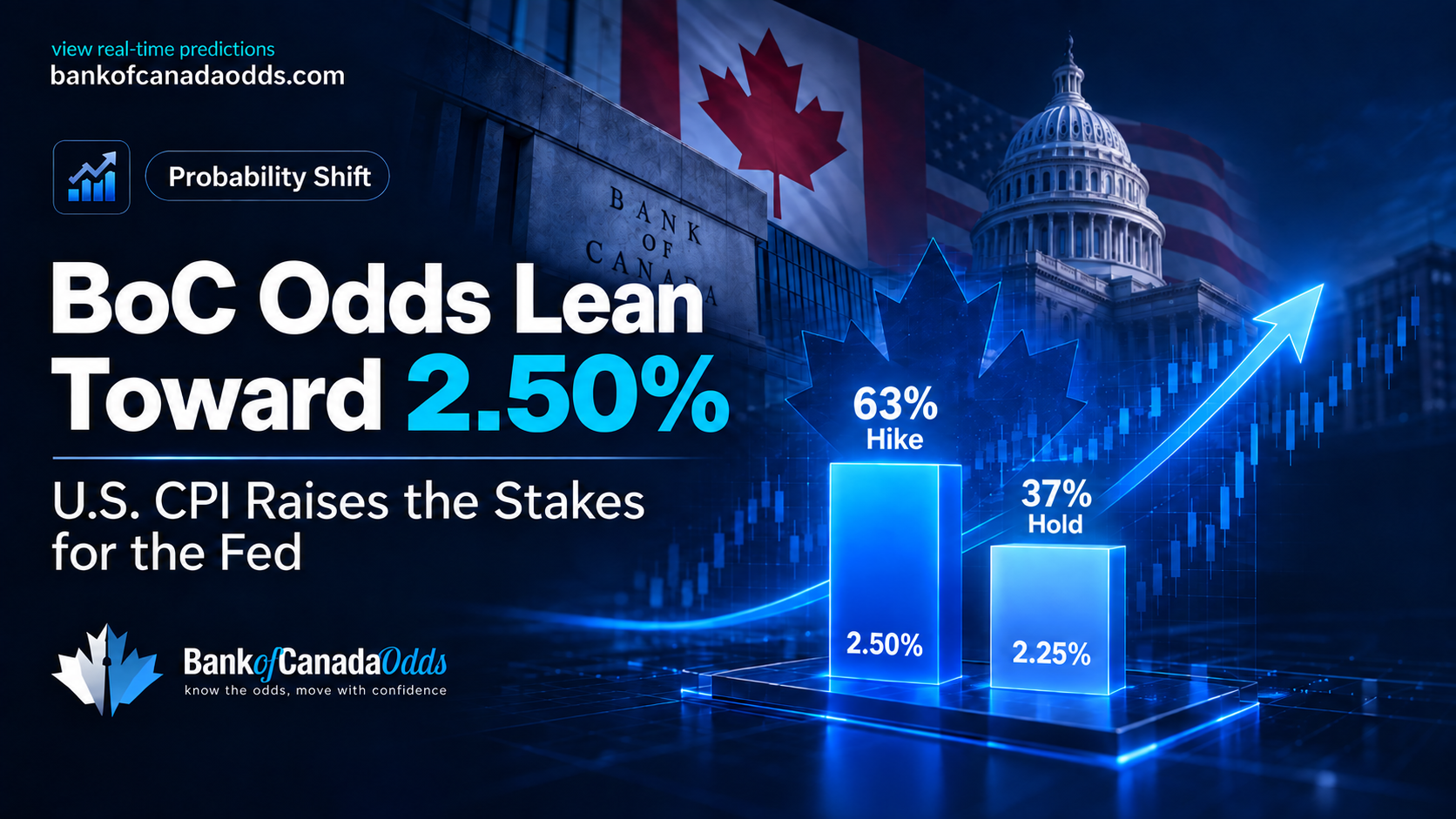
Bank of Canada rate hike odds are leaning toward another increase in
September 11, 2026

Canada jobs August 2026 data showed a sharp reversal in the labour
September 8, 2026

No rate move. Plenty of new risk. The BoC September decision kept
September 2, 2026

Canada inflation climbed to 3.0% in July, up from 2.8% in June,
August 17, 2026
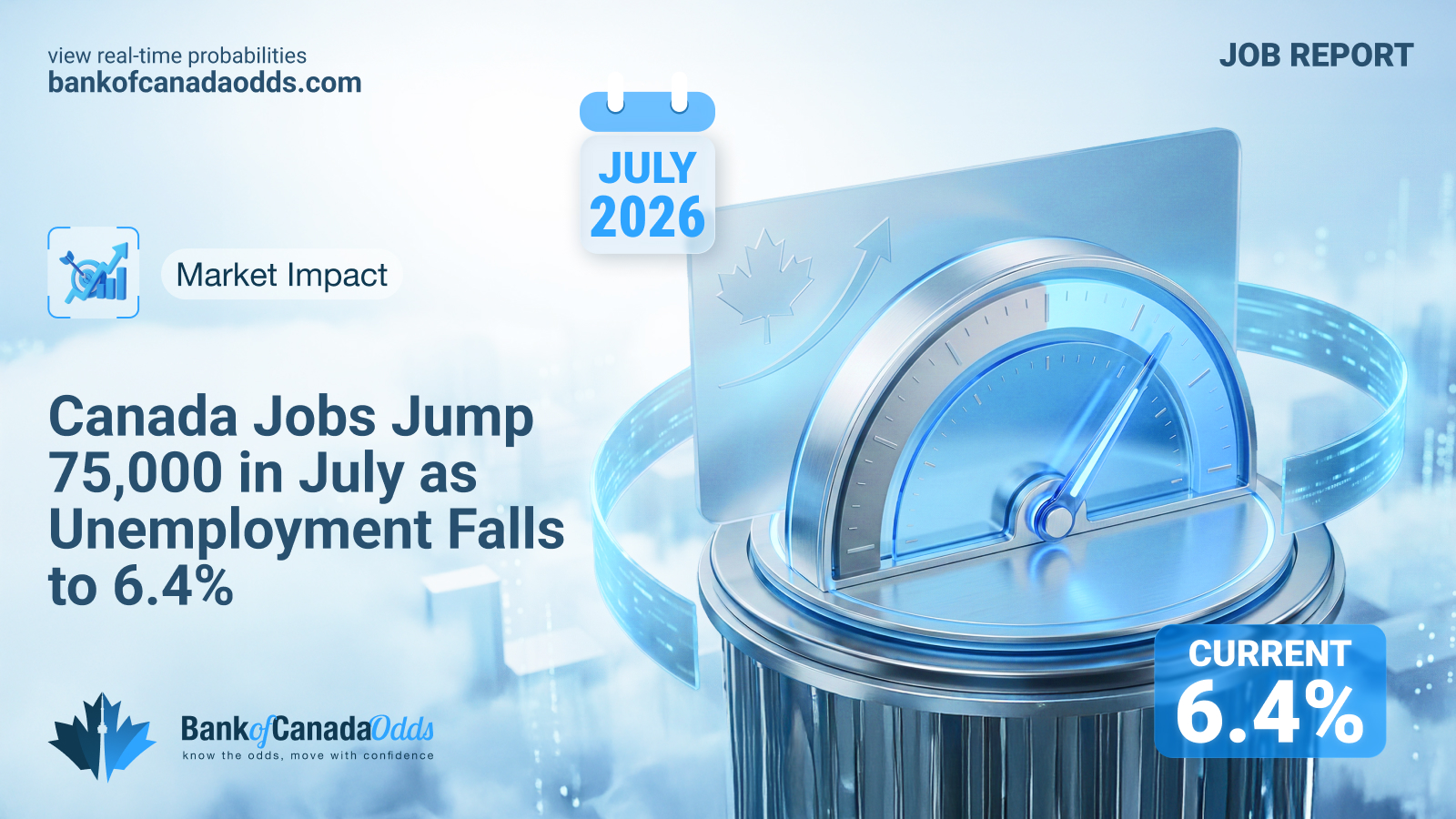
Canada jobs July 2026 data showed a stronger labour market, with employment
August 7, 2026

The Bank of Canada economic rebound outlook has improved, but officials are
July 30, 2026
- Frequently Asked Questions
What do you
need to know?
Understanding how central banks set interest rates helps explain why borrowing costs change, how currencies move, and why different countries take different monetary policy paths. Here are the most common questions people ask about global central bank rates.
Central bank interest rates are the policy rates set by a country’s central bank for overnight lending between financial institutions. These rates influence borrowing costs across the entire economy.
Central banks raise rates to slow inflation and cool demand.
They cut rates to stimulate borrowing, support growth, and ease financial conditions when the economy weakens.
The policy rate is the overnight rate set by a central bank.
The prime rate is the benchmark commercial banks charge customers.
Prime usually rises or falls when the policy rate changes, but banks set their own prime rate.
Most central banks meet 8 times per year to review monetary policy, though they can adjust rates at any meeting. Emergency moves can occur outside scheduled dates.
Markets price expectations through bonds, swaps, futures (like CORRA futures), and currency movements. Central banks monitor these signals closely because expectations affect financial conditions even before a rate is officially changed.
More FAQs on Global Central Bank Policy
Nominal rates are the posted central bank rates.
Real rates adjust for inflation:
Real Rate = Nominal Rate – Inflation
Real rates show the true cost of money.
Higher rates tend to strengthen a currency by attracting foreign investment. Lower rates often weaken the currency by reducing investment flows.
Tools include open market operations, reserve requirements, forward guidance, quantitative easing (QE), and quantitative tightening (QT).
Quantitative easing (QE) is when a central bank buys bonds to lower long-term borrowing costs and support economic growth when short-term interest rates are already low.
Countries with persistent inflation, strong wage pressure, or currency instability often keep rates higher to maintain economic stability.
Different economies face different conditions. Some are seeing slowing growth and cooling inflation, while others still face strong demand or elevated price pressures.
Global policy decisions influence bond yields, currency flows, and import costs. The Bank of Canada primarily responds to domestic conditions but considers global financial conditions, especially moves by the U.S. Federal Reserve.
Let’s Connect
Have a question about our BoC rate tools or insights? Send us a message and we’ll reply within one business day.
Response Time
<24 Hours
Average email response