Renewal vs Refinance: The Turning Point for Canadian Homeowners
When it comes to mortgage renewal vs refinance in Canada, the decision is far from routine paperwork — it’s one of the most critical financial turning points for Canadian homeowners. With economic shifts rattling the housing and lending sectors, and a wave of Canadians hitting the end of their mortgage terms, the pressure to choose wisely has never been greater.
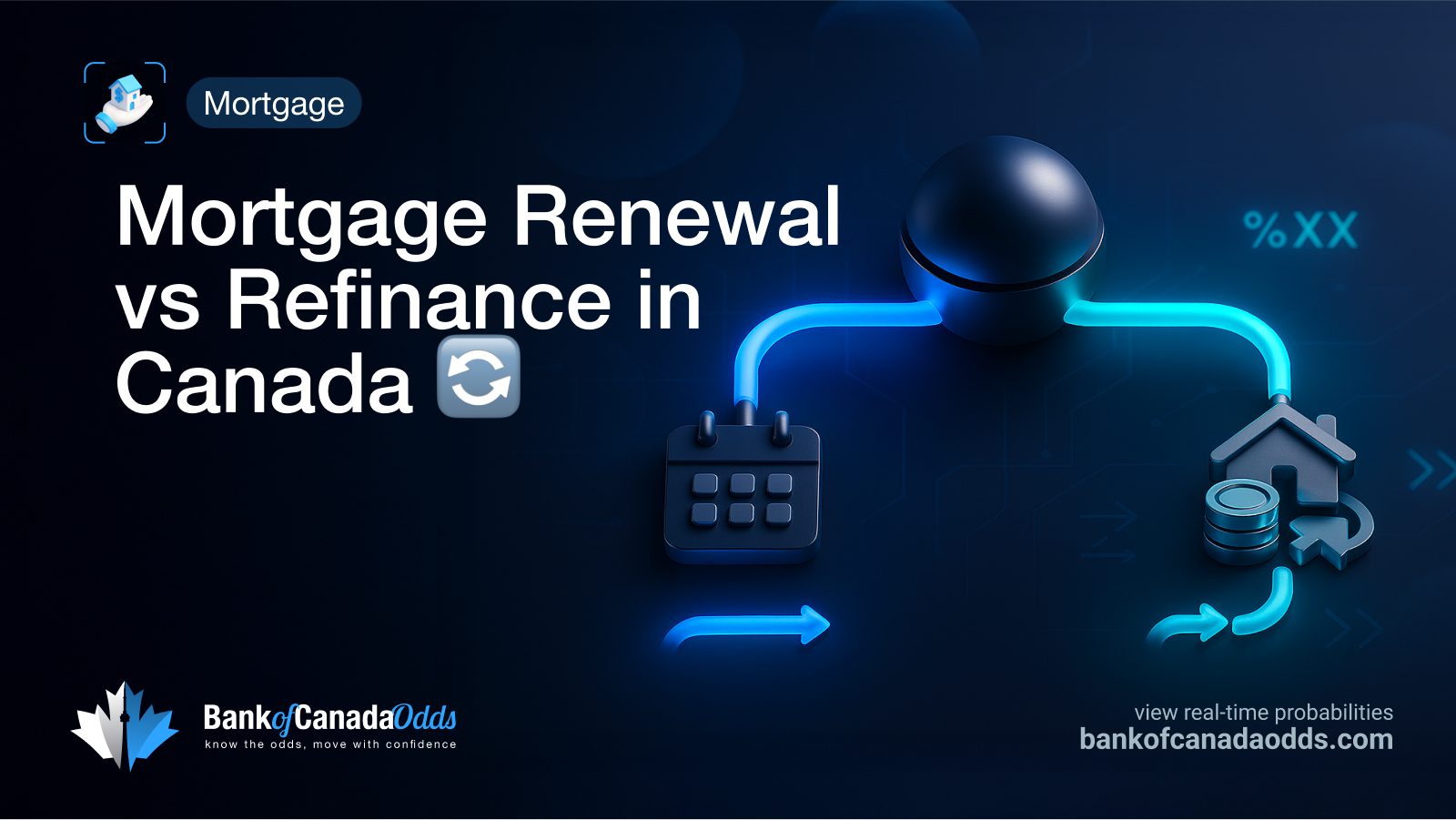
This isn’t just about rolling over your contract. It’s about determining whether you stay locked into your current structure or take bold action to reset your financial path. Mortgage renewal vs refinance in Canada defines your payments, your flexibility, and your long-term breathing room.
As BankofCanadaOdds.com warns: “Your renewal or refinance is a turning point — and what you choose shapes your mortgage for years to come.” With rate cuts possibly ahead but volatility still looming, now is the time to act strategically.
The question is simple, but the consequences are massive: Will you passively renew, or strategically refinance to protect your future?
Why Mortgage Renewal vs Refinance Matters Now
Rising rates, shifting personal finances, and changing market realities have made mortgage renewal vs refinance Canada decisions more important than ever. Over one million Canadians are up for renewal this year, facing higher payments and new financial goals. “Renewal or refinance is about controlling the outcome, not just accepting it,” notes BankofCanadaOdds.com.
Key Takeaways
- Mortgage renewal is simple and low-friction, allowing rate negotiation without requalifying if you stay with your lender.
- Mortgage refinance offers access to equity and flexible restructuring, but involves more steps, fees, and full requalification.
- The best choice depends on your current goals, income stability, equity, and readiness for change.
What is Mortgage Renewal in Canada?
Mortgage renewal is the process when your current mortgage term ends, giving you a chance to negotiate a new interest rate and term. You can accept your lender’s offer, switch lenders, or renegotiate terms — usually with minimal paperwork if staying with the same lender.
Pros:
- Convenient, fast, and requires minimal documentation.
- Opportunity to negotiate better terms or switch to a new provider.
- No requalification needed with the same lender.
Cons:
- You may miss better deals if you blindly accept your current lender’s first offer.
- Switching lenders may require legal paperwork and fees.
What is Mortgage Refinance in Canada?
Mortgage refinance means breaking your current contract and starting a new one, often with a new lender, rate, term, and even a larger loan amount. Refinancing is often used to tap into home equity, consolidate debt, or restructure terms.
Pros:
- Access home equity for renovations, investments, or major purchases.
- Consolidate high-interest debt into lower mortgage rates.
- Adjust monthly payments and amortization.
Cons:
- Requires full requalification based on current income and credit.
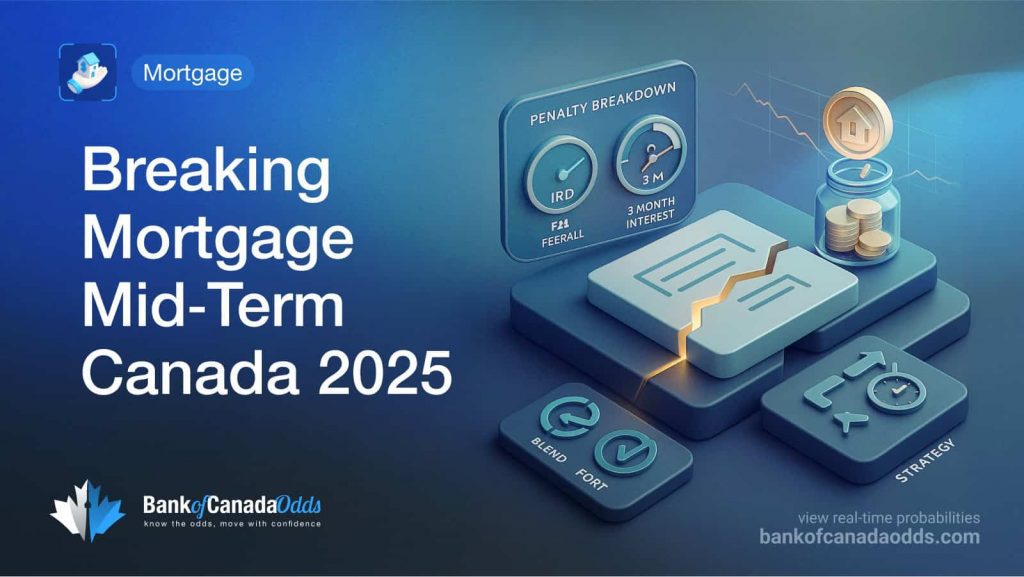
- May trigger prepayment penalties if done mid-term.
- Involves appraisal, legal, and admin costs.
Renewal vs Refinance: Comparison Table
| Feature | Renewal | Refinance |
|---|---|---|
| Timing | At end of term | Anytime (even mid-term) |
| Process | Simple, low paperwork | Complex, full requalification |
| Equity Access | No | Yes (up to lending limit) |
| Costs | Minimal with same lender | Legal fees, appraisal, penalties |
| Ideal For | Maintaining current terms | Debt restructuring or equity access |
How to Choose Between Mortgage Renewal vs Refinance in Canada
- Assess your goals: Do you need major changes, or just a better rate?
- Review equity: Refinance if you need access to home equity or debt relief.
- Compare total cost: Include potential fees, penalties, and rate differences.
- Negotiate proactively: Always ask your lender for the best rate—don’t settle.
Historical & Market Context
As of 2025, most Canadians are renewing at higher rates after historically low terms. Refinancing is gaining traction due to household debt, home renovation demand, and rising cost of living. Yet renewal remains the default for most borrowers unless major restructuring is needed.
Special Variations
- Blend-and-extend: Combines old and new rate to avoid penalties.
- Switch at renewal: Move lenders without full refi.
- Cash-back refinance: Access equity with cash back at closing.
FAQs
- Can I refinance during mortgage renewal? Yes, doing so avoids prepayment penalties.
- Do I need to requalify for renewal? No, unless you’re switching lenders or refinancing.
- Can refinancing lower my monthly payments? Yes, especially if consolidating debt or extending amortization.
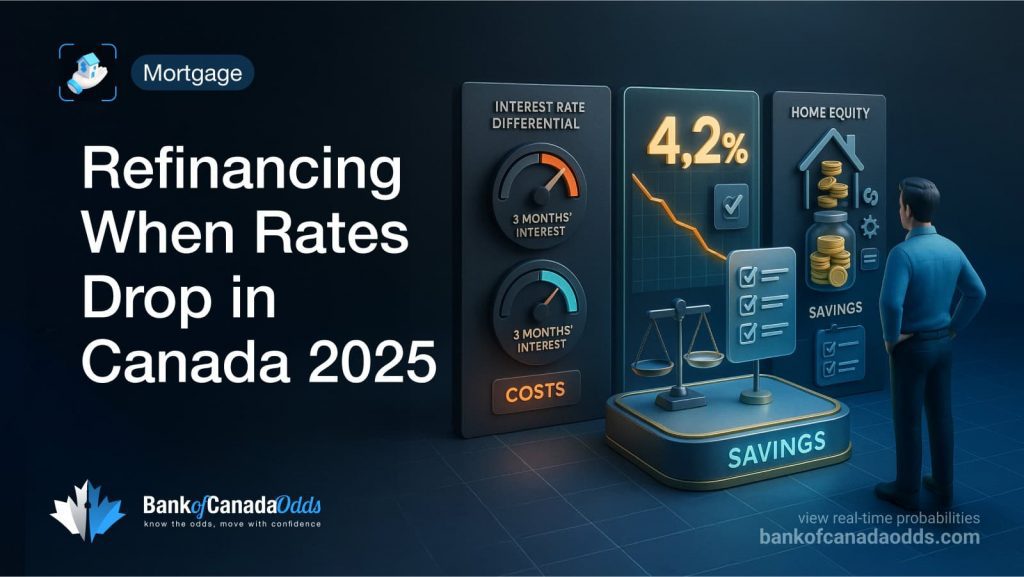
- Should I refinance if rates are dropping? Only if you can lock in meaningful long-term savings after costs.
Conclusion: Mortgage Renewal vs Refinance Canada – Choose Smart in 2025
Renewing is best for stability, refinancing is ideal for change. Use this fork in the road to your advantage. Compare your current mortgage to what’s possible — and don’t just settle. Visit our related guides like Fixed vs Variable, Open vs Closed, and the Financial Consumer Agency of Canada for deeper insights.
BankofCanadaOdds.com: “Renewal is a reset. Refinance is a strategic move. Know which play fits your financial future.”