Key Takeaways
- Fixed-rate mortgages shield you from rate hikes but can cost more if rates fall.
- Variable mortgages respond instantly to BoC changes, offering savings potential but more risk.
- Don’t guess: use BankofCanadaOdds.com to make data-driven choices.
What is a Fixed-Rate Mortgage?
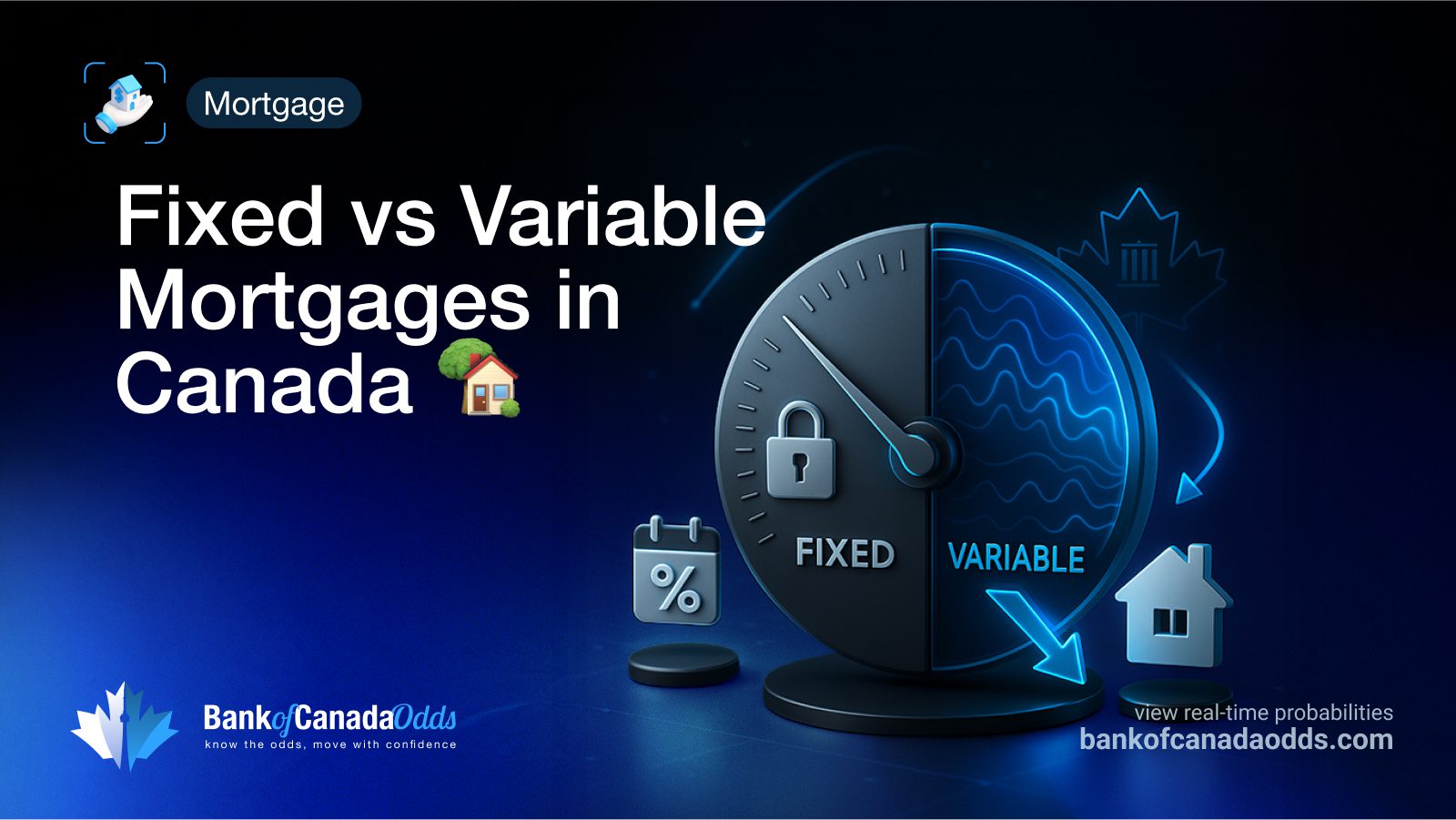
A fixed-rate mortgage means your interest rate and monthly payment stay the same for the entire term. It offers payment certainty and shields you from BoC rate hikes during that period.
✅ Pros:
- Predictable payments — great for budgeting.
- No exposure to interest rate hikes during the term.
- Ideal for first-time buyers or risk-averse homeowners.
⚠️ Cons:
- Higher initial rates than variable options.
- No benefit if the BoC cuts rates.
- Early break penalties can be steep (Interest Rate Differential).
Fixed rates are influenced by government bond yields, which often adjust based on BoC rate expectations. According to BankofCanadaOdds.com, bond yields start moving even before official BoC announcements.
What is a Variable-Rate Mortgage?
A variable-rate mortgage adjusts with your lender’s prime rate, which closely tracks the BoC overnight rate. That means your payment or interest portion can change with each policy decision.
✅ Pros:
- Often starts lower than fixed rates.
- Immediate benefit when the BoC cuts rates.
- Lower penalties if you break early.
- More flexibility to convert to fixed mid-term.
⚠️ Cons:
- Rates rise with BoC hikes — payment shocks are possible.
- Budgeting is harder in a volatile rate environment.
- Not ideal for risk-averse buyers.
Variable mortgages are best suited for those who actively monitor market trends or use tools like the Pre-Hike Stress Test and live odds dashboard.
Fixed vs Variable Mortgage Comparison
| Feature | Fixed-Rate | Variable-Rate |
|---|---|---|
| Flexibility | Low | High |
| Payment Predictability | Very High | Moderate |
| Break Penalties | High (IRD) | Low (3-month interest) |
| BoC Rate Impact | Indirect | Immediate |
| Best For | Budgeters, risk-averse | Flexible, rate-savvy |
Historical & Market Context
- In 2022–2023, BoC hikes shocked many variable-rate borrowers.
- By late 2024, BoC signaling rate cuts gave variable borrowers early relief—before fixed rates adjusted.
- CMHC and StatsCan data show affordability, not preference, now drives mortgage type decisions.
How to Choose Between Fixed and Variable?
- Risk Tolerance: Can your budget absorb a 10% spike?
- Scenario Modeling: Use the Mortgage Calculator and rate simulators to plan.
- Timing: Planning to move? Variable might offer more flexibility.
- Stay Ahead: Use BoC odds trackers and comparison tools to stay proactive.
Special Mortgage Variations
- Convertible Variable: Switch to fixed mid-term if needed.
- Hybrid: Combine fixed and variable in one product.
- Capped Variable: Variable rate with a ceiling.
- Accelerated Payment Options: Compare bi-weekly vs accelerated structures.
FAQs
- Can I switch from variable to fixed mid-term?
Yes. Most lenders allow a conversion to current fixed rates. - How much would a 0.25% BoC hike affect my payment?
Use the Pre-Hike Stress Test to calculate the difference. - Are variable rates always better long-term?
No. In volatile periods, fixed often outperforms. Trends matter more than averages. - How do BoC decisions impact fixed rates?
Fixed rates are influenced by bond yields, which react to BoC expectations before official changes.
Final Thoughts: Act Before the Market Moves
Whether you prefer stability or flexibility, the mortgage you choose should reflect your goals, risk tolerance, and financial timeline. With BoC decisions on the horizon, the smartest move is a prepared one. Model your payments, compare terms, and track live rate probabilities to stay ahead of the curve.
Disclaimer: This article is for informational purposes only and does not constitute financial advice. Consult a licensed mortgage advisor before making any loan decisions.