Learning how to qualify for a personal loan is crucial as Canada’s lenders become increasingly selective in 2025. With high interest rates and tighter borrowing conditions, securing a loan depends on your credit profile, income stability, and overall financial health. While every lender uses its own evaluation criteria, most focus on similar key factors: credit history, income level, and debt-to-income ratio.
Understanding these elements, and how the Bank of Canada rate policies affect them, can help you prepare and increase your chances of approval.
Key Takeaways
- A good credit score (typically 660 or higher) increases approval odds and lowers your rate.
- Lenders review income, employment history, and debt-to-income (DTI) ratio to assess affordability.
- Reducing existing debt and limiting new credit applications before applying improves eligibility.
- The Bank of Canada’s policy rate impacts loan interest rates and lender risk tolerance.
1. Review Your Credit History
Credit history is the first thing lenders evaluate. In Canada, credit scores range from 300 to 900, with 660 or higher considered good. A strong score signals reliability and makes lenders more confident in offering better terms.
Ways to Improve Your Credit
- Pay all bills and credit card minimums on time.
- Keep credit utilization below 30% of available limits.
- Avoid multiple credit applications within a short period.
- Check your credit report for errors through Equifax or TransUnion.
Establishing consistent payment habits can improve your credit profile within months, boosting your loan eligibility.
2. Determine Your Income and Work Experience
Lenders must see that you can make timely payments. They typically require:
- Recent pay stubs or proof of employment
- Two years of steady work history
- For self-employed individuals: tax returns, financial statements, or Notices of Assessment
Your debt-to-income (DTI) ratio should be 40% or lower. This means your total monthly debt obligations should not exceed 40% of your gross monthly income. You can learn more about managing debt ratios via the Financial Consumer Agency of Canada.
Example: If you earn $6,000 monthly, your combined debt payments should be under $2,400.
3. Lower Outstanding Debts
High DTI ratios and multiple existing loans may raise red flags for lenders. Paying down credit card balances or lines of credit before applying can improve your eligibility and interest rate.
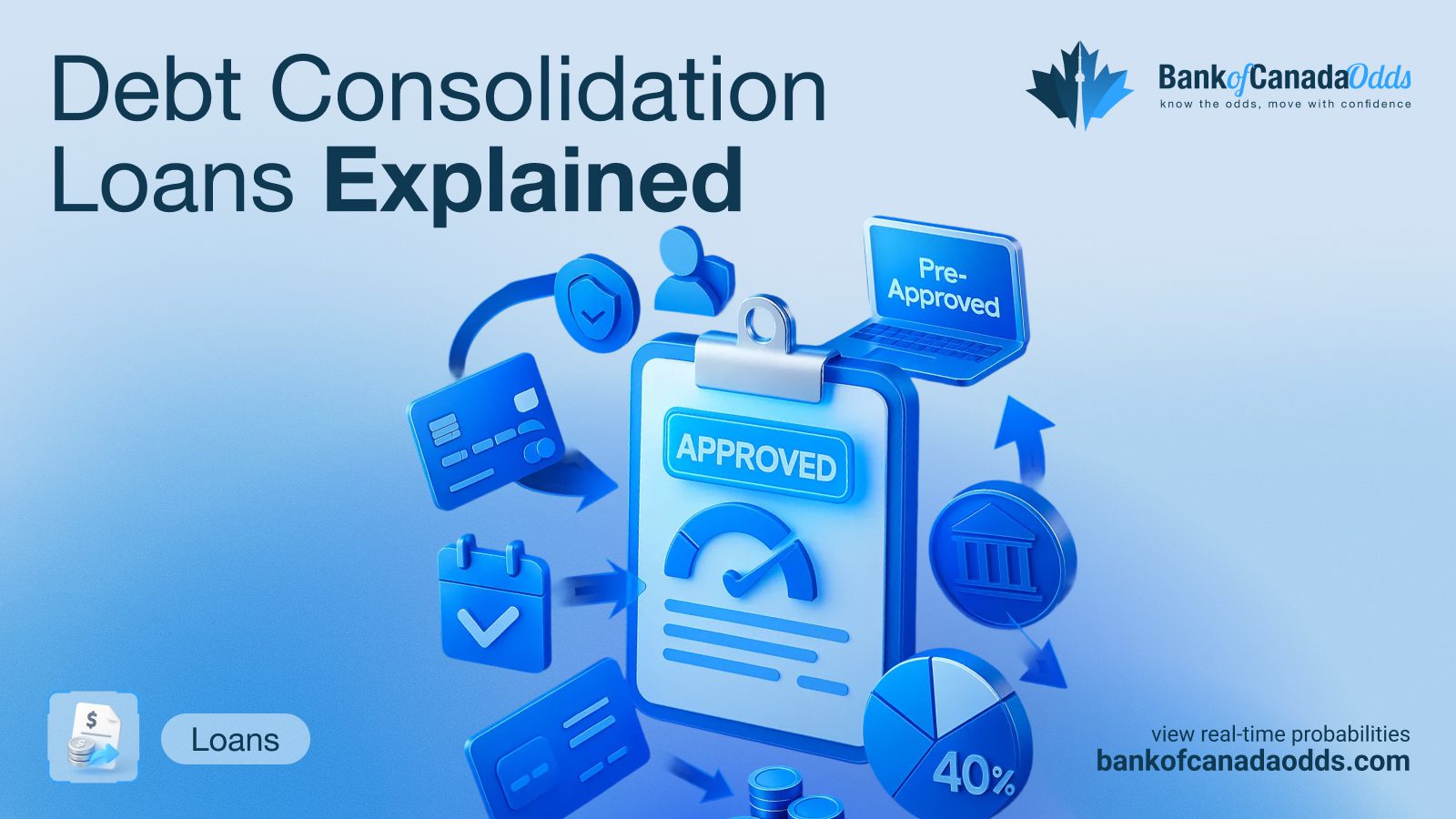
You can also consider a debt consolidation loan, which combines multiple debts into one monthly payment. This approach simplifies budgeting and can improve your credit over time with consistent payments.
4. Gather Required Documents
Having organized documentation makes the process smoother. You will need:
- Government-issued ID (driver’s license or passport)
- Proof of income (pay slips, employment letter, or bank statements)
- Tax returns (especially if self-employed)
- Details on existing loans and financial obligations
Submitting complete, accurate information helps lenders make faster decisions and builds trust.
5. Find the Right Lender
Each lender has different qualification standards. Major banks such as RBC, TD, Scotiabank, BMO, and CIBC usually require strong credit and stable income. Credit unions like Meridian and Vancity may offer more flexibility. Meanwhile, online lenders such as Borrowell and Fairstone cater to borrowers with shorter credit histories.
Tip
Compare multiple lenders before applying. Even a 1% rate difference can save hundreds of dollars over the life of the loan.
6. How the Bank of Canada Influences Loan Approval
The Bank of Canada (BoC) sets the policy rate that determines borrowing costs nationwide. When the BoC raises rates, banks increase their prime lending rate. This makes personal loans, especially variable-rate ones, more expensive. You can track these rate movements on our Odds Dashboard.
In 2025, with the BoC maintaining elevated rates to control inflation, lenders have tightened their criteria. Borrowers with excellent credit, low debt, and consistent income are receiving the most competitive offers. To understand the economic factors behind these decisions, read about The Six Drivers of monetary policy.
Example: If the BoC raises rates by 0.25%, payments on a $10,000 variable-rate loan could rise by $20 to $30 per month depending on term length.
7. Avoid Common Mistakes
Even qualified borrowers can face rejection. Avoid these pitfalls when figuring out how to qualify for a personal loan:
- Applying for multiple loans simultaneously (causes multiple hard credit checks).
- Providing inconsistent employment or income details.
- Ignoring pre-qualification tools that estimate eligibility without impacting credit.
- Taking on new credit cards or loans right before applying.
8. Consider a Co-Signer
If your credit is limited or your income fluctuates, a co-signer with strong credit can improve your approval odds. The co-signer shares repayment responsibility, which reduces lender risk and may lower your rate.
However, missed payments affect both parties’ credit scores so proceed carefully.
9. Use Pre-Approval Tools
Many lenders now offer online pre-approval with soft credit checks. This lets you view potential rates without damaging your score. Use these tools to compare offers before submitting your formal application. We will be launching similar comparison features soon on our Tools Coming Soon page.
FAQs
Do I need a perfect credit score to qualify?
Most lenders approve applicants with scores 660 or higher, though some online lenders may consider scores around 600 if income and debt levels are strong.
Can I get a loan with bad credit?
Yes, but interest rates will be higher. Improving your credit or adding a co-signer can help secure better terms.
How much can I borrow?
Loan amounts typically range from $5,000 to $50,000 depending on credit and income.
Does the BoC’s policy rate affect approval?
Yes. Higher BoC rates make lenders more cautious and may tighten qualification standards, especially for variable-rate loans. For more answers to common questions, visit our FAQ section.
Conclusion
Understanding how to qualify for a personal loan in Canada in 2025 requires preparation and strong financial habits. Focus on improving your credit, reducing debt, and maintaining income stability. Compare offers across banks, credit unions, and online lenders to find the best fit.
As the Bank of Canada monitors inflation and future rate changes, borrowers who strengthen their financial profile will be best positioned to secure affordable financing. If you have specific questions about how rates might change soon, feel free to contact us.