Mortgage stress test Canada rules are a critical hurdle for homebuyers and refinancers. Since 2018, this policy has shaped who qualifies for a mortgage. It ensures borrowers can handle rising interest rates by requiring them to prove they can afford higher payments than their contract rate. In today’s elevated rate environment, understanding the stress test is essential to pass and qualify smartly.
What Is the Mortgage Stress Test?
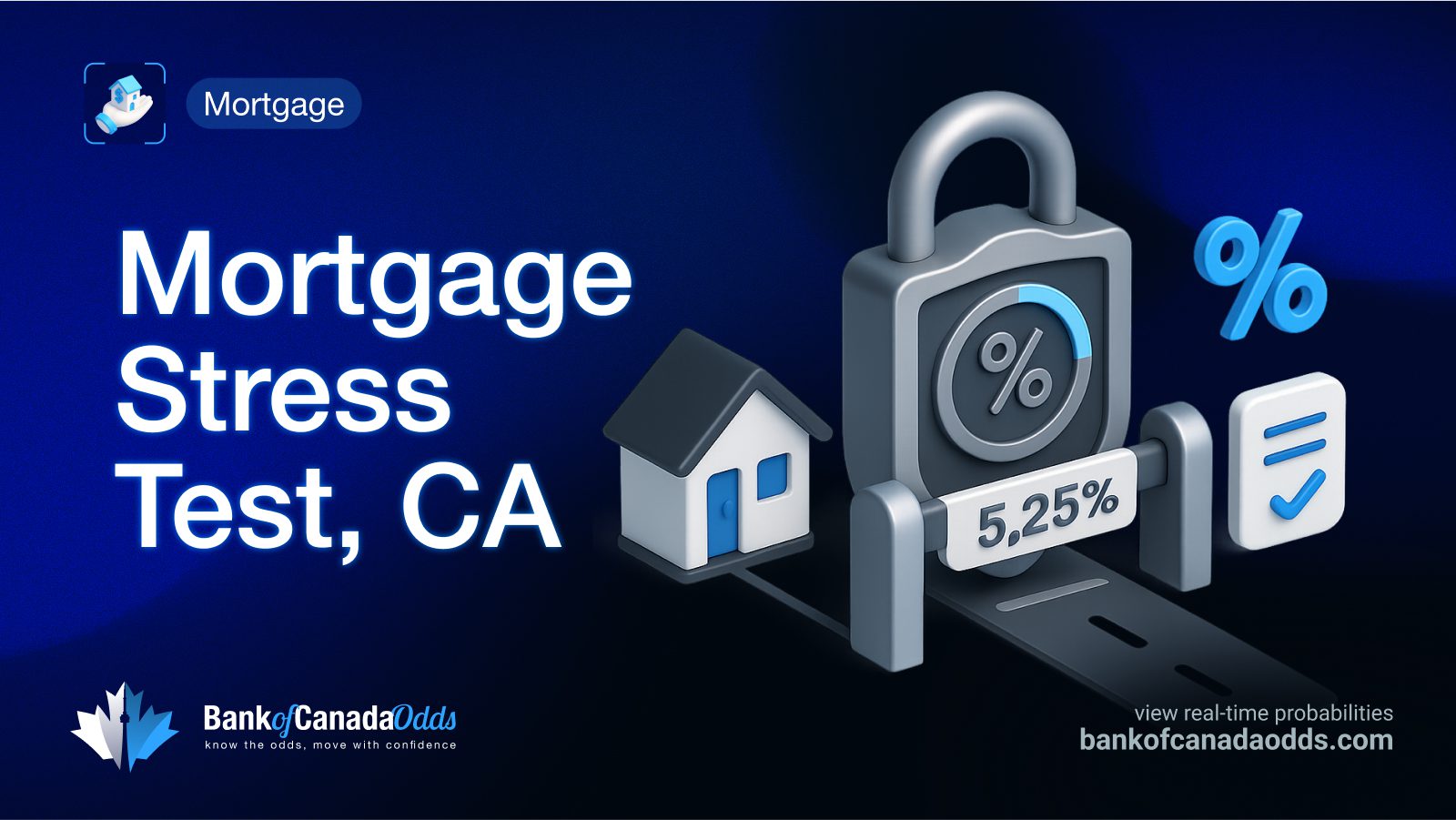
The stress test requires you to qualify for a mortgage at a higher rate than you’re offered. You must meet the greater of:
- Your contract rate + 2%
- The minimum qualifying rate (set by OSFI, currently 5.25%)
This applies to new mortgages, refinances, and renewals with new lenders. Even if your lender offers a 5% rate, you might have to qualify at 7% or more.
Why the Stress Test Matters in Canada
- Protects borrowers: Helps avoid unaffordable mortgages if rates rise.
- Protects lenders: Reduces risk of mass defaults in downturns.
- Limits affordability: Lowers the mortgage size you qualify for.
Canada’s mortgage stress test is key to national financial stability, but it also makes borrowing harder. Smart strategy can help overcome it.
How BoC Rate Moves Impact the Stress Test
While the Bank of Canada (BoC) doesn’t directly set stress test rules, its policy rate affects contract mortgage rates. If BoC hikes rates, your contract rate rises, and so does your qualifying rate. Conversely, a rate cut can ease your qualification hurdle.
For example:
- Contract rate = 5.00%
- Stress test = 7.00%
- BoC cuts = contract drops to 4.75%, stress test = 6.75%
This small change can boost your borrowing power by tens of thousands.
7 Ways to Pass the Stress Test
1. Improve Your Credit Score
A better credit score may qualify you for a lower contract rate, which reduces your stress test hurdle. Pay down balances, avoid new credit, and correct credit report errors.
2. Lower Other Debts
Reduce your total debt service (TDS) ratio by paying off loans. Even removing a $500/month car loan could raise your mortgage approval limit by over $50,000.
3. Boost Your Down Payment
Putting more down reduces your loan amount and eases monthly payments — improving your qualification odds.
4. Use a Longer Amortization
Extending your amortization from 25 to 30 years lowers monthly payments, helping you qualify. Be mindful of total interest paid.
5. Apply With a Co-Borrower
A joint application can improve your debt ratios. Many Canadians apply with a spouse or family member to strengthen their profile.
6. Explore Credit Unions or B-Lenders
Some non-bank lenders may offer more flexible underwriting. Just note they may charge higher interest or fees. Compare options at WOWA.ca or Ratehub.
7. Time Your Application With BoC Rate Cycles
Track BoC rate forecasts. Applying after a rate cut may ease the stress test; applying before a hike may lock in a better rate.
Case Study: How One Couple Passed the Test
A Toronto couple failed the stress test at 7.25%. After paying off a car loan and improving their credit, they re-applied at 4.75%, with a 6.75% stress test hurdle — and passed. Strategic prep made the difference.
Q&A: Stress Test Myths and Realities
- Q: Can I avoid the stress test?
A: Only if you go with some private lenders — but they charge much more. - Q: Does refinancing require it?
A: Yes. You must requalify under the test when refinancing or switching lenders. - Q: Will the test disappear?
A: Unlikely. It’s considered permanent, though formulas may evolve. - Q: How much does it reduce my borrowing?
A: Often by 15–20% compared to your actual contract rate.
Risks to Consider
- Overstretching: Passing doesn’t mean it’s affordable long-term.
- Longer amortizations: Reduce payment stress now, but cost more later.
- Alternative lenders: May help you qualify but carry higher costs.
- BoC prediction risk: Relying too much on forecasts can backfire.
Final Thoughts
Canada’s mortgage stress test may feel like a wall, but with the right approach — improving credit, reducing debt, increasing down payment, and smart timing — it becomes a hurdle you can clear. Use tools like the BoC Rate Odds Tracker to time your application wisely and unlock better approval odds.