The Bank of Canada mortgage rate is the single most important number in Canadian finance. It sets the tone for how much you pay on your mortgage, HELOC, car loan, and even your credit card. For borrowers, every 25-basis-point move can translate into hundreds of dollars per year. If you’re buying, refinancing, or renewing, knowing how this rate works is essential.
This guide explains how the rate functions, how it flows through the system, and what it means for borrowers. We’ll explore examples, market signals, and borrower strategies to stay ahead of rising or falling rates.
What Is the Bank of Canada Mortgage Rate?
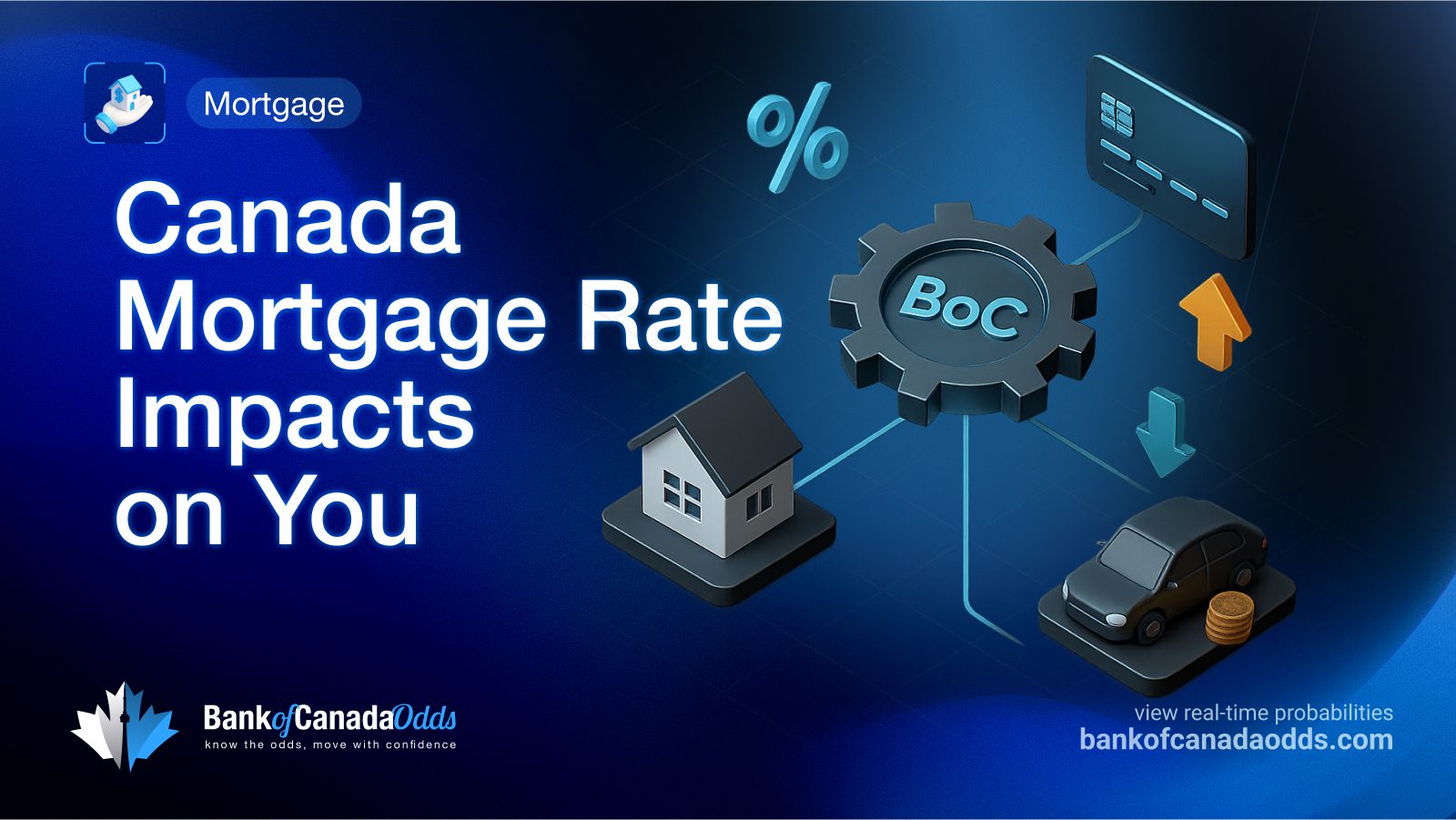
The Bank of Canada sets a target for the overnight rate, which is the rate at which major financial institutions lend to one another for one day. This rate is updated eight times per year during scheduled announcements. While you don’t borrow directly at this rate, it serves as the base for your mortgage and credit pricing.
The BoC uses this rate to keep inflation close to its 2% target. If inflation rises too quickly, the rate is increased to cool demand. If the economy weakens, the rate is lowered to boost borrowing and growth. It is essentially Canada’s monetary steering wheel.
How the Rate Affects Mortgages and Lending
- Prime rate: Commercial banks adjust their prime rate in lockstep with BoC decisions. Prime is used to price variable-rate mortgages, HELOCs, and credit lines.
- Bond yields: Fixed mortgage rates follow Government of Canada bond yields, especially the 5-year. Bond traders price in expectations of future BoC moves.
- Lender pricing: Lenders apply their own spreads and risk adjustments, sometimes raising or lowering rates even when the BoC holds steady.
How Borrowers Are Affected
- Variable-rate mortgages: These move with prime. A 0.25% hike adds about $15 per $100,000 in monthly payments.
- HELOCs and credit lines: These are also based on prime. Your cost of borrowing increases or decreases shortly after a BoC move.
- Mortgage renewals: When your fixed term ends, the rate you get next depends on the current BoC cycle. If rates have risen, expect a higher payment.
You can track upcoming rate decisions using our BoC Rate Tracker.
Broader Market Effects
- Housing demand: Higher rates reduce affordability and cool housing activity. Lower rates support price growth.
- Mortgage stress test: Borrowers must qualify at the greater of their contract rate plus 2%, or a minimum benchmark. When contract rates rise, fewer people qualify.
- Household debt: Canadians carry high personal debt. As interest costs rise, less income is left for other spending.
Real Examples
- 2020 rate cuts: During the COVID crisis, the BoC cut its rate to 0.25%. Variable-rate borrowers saw major savings and home prices soared due to cheap credit.
- 2022–2023 hikes: To fight inflation, the Bank raised the rate from 0.25% to over 5%. Mortgage renewals became much more expensive and the housing market cooled.
What Signals Should Borrowers Watch?
- Inflation: CPI is the BoC’s main target. High inflation suggests more rate hikes ahead.
- Employment: Job growth and rising wages support spending and often lead to more inflation.
- Bond yields: Government bond yields show how investors expect the BoC to act.
- OIS swaps: Overnight index swaps are market instruments that often forecast BoC decisions weeks ahead.
Borrower Strategies
- Fixed-rate mortgages: If the market expects further hikes, locking into a fixed rate can provide cost certainty.
- Variable-rate mortgages: These may save money if rate cuts are expected, but only if your budget can handle some risk.
- Stress testing: Run your own numbers assuming rates rise 1% to 2% more. Can your budget handle it?
- Renewal timing: If your term ends within 6 to 12 months, consider renewing early before further hikes.
For a deeper dive, visit our Mortgage Comparison Guide.
Frequently Asked Questions
Does the BoC set my mortgage rate directly?
No. The Bank sets the overnight rate, which influences lender prime and fixed-rate pricing.
How quickly do rates change after a BoC announcement?
Variable-rate products often adjust the same day. Fixed rates may shift earlier or later, depending on bond market reactions.
Should I lock in now?
If rate hikes are expected and your budget is tight, fixed rates can offer peace of mind. But if cuts are likely, variable may save money.
Conclusion
The Bank of Canada mortgage rate is at the center of your borrowing costs. It flows into prime rates, influences bond markets, and shapes mortgage pricing across the board. Every borrower — whether on a fixed or variable term — is affected eventually.
By understanding how this rate moves, what signals to watch, and how lenders respond, you can take smarter action. Don’t wait to be surprised. Watch the rate, plan your next move, and use tools like our BoC Forecast Dashboard to stay ahead.