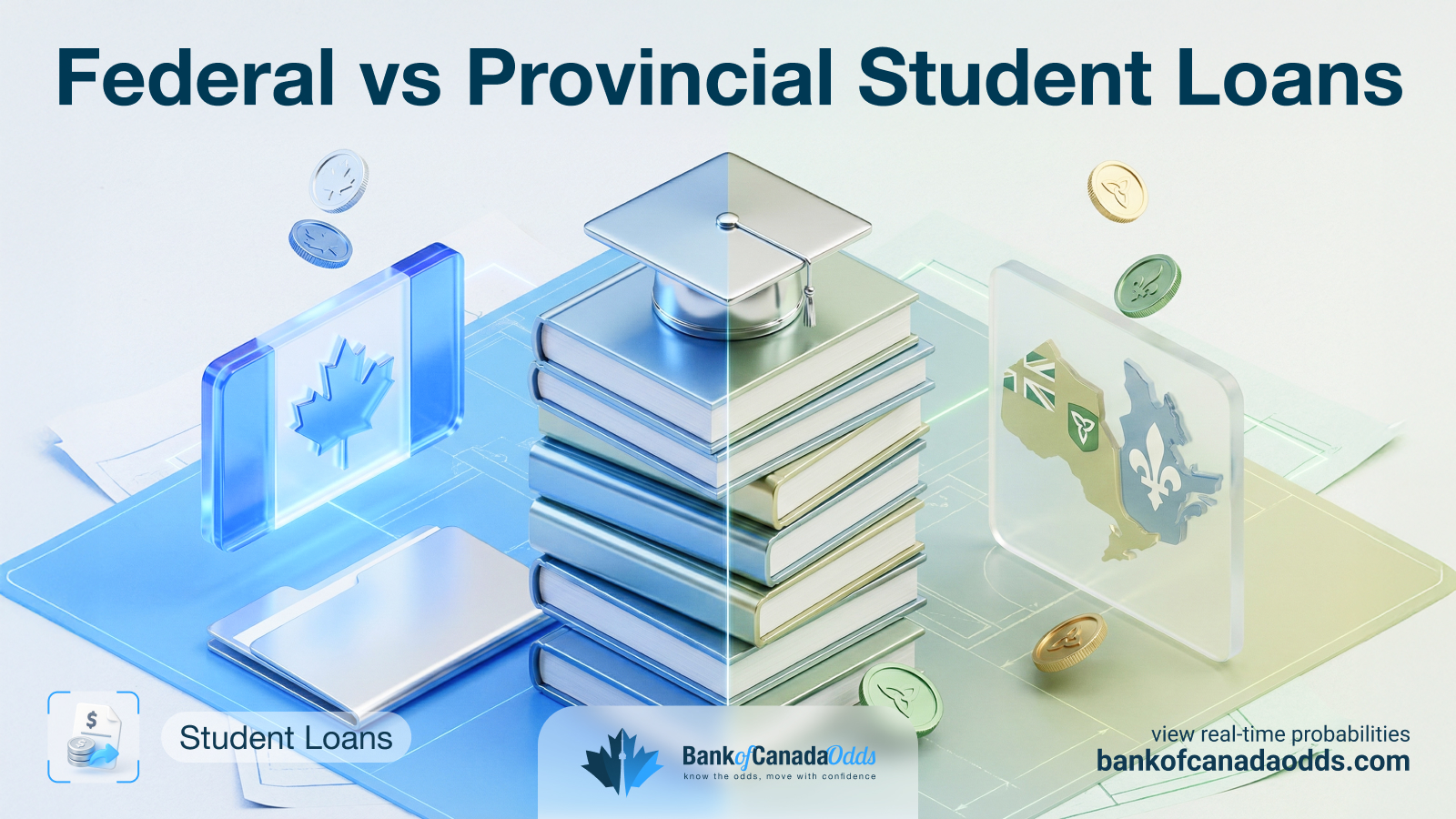
The student financial aid system in Canada is unique because it is split between two government levels: federal and provincial/territorial. Nearly all Canadian students who apply for financial assistance will get a combination of both. However, there are differences between the two systems regarding eligibility rules, interest rates, grants, payment structures, and forgiveness opportunities. The goal of this article is to explain the differences between federal vs provincial student loans, how they interact, and what students should consider before borrowing money.
Difference #1: Who is Responsible for Administering the Loans
Federal Loan Program
Administered through the Canada Student Financial Assistance Program (CSFA Program).
- Federal Loans provide Canada Student Loans (CSL).
- Federal Loans provide Canada Student Grants (CSG).
- Decision-making is based upon financial need and student enrollment status.
Provincial/Territorial Loan Programs
Each province or territory has its own student aid system.
- Ontario: OSAP
- British Columbia: StudentAid BC
- Alberta: Alberta Student Aid
- Quebec: Aide financière aux études (an independent system)
- Atlantic provinces: Mixed loan-grant systems
Students usually receive two separate assessments: one federal and one provincial.
Difference #2: Interest Rates (2025)
Federal Loans
- Always interest free (interest was permanently abolished in 2023).
- No interest is ever charged on a federal loan during either repayment or non-repayment.
Provincial Loans
Interest varies by province:
- No interest: British Columbia, Newfoundland & Labrador
- Interest on provincial portion: Ontario (OSAP), Alberta, Saskatchewan, Manitoba
- Independent interest rates: Quebec
Federal loans are currently the best option for borrowers interested in avoiding interest costs. You can monitor interest rate trends on our Odds Dashboard.
Difference #3: Grants and Non-Repayable Aid
Federal Grants
Grants are awarded automatically to students when they apply for loans. Examples of federal grants:
- Canada Student Grant for Full-Time Students
- Grant for Students with Dependents
- Grant for Students with Disabilities
Provincial Grants/Bursaries
Some provinces award:
- Tuition-free programs for low-income students
- Up-front grants
- Needs-based bursaries
- Rural or underrepresented student incentives
Quebec, Ontario, BC, and Newfoundland offer some of the largest provincial grant support.
Difference #4: Repayment Structures
Federal Loan Repayment
- Repayment of federal loans starts six months after a student leaves school.
- No interest is charged on federal loans while a student repays their debt.
- Access to the Repayment Assistance Plan (RAP): Federal Loans can be forgiven if a borrower qualifies for RAP and repays their loan for fifteen years.
Provincial Loan Repayment
Repayment structure varies by province:
- Some follow the federal repayment timeline.
- Some provinces begin charging interest right away when repayment starts.
- Provincial RAP-equivalent programs vary in generosity.
When students have both federal and provincial loans, they must manage two separate accounts. However, many provinces allow students to pay both in one account using one login portal.
Difference #5: Forgiveness and Assistance Programs
Federal Forgiveness Programs
- RAP: Borrowers qualify for full forgiveness after fifteen years.
- Doctors & Nurses Rural Forgiveness: Up to $60,000 (doctors) or $30,000 (nurses)
Provincial Forgiveness Programs
Examples of provincial forgiveness:
- BC Loan Forgiveness Program for in-demand occupations
- Quebec bursary/forgiveness incentives
- Manitoba and Saskatchewan rural education forgiveness
- Nova Scotia teacher and nurse forgiveness programs
Federal forgiveness is income-based while provincial forgiveness is occupation and/or location-based.
Difference #6: Total Funding Amounts
Federal Loan Limits
There are weekly loan limits for federal loans across the country.
Provincial Loan Limits
Each province determines:
- Its own weekly loan maximum (living allowance calculation)
- Tuition maximum
- Maximum loan award
Two students in different provinces pursuing the same program with similar financial needs may receive vastly different total funding amounts.
How Do Federal and Provincial Programs Interact?
Nearly all students receive a combination package of federal and provincial funds.
Combined package consists of:
- Federal portion: Larger interest-free grant-heavy amount
- Provincial portion: Varies per province (includes interest and/or additional grants)
Both are used to help fund students’ expenses for:
- Education (tuition)
- Housing
- Food
- Transportation
- Books and supplies
What Is Better For Students?
Federal Loans Are More Suitable For:
- Long-term repayment (no interest)
- Students who rely on RAP
- Borrowers who prefer predictable repayment terms
Provincial Loans Are More Suitable For:
- More grants/bursaries
- Students whose home province offers interest-free loans
- Students pursuing occupations with provincial forgiveness programs
Most students benefit from receiving both federal and provincial funding; however, federal loans are generally better funded than provincial loans.
Frequently Asked Questions (FAQ)
For more answers on financial aid, visit our Main FAQ page.
Do I need to submit a separate application for federal and provincial loans?
No. When you complete an application (for example OSAP, StudentAid BC, Alberta Student Aid, etc.), you are automatically assessed for both the federal and provincial portions of your potential funding.
Can I elect to only receive federal loans?
No. Funding decisions are made based on your demonstrated financial need. Unless you refuse the entire funding package, you cannot opt-out of the provincial portion.
Are provincial loans interest-free in all provinces?
No. Some provinces still charge interest on provincial loans.
Are federal grants guaranteed?
Yes, they are automatically assessed for eligibility based on financial need.
Do forgiveness programs cancel both my federal and provincial loans?
It depends. Federal loan forgiveness occurs through the Repayment Assistance Plan (RAP) which only forgives federal loans. Provincial forgiveness differs greatly by province.
Additional Factors to Consider in 2025
Provincial Cost of Living Differences
The amount of provincial support provided often reflects the local cost of living. For example, students studying in British Columbia and Ontario may receive larger living allowances due to the higher housing and transportation costs in these provinces compared to other provinces. To understand the economic forces driving these costs, check out The Six Drivers section.
Effect of Earning Money While Studying
Students who earn part-time income may impact the amount of funding they demonstrate a need for differently at the federal and provincial levels. Some provinces are much stricter about how income impacts a student’s eligibility for a loan. Students should keep records of their income to avoid an unexpected reduction in funding.
International Students and Access to Loans
International students do not qualify for federal vs provincial student loans; however, provinces differ regarding:
- Availability of scholarships
- Availability of institutional grant programs
- Eligibility for provincial residence-based bursaries
Differences in Student Portal Systems
Some provinces combine federal and provincial loans into one portal for paying back your loans (for example, NSLSC + province). However, some provinces require students to use two separate portals to manage their loans.
This affects how students:
- Track their loan balance(s)
- Request and apply for repayment assistance
- Track the conversion of their grants
Differences in Documentation Needed
Federal loans have standard requirements, but provincial programs may require students to provide:
- Documentation of residency
- Documentation verifying parental income
- Specific tax documentation required for the province
- Additional documents for students with dependents or those studying part-time
Professional Programs and Provincial Differences
Some provinces have additional funding packages for professional programs (i.e. medicine, law, engineering, nursing, social work, etc.). These packages vary widely between provinces, with some offering:
- Higher loan maximums,
- Additional provincial grants,
- Special bursaries for high-need fields,
- Extra support for rural training programs.
Differences in Bankruptcy Rules
Student loan bankruptcy in Canada requires a minimum seven-year wait after filing for bankruptcy protection. Additionally, some provinces require students to submit separate documentation for provincial loans to be discharged. This can make the process more complex for borrowers with large provincial balances.
Long-Term Financial Implications
Because provincial loans can accrue interest (depending on the province), students with significant provincial portions may face:
- Higher total repayment obligations,
- Longer repayment timelines,
- Greater reliance on RAP or provincial repayment assistance programs.
Borrowers should keep careful track of how much of their total loan balance is federal (interest-free) versus provincial (possibly interest-bearing).
Conclusion
While both federal and provincial student loan programs aim to help Canadians access higher education, the two systems differ significantly regarding interest rates, grants, repayment structures, and forgiveness opportunities. Most students receive a blend of both types of funding, and understanding the differences between federal vs provincial student loans is essential for borrowing strategically.
Federal loans tend to be more favourable due to permanent interest elimination and strong grant support, while provincial programs offer supplemental funding, additional grants, and occupation-specific forgiveness incentives.
By understanding these differences and staying informed about provincial rules, students can minimize their borrowing costs, maximize available grants, and build a long-term repayment plan that supports financial stability well beyond graduation. Stay updated with the latest loan news by joining our Subscription list.