A debt consolidation loan is one of the most effective financial tools available to Canadians looking to regain control over their finances, lower monthly payments, and simplify how they repay debt. If the Bank of Canada continues easing rates in 2025, these loans are becoming even more attractive. This is especially true for borrowers juggling high-interest credit cards, personal loans, lines of credit, or retail financing. Lower rates mean borrowers have a greater chance of securing favourable terms, reducing interest costs, and creating a more predictable path toward becoming debt-free.
In this expanded guide, we explain what a debt consolidation loan is, how it works, the different types available, and who qualifies. We also cover practical benefits, risks, and how it compares to other debt-relief options. By understanding these factors, Canadians can make informed decisions and use consolidation strategically to improve long-term financial stability.
What Is a Debt Consolidation Loan?
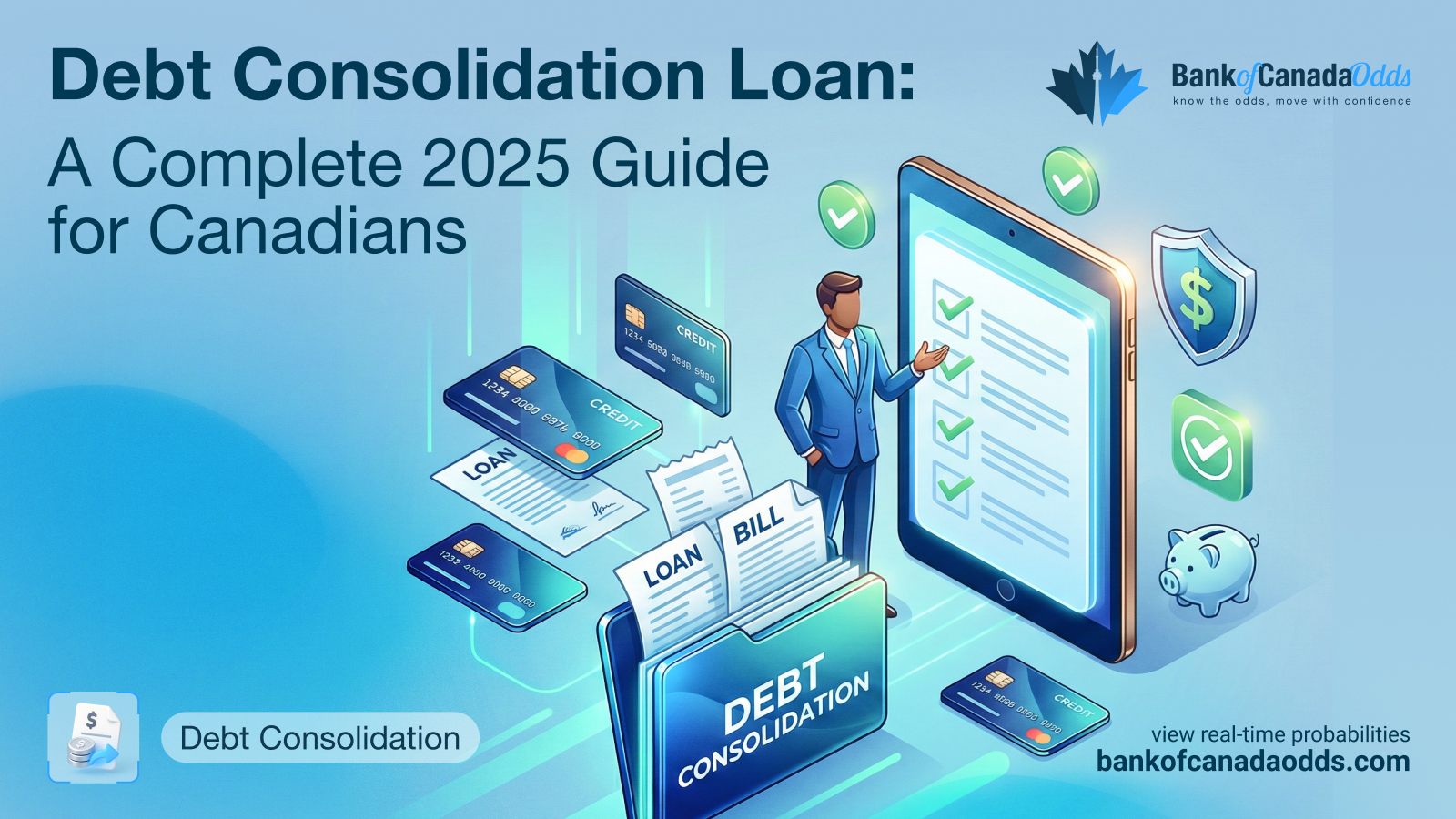
A debt consolidation loan is a single, structured loan used to pay off multiple existing debts. Instead of dealing with several lenders, each with different interest rates, due dates, and payment requirements, the borrower streamlines their obligations into one loan. This is ideally done at a lower rate.
The primary goal is not to eliminate debt instantly but to make repayment easier, cheaper, and far more manageable.
Debts Commonly Consolidated
- High-interest credit cards
- Personal loans
- Lines of credit
- Overdraft balances
- Retail and store financing plans
- High-interest installment or payday-style loans
By consolidating these into one loan, borrowers reduce complexity and often save thousands in interest.
How Debt Consolidation Loans Work
The process is straightforward. Once approved for a debt consolidation loan, the lender typically takes one of two approaches:
- Pays off the borrower’s debts directly, ensuring everything is closed properly.
- Deposits the loan amount into the borrower’s bank account so they can pay off each debt themselves.
Afterward, the borrower makes a single monthly payment toward the consolidation loan until it is fully repaid.
Key Features of Consolidation Loans
- A single monthly payment instead of several
- Lower interest rates compared to credit cards (which often exceed 20%)
- A fixed repayment term, usually between 12 and 60 months
- Predictable budgeting with fixed amortization
- A clear payoff date, reducing financial uncertainty
It is important to note that consolidation does not erase debt. It restructures it so repayment becomes more efficient and less stressful.
Benefits of a Debt Consolidation Loan
Lower Interest Costs
Borrowers often replace revolving credit at 19–29% with a much lower fixed-rate installment loan. Over time, this can significantly reduce total interest paid. You can track interest rate trends on our Odds Dashboard to see if now is the right time to lock in a rate.
Simplified Payments
Managing multiple debts increases the risk of missed payments. Consolidation streamlines everything into a single payment, reducing mental burden and logistical complications.
Faster Repayment Timeline
With a fixed term, borrowers are no longer trapped in the minimum-payment cycle that keeps credit card holders in debt for years.
Credit Score Improvement
Two credit score benefits occur:
- Reduced credit utilization once balances are paid.
- A consistent history of on-time payments.
For more details on how debt affects your credit score, resources like Equifax Canada provide excellent overviews.
Lower Financial Stress
Knowing there is one predictable payment each month provides a greater sense of control.
When Debt Consolidation Makes Sense
Consolidation is especially helpful when the following conditions apply:
- You carry multiple high-interest debts and want a lower rate.
- Your credit score is strong enough to qualify for good terms.
- You prefer structured payments with a fixed payoff timeline.
- Your income is steady enough to handle consistent monthly payments.
- You want to boost your credit profile over the long term.
Borrowers with strong financial discipline typically benefit the most.
Types of Debt Consolidation Loans
Not all consolidation methods function the same way. Here are the most common options available to Canadians. The Financial Consumer Agency of Canada also offers a detailed breakdown of these consumer rights and options.
Unsecured Personal Loan
This is the most widely used consolidation tool. It does not require collateral and is based solely on creditworthiness.
Home Equity Loan or HELOC
These options use home equity as security, offering significantly lower interest rates. They are excellent for large consolidation amounts but involve the risk of foreclosure if the borrower cannot repay.
Line of Credit Consolidation
A personal line of credit can be used to pay off debts. However, because payments are interest-only and not structured, discipline is essential.
Balance Transfer Credit Cards
Promotional 0% or low-interest balance transfer cards can help borrowers eliminate debt quickly, but only when used correctly. These often include transfer fees and strict deadlines.
Costs to Consider Before Consolidating
Even when a debt consolidation loan saves money, borrowers should understand all associated costs.
Interest Rates
Rates depend on credit score, income, loan amount, and lender policies. Economic factors influencing these rates are discussed in our The Six Drivers section.
Origination or Processing Fees
Some lenders charge administrative fees for issuing the loan.
Balance Transfer Fees
Credit card balance transfers often carry fees of 2–3%.
Early Repayment Penalties
Some personal loans include fees for paying off the balance early. Always review terms carefully.
Understanding all costs ensures borrowers calculate real savings.
How to Qualify for a Debt Consolidation Loan
Lenders evaluate the borrower’s overall financial health. The most important factors include:
- Credit score: Higher scores secure lower rates.
- Income stability: Lenders must see consistent earnings.
- Employment history: Stability increases approval odds.
- Debt-to-income ratio: Lower ratios show better repayment capacity.
- Current credit obligations: Lenders analyze existing payment behaviour.
Documentation Required
Borrowers typically need to provide:
- Government-issued ID
- Recent pay stubs
- Bank statements
- Employment verification
- A detailed list of debts to be consolidated
Debt Consolidation vs. Other Debt-Relief Options
Consolidation is only one of several methods available. Understanding how it compares helps borrowers choose wisely.
Debt Consolidation Loan
Ideal for borrowers with moderate to high-interest debt and the credit strength to qualify for better rates.
Consumer Proposal
A legally binding settlement that reduces the total debt owed. Suitable for borrowers in severe financial distress.
Credit Counselling / Debt Management Plan
A nonprofit counsellor negotiates lower interest rates with creditors, but the borrower still repays the full principal.
Bankruptcy
A last-resort option for those completely unable to repay debts.
Risks of Debt Consolidation
While consolidation offers many benefits, it also comes with risks.
- Consolidation does not fix overspending habits.
- Lower monthly payments may extend total repayment time.
- Leaving old credit lines open can lead to new debt accumulation.
- Home equity loans involve the risk of losing your home.
Borrowers should pair consolidation with strong budgeting habits to avoid falling back into debt.
Frequently Asked Questions
Does consolidation hurt my credit?
It may cause a small temporary dip due to the credit inquiry, but long-term repayment improves your score.
Can I consolidate debt with bad credit?
Yes, but interest rates may be higher. Some lenders specialize in fair-credit borrowers.
Is consolidation the same as debt settlement?
No. Settlement reduces the amount owed, while consolidation restructures repayment.
Does consolidation stop collection calls?
Collection calls stop once the original debts are fully paid off through the consolidation loan. For more answers, check our Main FAQ section.
Conclusion
A debt consolidation loan is a powerful and structured solution for Canadians seeking to reduce interest costs, simplify repayment, and regain financial control. As borrowing rates decline in 2025, many households will find consolidation increasingly appealing. When paired with disciplined spending, strong budgeting, and a long-term plan, consolidation can accelerate debt elimination and support long-term financial health. Borrowers who take the time to understand their options, and choose the right form of consolidation, can transform a stressful financial situation into a manageable, strategic path forward.