When mortgage rates fall, Canadian homeowners often ask whether refinancing when rates drop is worth it. A well‑timed refinance can reduce payments and save thousands over the mortgage term — but penalties and fees can offset those gains. Here’s how to decide when refinancing after a rate drop makes sense, how to calculate savings, and what to avoid in 2025’s shifting rate environment.
What Is Mortgage Refinancing?
Refinancing means replacing your current mortgage with a new one, usually to secure a lower rate, change your term, or access equity. You can refinance with your current lender or switch to another offering better conditions. In 2025, refinancing is particularly relevant as the Bank of Canada’s policy rate cuts have influenced fixed and variable mortgage pricing nationwide.
Common Reasons to Refinance
- Lower your rate: Capture savings as mortgage rates decline.
- Access equity: Use built‑up home equity for renovations, debt consolidation, or investment.
- Adjust your term: Shorten or extend amortization for more flexibility.
- Switch rate type: Move between variable and fixed depending on risk tolerance.
- Consolidate debt: Replace higher‑interest loans with one lower‑cost mortgage.
When Refinancing Makes Sense
1. Rates Have Dropped Enough to Offset Penalties
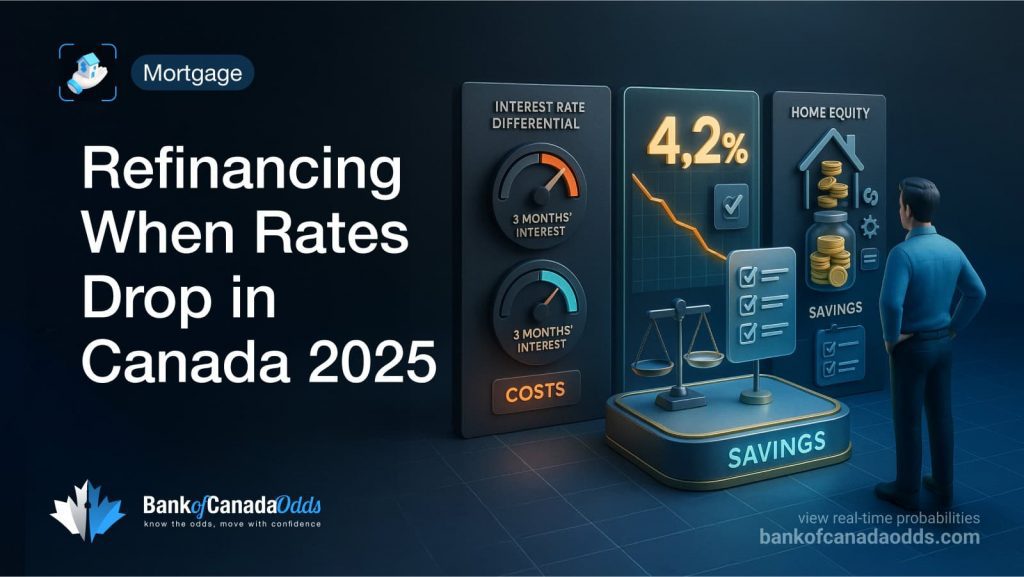
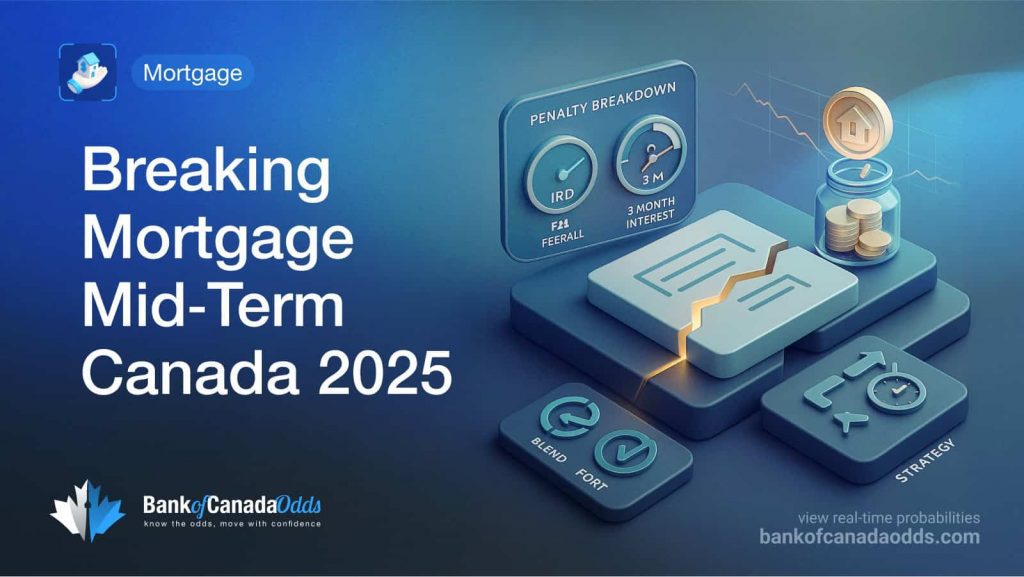
Breaking your mortgage early triggers a penalty—usually three months’ interest or the Interest Rate Differential (IRD). The key is whether the lower rate saves you more than the cost of switching.
Example: If you owe $400,000 at 5.2% with 2 years left, refinancing at 4.2% saves roughly $12,000 in interest. After $7,000 in fees, your net savings would still be $5,000 — a worthwhile move.
2. You Want to Unlock Home Equity
Refinancing in Canada lets you borrow up to 80% of your home’s appraised value. Rising property values can make this a cost‑effective way to fund renovations, investments, or education expenses.
3. You Want to Consolidate Debt
Using a refinance to pay off credit cards or personal loans can slash interest costs. For example, replacing 19% credit card debt with a 4.5% mortgage rate can save thousands annually. Check real‑time rates using WOWA’s refinance calculator or Nesto before deciding.
4. You Plan to Stay Put
Refinancing only pays off if you’ll stay in the property long enough to recover setup costs (typically 2–3 years).
When Refinancing Might Not Make Sense
- High penalties: Breaking your term could wipe out any savings.
- Short remaining term: If renewal is near, waiting may be better.
- Falling‑rate outlook: Analysts predicting more BoC cuts? Waiting could yield lower rates.
- Added costs: Expect appraisal, legal, and admin fees around $1,000–$2,000 total.
Current Market Context (October 2025)
According to public data from NerdWallet and Ratehub, five‑year fixed mortgage rates currently range from 3.8% to 5.0%, while variable rates hover between 3.6% and 4.9%. The Bank of Canada’s September 17, 2025 rate cut to 2.50% has opened opportunities for well‑qualified borrowers to refinance and save.
Steps to Refinance Smartly
- Get your payout quote: Ask your lender for your current penalty and balance.
- Shop around: Compare banks, credit unions, and mortgage brokers.
- Calculate savings: Use calculators to see your total cost vs. benefit.
- Negotiate: Lenders often match competitors to retain clients.
- Lock in your rate: Secure it with a rate hold (typically 90–120 days).
Tax & Qualification Notes
- Stress test: You must meet the federal OSFI Minimum Qualifying Rate (MQR)—the higher of your rate +2% or 5.25%.
- Tax implications: Refinancing for investments may make interest tax‑deductible (consult a professional).
- Closing costs: Expect about $1,000–$2,000 in legal and admin fees.
Quick Q&A
Q: How much do rates need to drop for refinancing to make sense?
Generally, a 0.75%–1% reduction makes refinancing worthwhile if you’ll stay long‑term.
Q: Can I refinance without breaking my mortgage?
Yes—some lenders offer a blend and extend option that combines your current and new rates, lowering penalties.
Q: Do I need to requalify?
Yes, unless you renew with your existing lender under similar terms.
Q: How long does refinancing take?
Typically 2–4 weeks, depending on lender timelines.
Q: Can I refinance multiple times?
Yes, but repeated refinancing can reduce equity and increase costs.
Conclusion
Refinancing when rates drop in Canada can unlock meaningful savings if approached strategically. Calculate your breakeven point, review penalties, and compare total costs before committing. With lenders offering competitive rates after recent BoC rate cuts, borrowers have more leverage than ever.
Stay informed through our BoC Rate Dashboard, explore How It Works, or subscribe for weekly refinancing insights. Smart timing—not luck—drives the best refinance results.