When your mortgage term ends, you have a golden opportunity to reassess your rate, lender, and financial goals. Yet most Canadians simply renew with their existing lender—often without realizing they could save thousands by switching. Understanding the process, timing, and costs of switching mortgage lenders at renewal can help you make an informed, money-smart decision.
What Does “Switching Lenders” Mean?
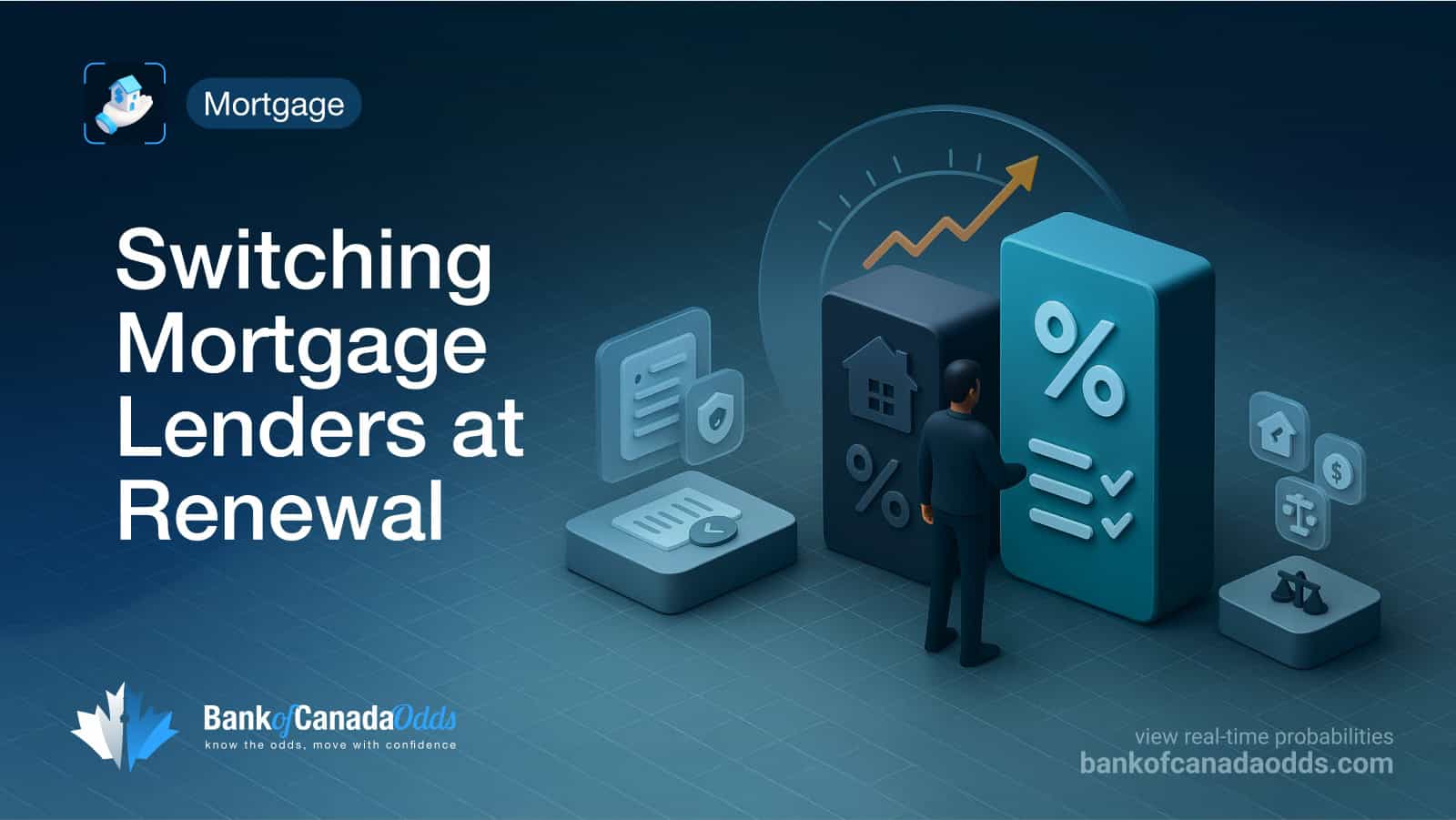
Switching lenders at renewal means transferring your mortgage balance from your current lender to a new one when your term expires. You’re not breaking your mortgage early, so no penalties apply. The new lender pays out your old mortgage and takes over the remaining balance under a new term and rate.
Why Consider Switching
- Lower interest rate: Competing lenders may offer promotional renewal rates to attract borrowers.
- Better terms and features: Enhanced prepayment options, portability, or rate-drop clauses.
- Improved service: If your current lender lacks flexibility or digital tools, a new one might better fit your lifestyle.
- Debt consolidation: Some lenders allow small top-ups during the switch, letting you simplify your finances.
The Renewal Timeline
- 120–180 days before maturity: Lenders start sending renewal offers. Use this time to shop around.
- 90 days before: Most lenders allow you to secure a new rate for transfer.
- 30 days before: Have your new lender and documents ready to ensure a smooth transition.
Early research ensures you can compare offers without rushing into another high-rate term.
What You’ll Need to Switch
Switching is similar to re-applying for a mortgage but generally simpler. Expect to provide:
- Proof of income (T4s, pay stubs, or tax returns)
- Mortgage statement and property details
- Proof of property insurance
- Credit check authorization
The new lender will arrange to discharge your old mortgage and register the new one, usually at no cost to you if they cover legal and appraisal fees (many do as an incentive).
Costs and Considerations
While switching at renewal avoids penalties, there can still be some costs:
- Appraisal fees: $300–$600 if property value verification is needed
- Legal or title transfer fees: May apply, though many lenders offer cashback or reimbursements
- Insurance adjustments: You may need to update your property or title insurance
Always ask whether the new lender covers these costs—many do to win your business.
Pros and Cons
Pros
- Access to better rates and terms
- No early-break penalty
- Opportunity to customize features (prepayment, term length, etc.)
Cons
- Requires new paperwork and credit verification
- Possible appraisal or legal fees
- Time and effort to compare and negotiate
How to Compare Lenders Effectively
- Gather your renewal offer: Use your current lender’s offer as the baseline.
- Check broker rates and credit unions: Smaller lenders may offer lower rates or better conditions.
- Compare the full package: Look beyond the interest rate—consider prepayment privileges, portability, and penalties.
- Negotiate: Ask your existing lender to match or beat competitor offers.
- Get everything in writing: Ensure rate, term, and incentives are clearly documented.
Market Context
As of late 2025, five‑year fixed mortgage rates in Canada generally range between 4% and 5%, while variable rates hover in the mid‑4% to low‑5% range. Following the Bank of Canada’s 0.25% policy rate cut in September 2025, competition among lenders has intensified. Many institutions now offer cashback incentives or fee-free transfers to attract borrowers switching at renewal.
Compare rates using public aggregators like Ratehub and check recent policy updates on the Bank of Canada website.
Quick Q&A
Q: Does switching lenders hurt my credit score?
A soft inquiry doesn’t impact your score. A hard inquiry may drop it slightly, but minimal if done within a 45-day window.
Q: Can I negotiate with my current lender before switching?
Yes. Use other lenders’ offers as leverage—many will match to retain your business.
Q: Will I have to requalify under the stress test?
Yes. Switching lenders requires you to pass the federal stress test (the higher of your rate +2% or benchmark).
Q: Can I change my amortization when switching?
Only if you refinance—not a simple switch.
Q: How long does the process take?
Typically 2–4 weeks, depending on appraisal and lender processing times.
Final Thoughts
Switching mortgage lenders at renewal is one of the easiest ways to secure better terms without penalties. With lenders competing aggressively post-BoC rate cut, now is the perfect time to explore your options. Don’t default to your current lender—compare, negotiate, and lock in terms that serve you best.
Stay updated on rate trends and mortgage strategies with BoCOdds.com.