BankofCanadaOdds.com coverage | Live BoC odds | Subscribe
Understanding different line of credit types is essential whether you are renovating a home, expanding a business, or managing cash flow. The structure of your credit line and the interest rate you choose will determine how sensitive your borrowing cost is to Bank of Canada policy decisions. This guide explains the key differences and how rate changes filter into your payments.
Overview
A line of credit provides flexible access to funds. You can borrow, repay, and borrow again up to an approved limit. Since you only pay interest on what you actually use, selecting the right rate structure is important.
One question matters for all line of credit types: should the rate be fixed or variable?
This guide breaks down how each option works and how Bank of Canada rate moves influence your borrowing cost.
What Is a Line of Credit?
A line of credit is a revolving loan that lets you draw funds when needed. You only pay interest on the amount you have outstanding. This is why the type of rate you select can significantly affect your overall cost.
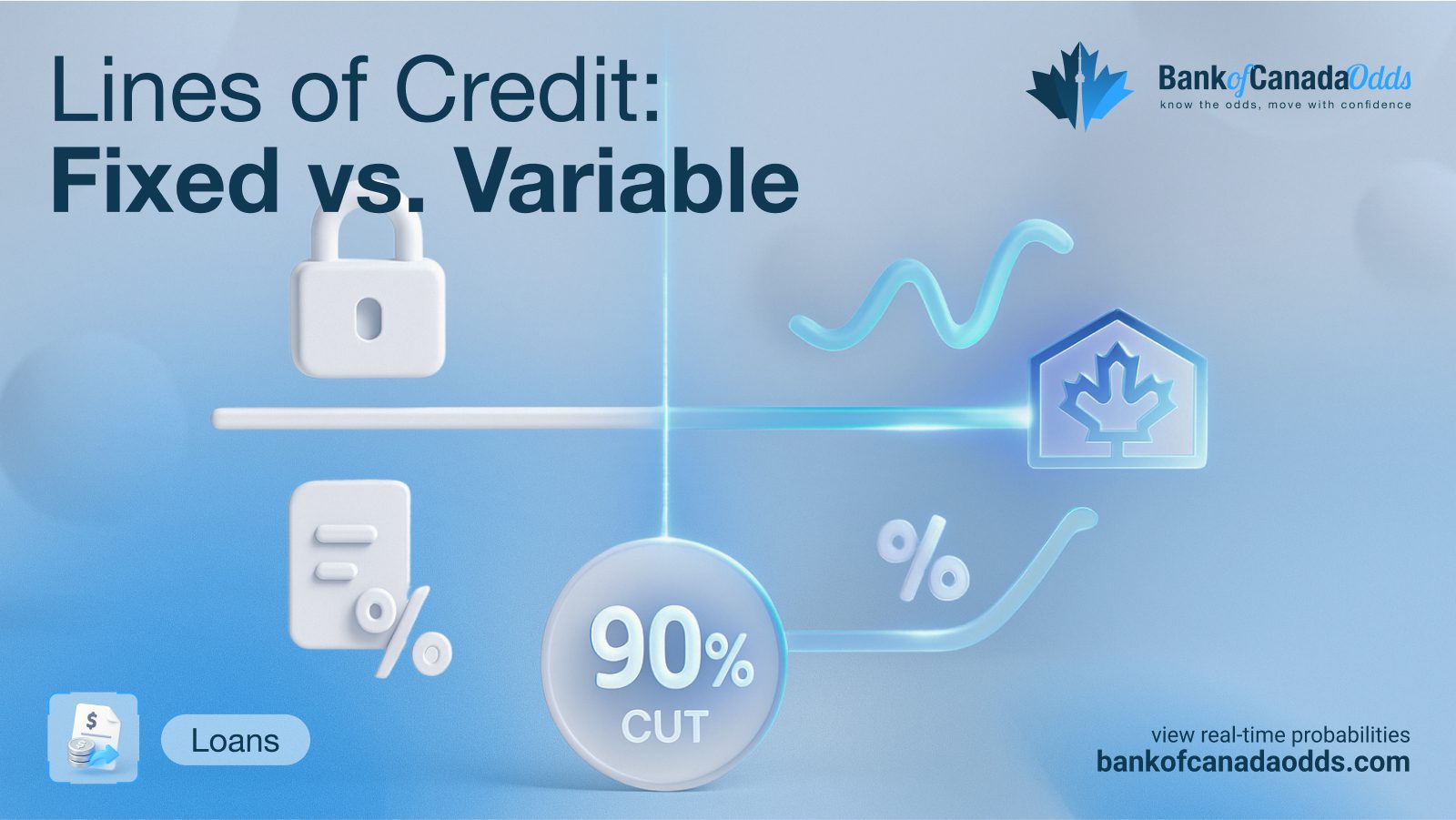
Fixed vs Variable LOCs: Key Differences
| Feature | Fixed Rate LOC | Variable Rate LOC |
| Interest rate | Locked for a set term | Moves with the Bank of Canada overnight rate |
| Payment predictability | Stable interest costs | Changes based on central bank decisions |
| Common usage | Less common for revolving credit | The standard option for most credit lines |
| Appeal | Useful during rising rate cycles | More affordable when rates fall |
How BoC Rate Cuts Affect Variable LOCs
Variable lines of credit generally follow the Bank of Canada overnight rate, with lenders pricing them as Prime plus a margin. For the official overnight rate series, refer to the Bank of Canada policy rate page.
When the Bank of Canada lowers rates, your variable LOC rate typically drops soon after.
Example
- BoC Overnight Rate: 2.75 percent
- Bank Prime Rate: 4.95 percent
- Your LOC Rate: Prime plus 1 percent equals 5.95 percent
If the Bank of Canada cuts by 25 basis points:
- New Prime: 4.70 percent
- New LOC Rate: 5.70 percent
That equals about 250 dollars in annual interest savings for every 100000 dollars borrowed.
Should You Choose Fixed or Variable?
Choose Variable if:
- You want the lowest starting rate
- You expect Bank of Canada rates to fall or remain stable
- You are comfortable with some month to month fluctuation
Choose Fixed if:
- You prefer predictable budgeting
- You expect rates to rise soon
- You do not plan to keep the credit line open long term
Bonus: Home Equity Lines of Credit (HELOCs)
Most HELOCs are variable rate products and adjust with each Bank of Canada decision. If you are completing renovations or accessing equity, your interest cost will move in line with monetary policy.
Summary
- Variable LOCs are the most common line of credit types and respond directly to Bank of Canada rate changes
- Fixed LOCs are less common but helpful during periods of rate volatility
- You can use the Live BoC Odds Tracker to gauge whether borrowing costs may rise or fall
Learn more about our methodology in the How it Works section or explore related resources in FAQ, What Drives Us, and The Six Drivers.