The Bank of Canada mortgage rate is one of the most important benchmarks in Canadian finance. It influences borrowing costs across mortgages, HELOCs, and credit lines. When the central bank changes this rate, it can directly affect how much you pay every month. Whether you’re renewing or applying for a new loan, knowing how this rate works is critical.
What Is the Bank of Canada Mortgage Rate?
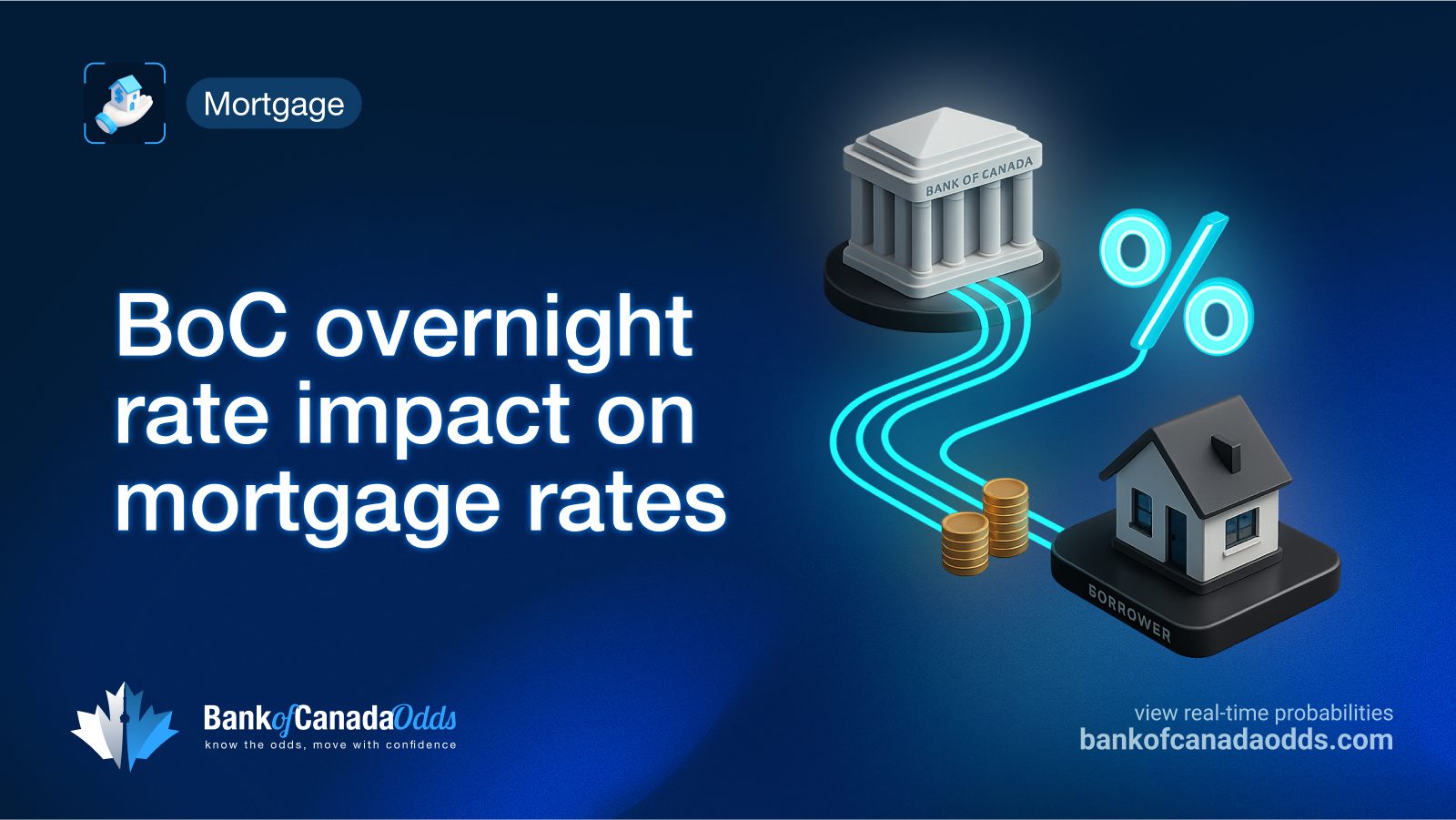
The Bank of Canada sets a target for its overnight rate, which becomes the foundation for lending across the country. While consumers do not borrow at the overnight rate itself, it impacts the prime rate that banks use to price mortgages. It also affects fixed mortgage rates through the bond market. The Bank adjusts this rate to control inflation and support economic stability.
You can track the official rate at the Bank of Canada’s interest rate page.
How It Affects Fixed and Variable Mortgages
- Variable-rate mortgages: These follow your lender’s prime rate. When the Bank changes the overnight rate, the prime rate usually follows.
- Fixed-rate mortgages: These depend more on Government of Canada bond yields. Bond markets react to what they expect the Bank will do in the future, so fixed rates may move before any formal announcement.
When the Bank of Canada mortgage rate changes, lenders typically update their posted and promotional mortgage rates very quickly.
What It Means for Borrowers
- Renewals: If your mortgage term is ending soon, you will be offered rates that reflect the current Bank of Canada policy cycle.
- HELOCs and credit lines: These are priced using prime. A 0.25% hike from the Bank usually means your borrowing costs go up by the same amount.
- Mortgage stress test: Higher rates increase the qualifying rate for borrowers, which may reduce how much you can afford to borrow.
You can follow rate movements live using our BoC Rate Tracker Dashboard.
Historical Example: 2022 to 2023 Rate Hikes
In 2022 and 2023, the Bank of Canada raised its overnight rate from 0.25% to over 5%. This led to:
- Hundreds of dollars in extra monthly payments for variable-rate borrowers
- Stress test levels rising to 8% or more for new buyers
- Renewal shock for homeowners coming off low 5-year fixed terms
We cover similar case studies in our Mortgage Comparison Guide.
How to Anticipate Future BoC Moves
- Inflation data: CPI reports from Statistics Canada are closely watched by the Bank.
- Bond yields: A rising 5-year Government of Canada bond yield often signals that fixed rates will follow.
- OIS swaps: Overnight index swaps show what traders expect from upcoming BoC meetings.
Borrowing Strategies to Consider
- Lock into a fixed rate: If further hikes are expected, fixed rates can offer predictability and protect your budget.
- Choose variable when cuts are likely: If markets expect rates to fall, variable mortgages may save money over time. Only do this if you can handle short-term changes.
- Run your own stress test: Make sure you can handle your payments if rates rise another 1% to 2%.
- Consider early renewal: If your mortgage is up in the next year, locking in early could avoid future increases.
Common Questions
Q: Does the Bank of Canada control my mortgage rate?
Not directly. The Bank sets the overnight rate, which influences prime and fixed mortgage pricing set by lenders.
Q: How soon do lenders adjust rates after a BoC decision?
Variable rates often adjust within one to three days. Fixed rates may move in advance, based on expectations.
Q: Should I always lock in?
It depends on your financial goals. Locking in offers stability, but if rate cuts are expected, staying variable could be cheaper.
Final Thoughts
The Bank of Canada mortgage rate affects every homeowner and buyer. It shapes variable mortgage payments, determines qualifying rules, and influences renewal offers. Keeping up with BoC decisions, bond markets, and inflation trends will help you make more informed mortgage choices.
Whether you’re about to renew, refinance, or purchase your first home, having a rate strategy puts you in control. And if you’re unsure what to expect next, check our BoC meeting forecast tool for real-time updates.