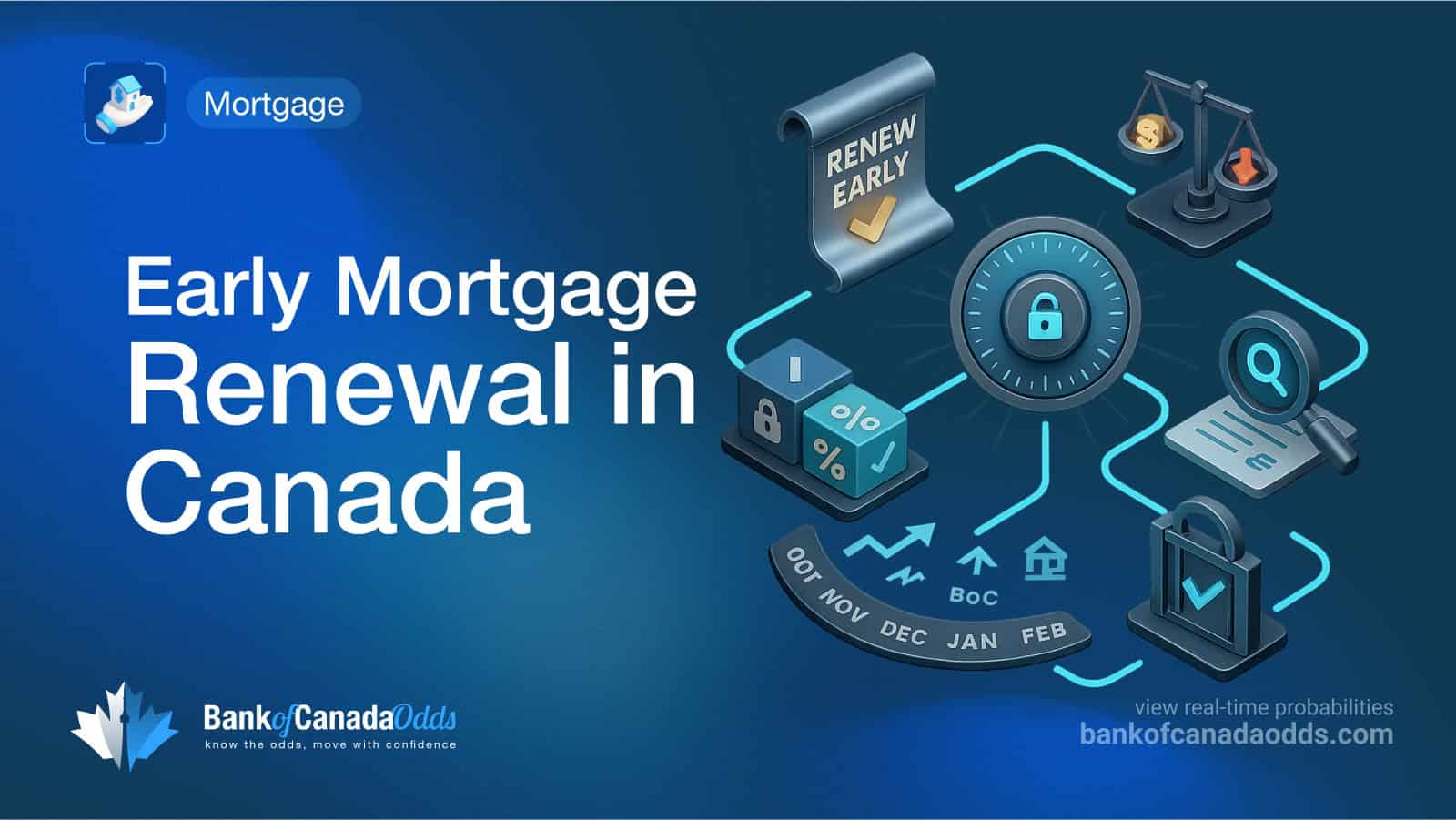
Early mortgage renewal in Canada is gaining traction—especially with interest rate uncertainty looming. By renewing your mortgage ahead of your term’s end, you can lock in a lower rate, secure financial stability, and avoid potential hikes by the Bank of Canada. But timing, penalties, and lender policies all matter. Here’s your complete guide to deciding whether renewing early makes sense in today’s market.
What Is Early Mortgage Renewal?
Early renewal means renegotiating your mortgage before your current term ends. Most Canadian lenders allow renewals within 120–180 days of maturity—sometimes without penalties. You sign a new contract with updated terms, usually with your existing lender.
Why Lenders Offer Early Renewals
Lenders want to retain your business. Offering an early renewal helps them secure you for another term before you shop around—especially if rates are expected to rise.
When It Makes Sense
- Rates are rising: Lock in now to beat future increases.
- You want stability: Move from variable to fixed for predictable payments.
- You expect major life changes: Like job shifts, maternity leave, or retirement.
- Debt consolidation: Blend other loans into one lower-rate mortgage.
- You’re within 6 months of maturity: Often penalty-free to renew now.
When You Should Wait
- Rates are expected to drop: Waiting could get you a better deal.
- High penalties apply: Early exit from your term might trigger IRD charges.
- You may sell soon: Renewing could complicate your mortgage portability.
How to Calculate Your Break-Even Point
- Get your penalty quote: Ask for both IRD and three-month interest costs.
- Compare rates: What’s your current rate vs. the new offer?
- Estimate savings: Calculate interest saved over the rest of your current term.
- Subtract total costs: Include penalty, legal, or admin fees.
- Break-even timeline: Divide total costs by monthly savings to see if early renewal pays off.
If you break even in under 12 months, the early renewal may be worthwhile.
Smart Negotiation Tips
- Get competing offers: Use broker quotes to leverage better rates.
- Negotiate features: Don’t just focus on the rate—ask about prepayment privileges, rate-drop clauses, and portability.
- Ask about shorter terms: If more rate cuts are forecasted, consider 1–3 year terms.
- Read the fine print: Know how penalties, rate locks, and discharge fees are calculated.
Fixed vs Variable During Early Renewal
- Fixed: Locks in your payment—ideal for stability.
- Variable: Offers flexibility and potential savings if rates drop.
- Hybrid: Splits your mortgage between fixed and variable.
Qualification Rules in Canada
Staying with your current lender usually means no requalification if your mortgage balance remains the same. But switching lenders or borrowing more triggers the federal stress test—you’ll need to qualify at the higher of your contract rate +2% or the benchmark rate.
Market Context (October 2025)
Today’s 5-year fixed mortgage rates in Canada range between 3.8% and 4.6%, while variable rates sit around 4.4% to 5.0%. Following the Bank of Canada’s September 0.25% cut, lenders adjusted renewal offerings. But the outlook remains mixed—some expect another small cut by year-end; others predict a rate pause.
To compare offers, browse trusted public rate aggregators like WOWA, Nesto, or Ratehub.
Track live monetary policy odds and rate expectations at BoCOdds.com.
Quick Q&A
Q: Can I renew early with another lender?
No. That’s considered a refinance and may trigger fees and requalification.
Q: Are there fees to renew early?
If you’re within your lender’s renewal window, usually not. Otherwise, IRD or interest penalties may apply.
Q: What if rates drop after I renew?
Ask if your lender offers a rate-drop guarantee before signing.
Q: Can I switch to variable during early renewal?
Yes—but it may require a new contract or term adjustment.
Final Thoughts
Early mortgage renewal can be a smart hedge against future rate hikes—but only if the savings outweigh the costs. Do the math, consider your timeline, and don’t hesitate to negotiate better terms.
As rate trends shift, stay updated through BankOfCanadaOdds.com—your go-to resource for real-time rate expectations, mortgage planning tools, and renewal timing strategies tailored for Canadian borrowers.