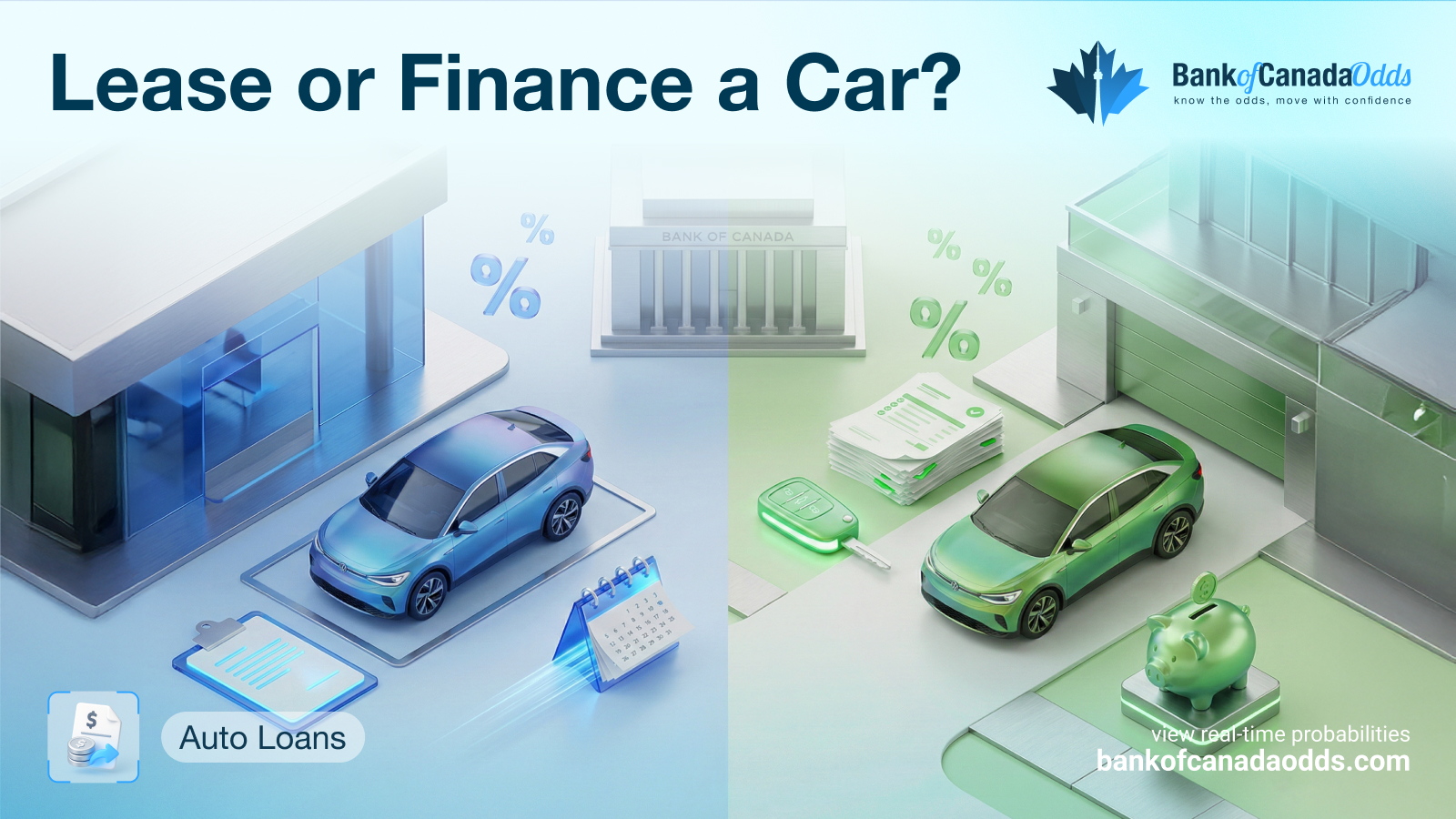
Interest rates have been consistently high through 2025. Therefore, many Canadians are reconsidering whether it is smarter to lease or finance a car. The ramifications of high interest rates affect all aspects of vehicle purchasing, from monthly payments to the potential long-term implications of ownership. Although leasing and financing were once viewed as two separate options, they each have their own advantages and disadvantages based upon current market conditions.
This updated guide provides an overview of the key differences between both methods. It aims to help Canadians decide which method of vehicle purchasing provides the greatest long-term savings in 2025.
Important Points
- Interest rates have a larger effect on the total cost of financing than leasing.
- While leasing will likely produce lower monthly payments than financing, it will also limit the consumer’s opportunity to accumulate long-term equity in a vehicle.
- If a consumer intends to retain ownership of a vehicle for an extended period, financing is clearly the preferred method.
- However, if a consumer plans to upgrade their vehicle frequently (every 2 to 4 years), leasing may be the preferable method.
- Ultimately, the decision to lease or finance a car depends on the individual’s driving habits, long-term vehicle plans, credit history, and risk tolerance.
- Many Canadians are choosing to lease their next vehicle in 2025 as a means of maintaining affordability during times of high interest rates.
Impact of High Interest Rates on Car Financing
When interest rates are high, financing a car becomes much more expensive. While the interest applied to leasing applies only to the amount of the vehicle that depreciates, the interest applied to financing applies to the full cost of the vehicle. Therefore, the financial burden placed on consumers utilizing long-term financing options increases significantly. You can monitor the latest policy rate trends on our Odds Dashboard.
Impact of high interest rates on car financing include:
- Increased monthly payments: Even a 1% rise in the interest rate can add an extra $10 to $30 per month for most borrowers, and more for larger loans.
- Increased interest paid over the life of the loan: Consumers may pay thousands more in interest depending on the length of the loan and the size of the borrowed amount.
- Risk of negative equity: Vehicles depreciate rapidly, especially in the first few years. With high interest rates, borrowers may owe more than the vehicle is worth for much of the loan term.
- Longer loan terms: Many consumers are opting for 84 to 96 month loan terms to help manage the increased costs. However, this ultimately increases the total interest paid.
While consumers with good credit may still qualify for promotional financing offers, many will experience significantly higher financing costs in 2025 than in previous years.
Impact of High Interest Rates on Leasing
Leasing differs from financing since the interest component (the money factor) is only applied to the depreciation of the vehicle and not the full value. Thus, leases may remain significantly more affordable than financing options even in high interest rate environments.
Benefits of leasing in a high interest rate environment:
- Lower monthly payments: Leases allow consumers to maintain affordable monthly payments without increasing the length of their loan terms.
- Lower up-front costs: Typically, down payments are optional or significantly lower than those required for financing.
- Regular access to newer models: Perfect for consumers looking for the latest technologies, especially with the rapid advancements in electric vehicles.
- Reduced exposure to depreciation: At the end of the lease term, the risk of the vehicle losing value remains with the manufacturer or dealer.
Disadvantages of leasing:
- At the conclusion of the lease, consumers cannot acquire ownership of the vehicle. They must either return the vehicle or buy it at a predetermined price.
- Mileage limitations: If consumers exceed the mileage limitations specified in their lease agreement, they will incur significant additional costs.
- Wear-and-tear charges: Any excessive wear and tear on the vehicle will result in consumers paying additional fees. The Financial Consumer Agency of Canada offers detailed guidelines on what constitutes “excessive wear.”
- Expensive buyouts: High interest rates don’t increase the buyout price itself, but they make financing a buyout more expensive.
Comparison of Leasing vs. Financing Costs
As interest rates rise, the monthly payment difference between leasing and financing grows wider. A loan of 7% to 9%, currently experienced by many consumers, can create a difference of hundreds of dollars in monthly payments between a lease and a loan with a comparable interest rate. To understand the economic factors driving these rates, visit What Drives Us.
Financing is generally more expensive when:
- Loans extend beyond 72 months.
- Consumer’s credit rating is only fair or subprime.
- Vehicle purchased has high depreciation (e.g., luxury brands).
- Consumer places little or no money down.
Leasing is generally more appealing when:
- Manufacturers are offering aggressive lease incentives or discounted money factors.
- Vehicle retains its value well (e.g., hybrid/electric vehicles, Japanese brands).
- Consumer is primarily concerned with having the lowest monthly payments.
- Consumer does not intend to keep the vehicle long-term.
Who May Benefit from Leasing When Rates Are High?
Leasing may be the superior option for Canadian consumers who:
- Desire the least expensive monthly payments.
- Drive moderately and predictably (12,000 to 20,000 km per year).
- Choose to upgrade vehicles every 2 to 4 years.
- Would like to take advantage of the newest technology, improved safety features, and rapid advancements in electric vehicles.
- Would like to protect themselves against long-term depreciation.
Leasing is especially advantageous for consumers who wish to preserve cash flow and minimize the risks of future fluctuation in the used-vehicle marketplace.
Who May Benefit from Financing When Rates Are High?
Financing may be the superior option for Canadian consumers who:
- Intend to keep their vehicle for 6 to 10 years or longer.
- Would like to develop equity in the vehicle and eventually eliminate monthly car payments.
- Would prefer not to be restricted by mileage allowances or subject to lease return inspections.
- Have sufficient down payments to decrease the amount of debt incurred.
- Expect interest rates to decline and plan to refinance their vehicle at a lower interest rate in the future.
Financing is best suited for those who see their vehicle as a long-term investment. For insights on how the economy impacts these long-term investments, check The Six Drivers section.
Strategies for Reducing Costs in High-Rate Environments
To reduce costs when determining whether to lease or finance a car, consumers can utilize the following strategies:
- Obtain pre-approval for a loan from their bank or credit union prior to going to the dealer.
- Shop multiple lenders (including online lenders) to compare financing costs.
- Increase down payments to reduce the amount borrowed.
- Compare financing incentives offered on the vehicle to leasing incentives.
- Attempt to negotiate the vehicle price separately from the financing or lease.
- Monitor Bank of Canada rate movements to identify optimal refinancing opportunities.
Commonly Asked Questions
Does leasing tend to be less expensive than financing when rates are high?
Yes. Because interest is only applied to the depreciation portion of the vehicle, leasing is generally less expensive.
Will I be able to refinance my auto loan if interest rates drop?
Yes. Many Canadians obtain financing now and then refinance their loan at a later date when interest rates are lower.
Will leasing be a poor option if I drive a great deal?
Yes. Driving too many miles will cost you extra.
Do automobile manufacturers or dealers negotiate lease agreements?
Yes. You can negotiate the vehicle price, money factor, mileage allowance, and fees.
Is there a high level of risk involved with obtaining financing at high interest rates?
Yes. High interest rates can increase the cost of monthly payments and increase the risk of a consumer owing more on the vehicle than it is worth.
Is a lease buy-out worthwhile in high interest rate environments?
Typically, no. High interest rates can drive up the price of a lease buy-out, making it unaffordable for consumers to purchase the vehicle. For more answers, visit our Main FAQ.
Conclusion
Selecting the appropriate option to lease or finance a car in an era of high interest rates requires a thoughtful analysis of your financial goals, driving habits, and long-term plans. Leasing allows you to achieve lower monthly payments and protects you from depreciation, but it restricts your ability to accumulate long-term equity. Financing allows you to build ownership and eventually eliminate monthly car payments, but it may require higher upfront costs.
By comparing incentives, evaluating the total cost of borrowing, and considering how long you plan to keep your vehicle, Canadians can make an informed decision that maximizes savings and minimizes financial risk in 2025. Stay updated on rate changes by joining our Subscription list.