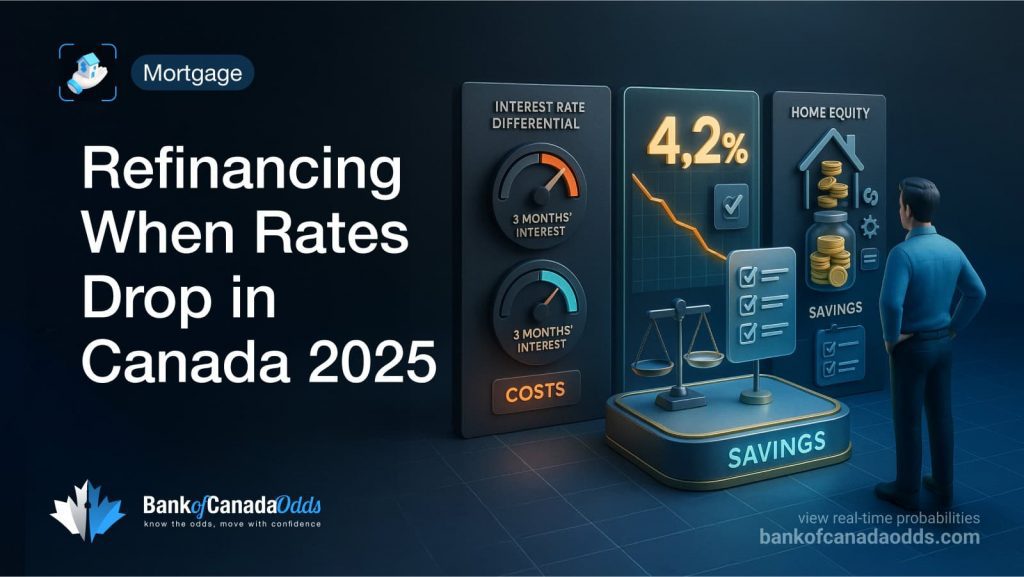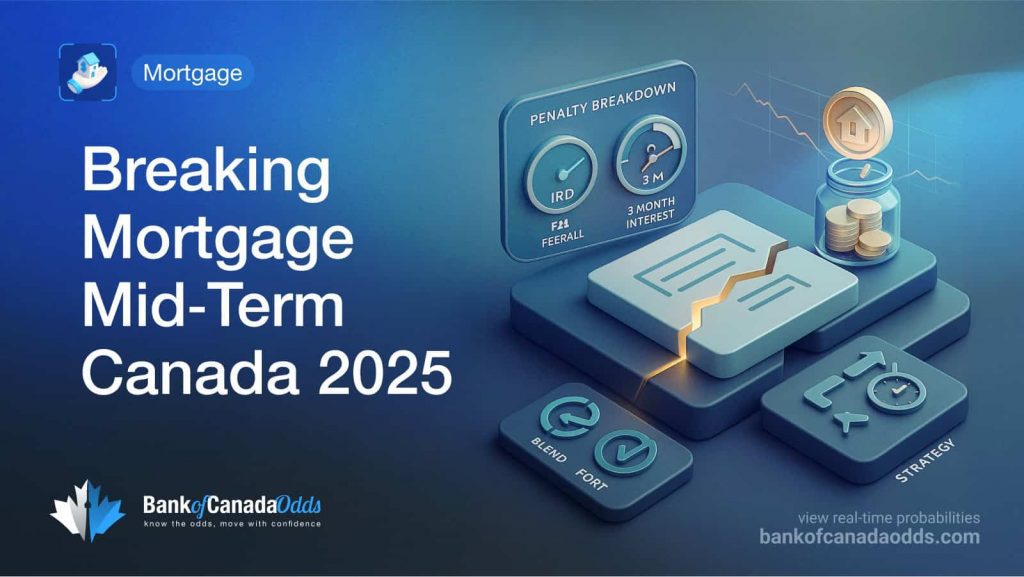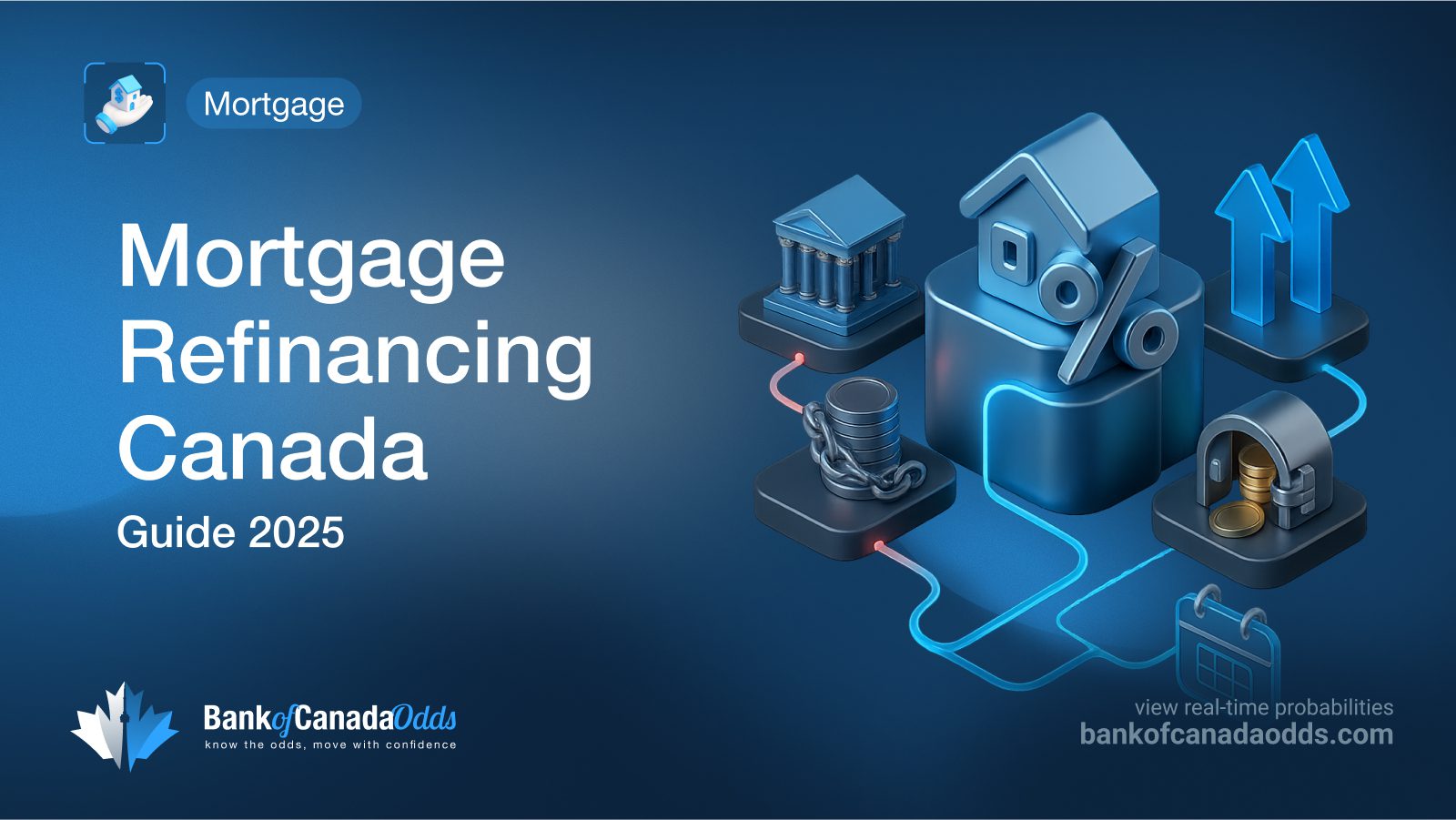
Mortgage refinancing in Canada is one of the most important financial decisions homeowners can make. Whether you’re aiming to lower your interest rate, consolidate debt, or tap into home equity, timing matters — especially in 2025, as the Bank of Canada (BoC) adjusts interest rates based on inflation and market conditions. This guide covers when, why, and how to refinance in Canada, plus how the BoC Rate Odds Tracker can help you make the smartest choice.
What is Mortgage Refinancing?
Mortgage refinancing means replacing your existing mortgage with a new one, typically with better terms or different features. Unlike a renewal — which happens at the end of your term — refinancing can happen any time, though breaking your mortgage early can result in fees.
Common Reasons for Refinancing
- Lower interest rate: Lock in a better rate than your current one.
- Switching terms: Change from variable to fixed, or adjust amortization.
- Consolidating debt: Fold high-interest debt into your mortgage.
- Accessing equity: Fund renovations, education, or investments.
Many Canadians refinance not just to save money but to gain flexibility and better align their mortgage with life goals.
How the Bank of Canada Affects Refinancing
The BoC’s overnight rate directly influences mortgage refinancing in Canada, particularly for variable-rate mortgages. Higher BoC rates mean higher borrowing costs; rate cuts lead to potential savings.
For the latest updates, check the BoC key interest rate page.
Rate Cycle Strategy
- During rate hikes: Lock in a fixed rate to shield against increases.
- During rate cuts: Waiting could lead to better refinance terms.
- Flat cycles: Refinance to restructure your debt or access equity.
With Canada’s household debt among the highest in the G7, even small rate changes can have long-term impacts.
Costs of Refinancing
Refinancing isn’t free. Key costs include:
- Prepayment penalties: Usually the greater of three months’ interest or the Interest Rate Differential (IRD). See CMHC’s penalty breakdown.
- Legal and appraisal fees: Typically $1,000–$2,000.
- Administrative charges: Lender or broker processing costs.
When Costs Are Worth It
- You’ll save more over time than you pay in penalties.
- Consolidating high-interest debt meaningfully reduces monthly expenses.
- You’ll invest the accessed equity in high-ROI areas like renos or education.
Use this mortgage refinance calculator to estimate savings vs costs.
Step-by-Step Refinance Checklist
- Check your mortgage terms: Look for penalties or conditions.
- Track BoC rate odds: Use the BoC Odds Tracker to monitor trends.
- Compare rates: Banks, brokers, and online lenders.
- Calculate break-even point: When do savings outweigh costs?
- Apply: Get credit checks, income docs, and property details ready.
- Finalize and switch: Sign, pay fees, and start fresh.
Pros and Cons of Mortgage Refinancing in Canada
Pros
- Lower interest rate possibilities.
- Change loan structure to match financial goals.
- Debt consolidation at better rates.
- Tap into equity for large expenses.
Cons
- Penalties for early breakage.
- Upfront legal and appraisal fees.
- Potential for higher total interest over longer amortizations.
- Risk of rates dropping after you refinance.
Refinance vs Renewal: What’s the Difference?
| Feature | Renewal | Refinance |
|---|---|---|
| When | At term end | Anytime (fees may apply) |
| Cost | Low or none | Higher (fees, penalties) |
| Flexibility | Limited | High (terms, equity) |
| Use Case | Maintain plan | Rework strategy |
Renewals are simpler. Refinances are more powerful — but come with more complexity.
Using BoC Odds to Time Refinancing
Visit BankofCanadaOdds.com to see live odds of BoC moves. You’ll gain:
- Smarter timing — avoid refinancing before rate cuts.
- Confidence — data-backed decisions reduce uncertainty.
- Better savings — lock in before hikes.
Risks to Watch For
- Forecasts can be wrong — don’t rely solely on projections.
- Frequent refinancing = repeated penalty costs.
- Debt consolidation only works if you stop overspending.
Refinance Case Study
A homeowner with a $400K variable mortgage at 5.5% refinanced into a 5.0% fixed just before a 0.75% BoC rate hike. They paid a $6,000 penalty but saved $15,000+ over 5 years — a net win from smart timing.
Q&A About Mortgage Refinancing in Canada
Q: Is refinancing the same as renewal?
A: No. Renewals happen at term-end. Refinancing can occur anytime, with more options and more costs.
Q: How much equity do I need?
A: Usually, you must keep 20% equity post-refinance.
Q: What if my credit isn’t great?
A: You can still refinance, but terms may be less favourable.
Q: Will refinancing hurt my credit?
A: Temporarily, due to credit checks. Long-term impact is small.
Q: How often can I refinance?
A: Technically anytime, but repeated refinancing eats into savings.
Conclusion
Mortgage refinancing in Canada lets you realign your mortgage to fit your evolving goals. In 2025, with rates fluctuating and inflation cooling, timing matters more than ever. Use the BoC Odds Tracker and plan smartly to make refinancing a powerful move — not a costly mistake.
📊 Track the odds: BoC Rate Forecast Dashboard
📬 Stay updated: Get weekly updates
🔍 Learn more: How BoC Odds Work