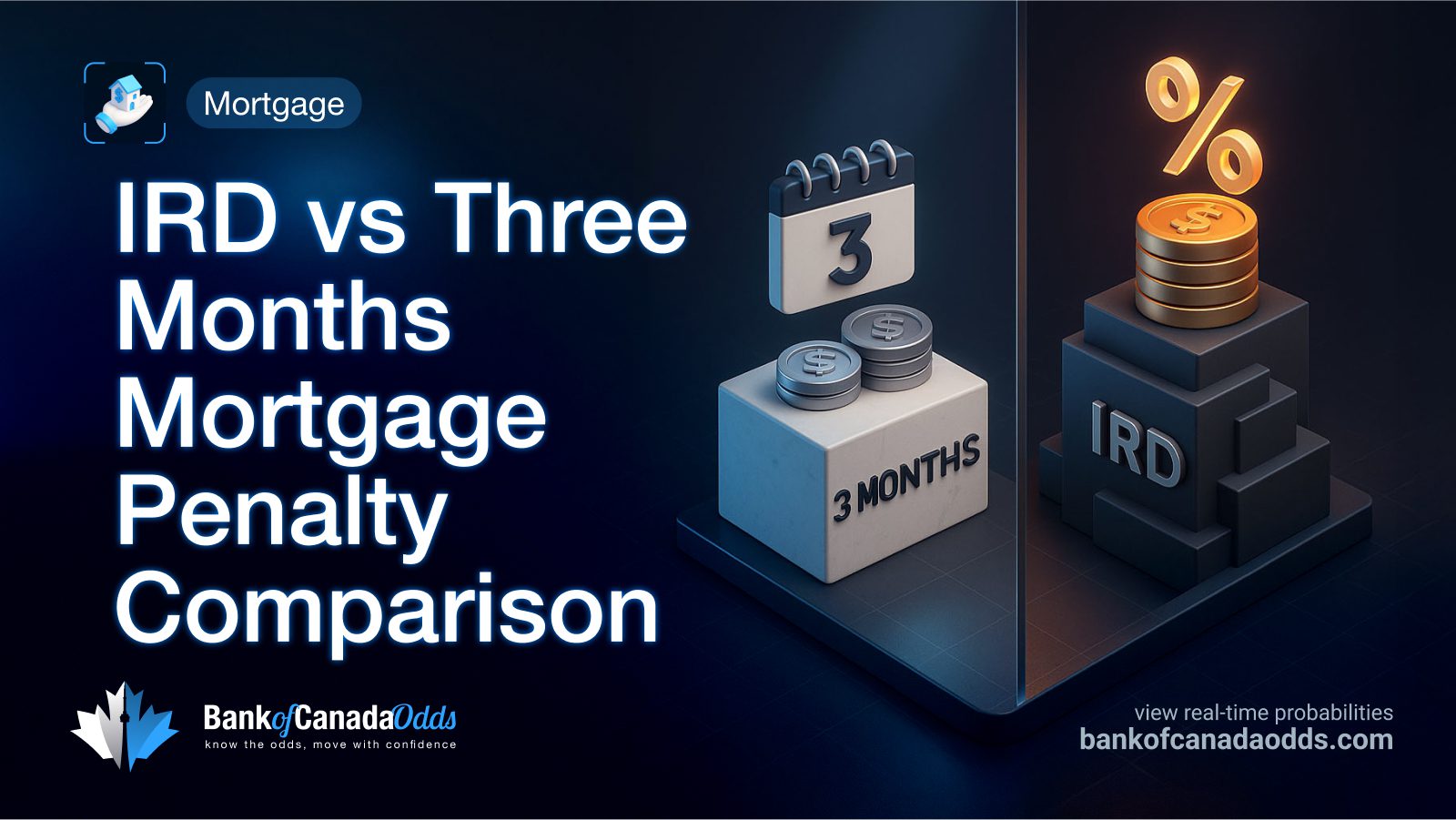
When you break a mortgage early in Canada, your lender will likely charge you a mortgage penalty. There are two main ways this is calculated: the mortgage penalty IRD (interest rate differential) or three months’ interest. The difference between these two methods can cost you thousands of dollars.
What Is a Mortgage Prepayment Penalty?
A prepayment penalty is a fee charged by your lender if you end your mortgage before the full term is over. This applies if you:
- Sell your home before your mortgage matures
- Refinance with your current or a new lender
- Switch lenders mid-term for a better deal
The fee compensates the lender for interest they expected but will no longer earn. Most borrowers underestimate the impact of mortgage penalty IRD.
Penalty Method 1: Three Months’ Interest
This is the simpler method. Your lender charges three months’ worth of interest on your remaining balance. It’s common for variable-rate mortgages.
Example: You owe $300,000 at 5% interest. Monthly interest = ~$1,250. Penalty = $3,750.
Penalty Method 2: Mortgage Penalty IRD
Mortgage penalty IRD is used mostly on fixed-rate mortgages. It’s calculated by comparing your mortgage rate to today’s rate for the remaining term. The difference is applied to your balance over the remaining time.
Example: $300,000 balance, 3 years left, contract rate 5%, current 3-year rate is 3%:
IRD = $300,000 × (0.05 − 0.03) × 3 = $18,000
When Do Lenders Use Each Method?
- Variable-rate mortgages: Almost always use three months’ interest.
- Fixed-rate mortgages: Use the greater of three months’ interest or the IRD.
Major banks like RBC and Scotiabank almost always apply the IRD on fixed rates. This can dramatically increase your penalty.
Why It Matters: IRD vs Three Months Interest
The calculation method changes your financial outcome. If rates have dropped since you locked in, IRD penalties will be higher. That’s why knowing how mortgage penalty IRD works is crucial.
- Refinancing? IRD can wipe out your savings.
- Selling? Your home equity may shrink due to penalties.
- Switching lenders? Big penalties can keep you locked in.
Real Examples
- Fixed mortgage: $400,000 at 4.5%, broken after 2 years. Today’s comparable rate is 2.5%. IRD penalty = ~$16,000.
- Variable mortgage: $400,000 at 5%. Penalty = ~$5,000 (three months’ interest).
That’s a difference of $11,000 based purely on your mortgage type and the lender’s penalty method.
Strategies to Lower or Avoid the Penalty
- Choose variable if you expect to break early
- Break close to your term’s end
- Use prepayment privileges: Make lump-sum payments beforehand
- Port your mortgage: Carry it to a new home without penalty
- Negotiate with your lender: Especially if staying with them
What Borrowers Should Watch For
- Posted vs discounted rates: Lenders often use higher posted rates to inflate the IRD penalty
- Fine print: Each lender calculates penalties differently
- Falling interest rates: These make IRD penalties much bigger
You can explore this more in-depth using Nesto’s mortgage penalty calculator.
Q&A: IRD and Mortgage Penalties
Why do banks prefer IRD? It better protects their expected revenue if interest rates drop.
Can I avoid a penalty? Not always, but you can reduce it with prepayments or timing.
Do credit unions use IRD? Some use more borrower-friendly methods — always ask.
Are fixed-rate penalties higher? Yes, especially if rates fall after you lock in.
Is variable always better? It depends on your risk tolerance and future plans.
Conclusion: Know Your Penalty Risk
Whether you’re buying, renewing, or refinancing, always ask your lender how they calculate penalties. The difference between mortgage penalty IRD and three months’ interest can reshape your financial future. Don’t just chase low rates. Choose a mortgage that fits your life — and your exit strategy.
See our Bank of Canada Dashboard | Mortgage FAQ | Rate Drivers