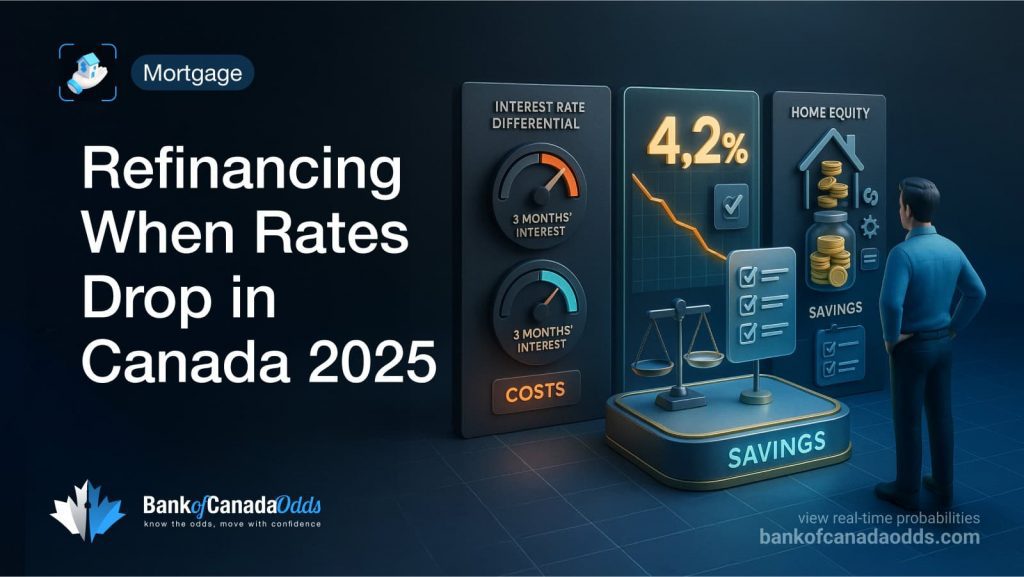
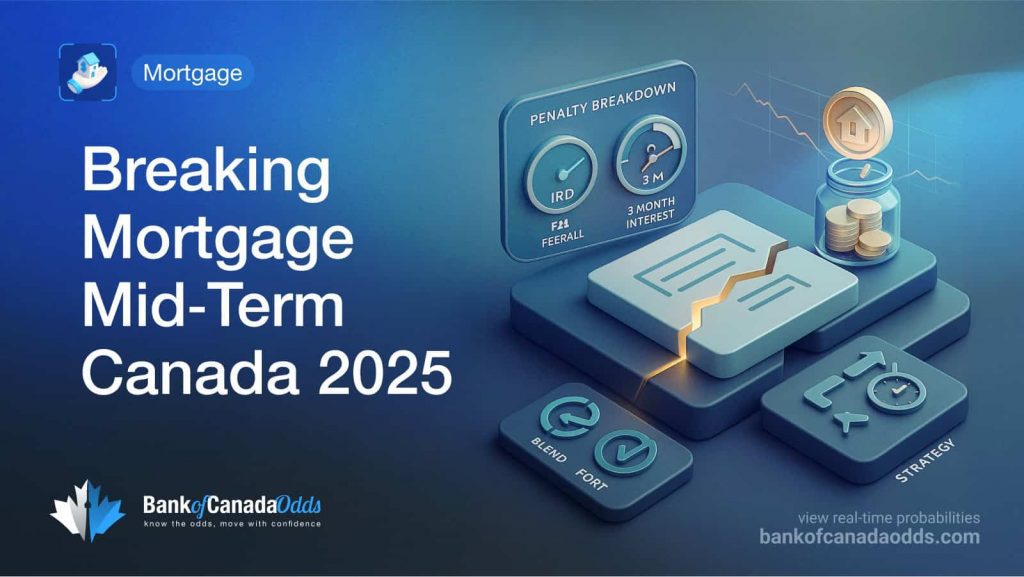
Our mortgage refinance guide explains one of the most important financial decisions Canadian homeowners can make. Whether you’re aiming to lower your interest rate, consolidate debt, or tap into home equity, the timing of your refinance can dramatically impact your long-term benefits. With the Bank of Canada (BoC) adjusting its key interest rate in response to inflation and economic growth, refinancing decisions are increasingly tied to BoC policy cycles. This guide explores the when, why, and how of refinancing your mortgage — and how BoC rate odds can help you make a smarter choice.
What is Mortgage Refinancing? (Mortgage Refinance Guide)
Mortgage refinancing means replacing your existing mortgage with a new one, typically with different terms. Unlike renewal, which happens at the end of your term, refinancing can happen at any time — though it often comes with penalties if you break your current mortgage early.
Reasons to Refinance – Mortgage Refinance Guide
- Lowering interest rates – lock in a better rate than your current mortgage.
- Changing terms – switch from variable to fixed, or adjust the amortization period.
- Consolidating debt – combine higher-interest debts like credit cards or personal loans into your mortgage.
- Tapping equity – access funds for renovations, investments, education, or emergencies.
Refinancing isn’t just about chasing a lower rate. For many Canadians, it’s about gaining flexibility, reducing overall financial stress, and aligning debt with broader life goals.
The Role of the Bank of Canada in Mortgage Refinancing
The BoC’s overnight rate directly impacts mortgage rates, especially variable ones. When the BoC raises rates, borrowing costs rise. When it cuts rates, mortgages often become cheaper. By tracking BoC rate odds, you can anticipate whether refinancing now or waiting might save you more in the long run. Use our BoC Odds Dashboard to see real-time market expectations or visit CMHC mortgage refinancing for government resources.
Why BoC Rate Cycles Matter for Mortgage Refinance Decisions
- During rate hikes – refinancing into a fixed rate can protect you from rising payments.
- During rate cuts – waiting could unlock cheaper options if you expect rates to fall further.
- Stable cycles – refinancing may be about other goals, like debt consolidation or accessing equity.
Historically, Canadian households with variable mortgages have been more exposed to BoC decisions. With household debt levels among the highest in the G7, every quarter-point change can affect thousands of dollars over a mortgage’s lifetime.
Costs of Refinancing – Mortgage Refinance Guide
Refinancing isn’t free. Key costs include:
- Prepayment penalties – breaking your mortgage can trigger fees (the higher of three months’ interest or the Interest Rate Differential).
- Legal and appraisal fees – typically $1,000–$2,000 combined.
- Administrative costs – lender or broker processing charges.
When Costs Are Worth It
- If the new rate saves you more over time than the penalty costs.
- If consolidating debt reduces your monthly obligations significantly.
- If accessing equity allows high-ROI investments (home renovations, education, or even starting a business).
Think of refinancing as a long-term play. Even a small rate drop, like 0.5%, can save thousands over the life of a mortgage if you plan to stay in your home for years.
Step-by-Step Mortgage Refinance Checklist
- Check your mortgage terms – understand penalties and restrictions before making any move.
- Track BoC rate odds – use our BoC Rate Odds Tracker to time your refinance decision.
- Shop around – compare rates from banks, credit unions, and mortgage brokers.
- Calculate break-even point – determine how long before your interest savings outweigh the penalties and fees.
- Submit application – prepare proof of income, credit check, and property documents.
- Close and switch – pay fees, sign new contracts, and begin your new mortgage.
Pros and Cons of Refinancing
Pros
- Potentially lower interest rate.
- Flexibility to change terms or amortization.
- Debt consolidation at a lower borrowing cost.
- Access to home equity for major expenses or investments.
Cons
- Prepayment penalties can be expensive.
- Legal and appraisal costs add up quickly.
- Resetting your amortization may increase total lifetime interest.
- Timing risk: if rates fall further after you refinance, you might miss out on better deals.
Comparing Refinancing vs Renewal
| Feature | Renewal | Refinance |
| Timing | At term end | Anytime (penalties may apply) |
| Costs | Low to none | High (penalties + fees) |
| Flexibility | Limited | High (change terms, access equity) |
| Best For | Staying on course | Changing strategy or unlocking funds |
A renewal is essentially “business as usual,” while refinancing allows you to reconfigure your financial approach. Both are useful, but refinancing carries more opportunity — and more risk.
How BoC Odds Give You an Edge in Mortgage Refinancing
At BankofCanadaOdds.com, we track real-time probabilities of BoC rate changes. This gives homeowners a clearer picture of where rates are headed; information you won’t find in generic renewal guides. By pairing refinance decisions with BoC odds, you gain:
- Better timing – avoid refinancing just before a rate cut.
- Smarter choices – lock in before rate hikes.
- Peace of mind – data-driven insights, not guesswork.
Case Study: Refinancing During a Rate Hike Cycle
Consider a household with a $400,000 mortgage at a 5-year variable rate of 5.5%. They refinance into a 5-year fixed at 5.0% just before the BoC raises rates by 0.75%. Without refinancing, their payments would have risen by several hundred dollars per month. The upfront penalty of $6,000 is offset by more than $15,000 in savings over the term. Timing, in this case, turned refinancing into a winning move.
Conclusion
Refinancing your mortgage using this mortgage refinance guide is more than just chasing a lower rate — it’s about aligning your debt strategy with your financial goals and the broader interest rate cycle. By watching BoC rate odds, Canadian homeowners can time their refinance decisions for maximum impact. Whether you’re consolidating debt, accessing equity, or protecting against future hikes, a refinance can be a powerful tool — if done at the right moment. Learn more at BankofCanadaOdds.com Mortgage Guides.
Disclaimer: The information provided is for general informational purposes only and does not constitute financial, legal, or professional advice. Always consult a qualified mortgage professional before making a financial commitment.