Life doesn’t always follow your mortgage schedule. Whether it’s a new job, a growing family, or shifting financial goals, sometimes you must break your mortgage early. While it can unlock flexibility or savings, breaking your mortgage mid‑term in Canada can also trigger steep penalties. Here’s what it means, what it costs, and how to decide if it’s financially worth it.
What Does Breaking a Mortgage Mean?
Breaking a mortgage means ending your current term before it expires. You repay the balance early—often to refinance, sell your home, or switch lenders for a better deal. Because the lender loses expected interest income, they charge a prepayment penalty to recover part of that loss.
Common Reasons for Breaking a Mortgage
- Moving or selling: Relocating or upgrading to a new property.
- Refinancing: Seeking lower rates or tapping into home equity.
- Debt consolidation: Combining higher‑interest debts into a lower‑rate mortgage.
- Relationship changes: Divorce, separation, or co‑ownership changes requiring payout.
How Mortgage Penalties Are Calculated
Penalty amounts depend on your mortgage type and lender policy. Understanding how these work helps you plan smarter.
Fixed‑Rate Mortgages
You’ll pay the greater of:
- Three months’ interest, or
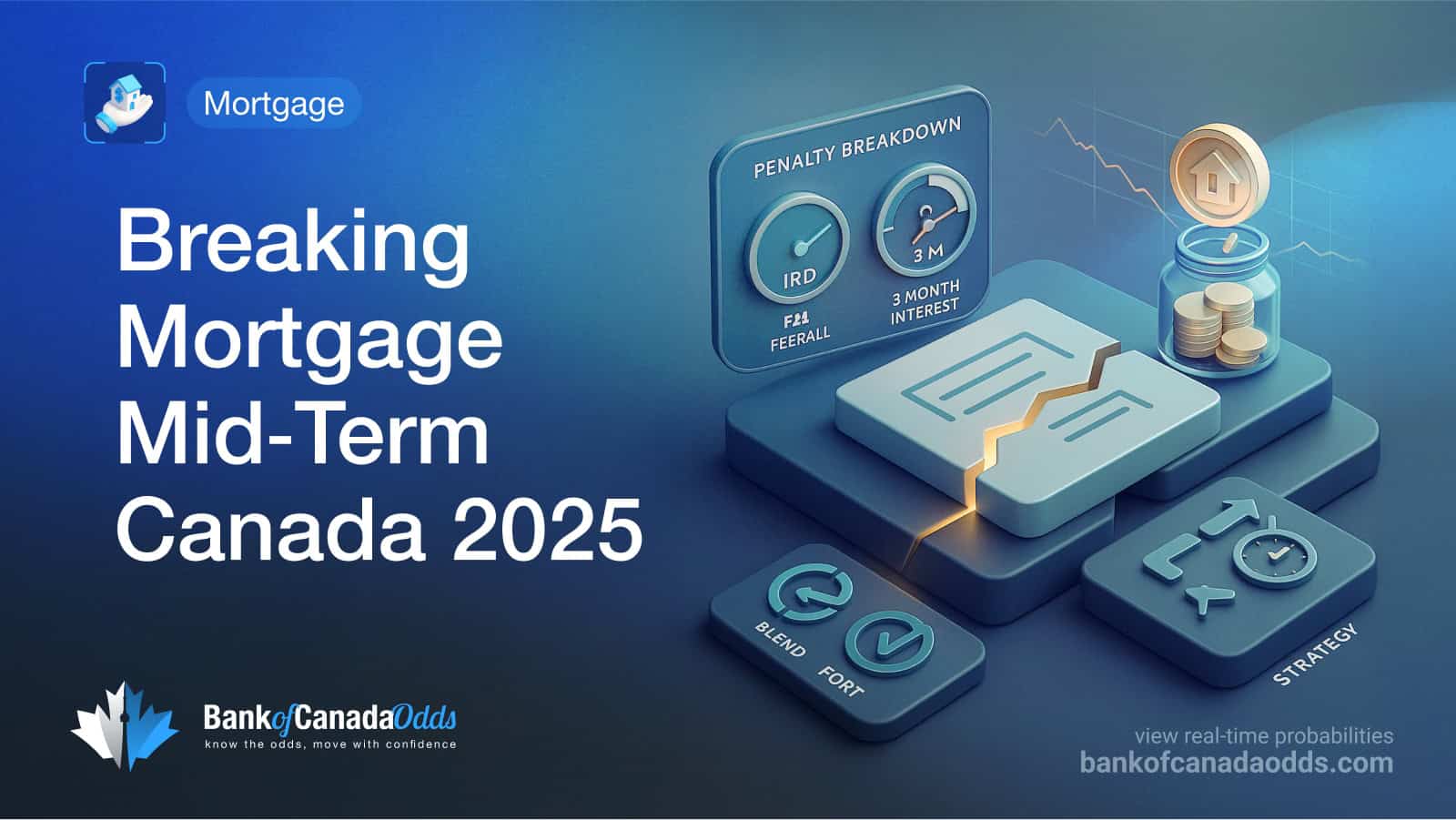
- The Interest Rate Differential (IRD) — the difference between your contract rate and the lender’s current rate for a similar term.
Example: You owe $350,000 at 5.2%, your lender’s 2‑year rate is 4.0%, and two years remain. The IRD penalty could be about $8,400 versus $4,500 for three months’ interest — meaning your cost is $8,400.
Learn more about IRD calculations from CMHC’s mortgage guide.
Variable‑Rate Mortgages
Penalties are simpler — usually three months’ interest on the remaining balance.
Other Fees to Expect
- Administration fee: $150–$300
- Discharge fee: $200–$400
- Reinvestment fee: If switching to another product with the same lender
Always request a written payout quote from your lender before making a move.
When Breaking Might Make Financial Sense
1. Mortgage Rates Have Dropped
If today’s rates are much lower than your current one, refinancing — even after penalties — can yield long‑term savings. Use WOWA’s refinance calculator to estimate your break‑even point.
2. You Want to Access Equity
Breaking to refinance and access home equity for renovations or debt consolidation may reduce your overall borrowing costs.
3. You’re Selling or Relocating
If you aren’t porting your mortgage to a new property, breaking early is necessary to complete the sale.
4. Major Life Changes
Events like relocation, job loss, or family restructuring can make early payoff unavoidable.
How to Reduce or Avoid Mortgage Penalties
- Port your mortgage: Transfer your existing rate and term to a new home.
- Blend and extend: Ask your lender to merge your current and new rate, avoiding a full break fee.
- Time your break: Penalties shrink as your term nears renewal — waiting a few months can save thousands.
- Negotiate: Some lenders may reduce penalties if you sign a new term with them.
- Use prepayment privileges: Apply lump‑sum payments (10–20%) before breaking to reduce your balance.
Understanding the Stress Test
If you refinance with a new lender, you must requalify under Canada’s mortgage stress test — showing you can afford payments at the higher of your contract rate +2% or 5.25%. Staying with your current lender avoids requalification.
Market Context (Late 2025)
As of late 2025, five‑year fixed mortgage rates in Canada range between 4.0% and 5.0%, and variable rates sit near 4.4%–5.1%. The Bank of Canada’s September 2025 0.25% rate cut has prompted many borrowers to reassess mid‑term refinance options. Always compare penalties against potential interest savings before acting.
Quick Q&A
Q: How do I know if breaking is worth it?
Compare your total penalty cost to potential interest savings. If savings exceed the fee, breaking may be worthwhile.
Q: How can I estimate my penalty?
Use your lender’s online calculator or request a written payout statement.
Q: Can I switch lenders without a penalty?
Only at renewal. Mid‑term switches count as breaking and trigger penalties.
Q: Does breaking affect my credit?
No — it’s a neutral transaction, though a refinance will trigger a credit check.
Q: Can I claim the penalty on taxes?
Only if the property is an investment or rental. For personal residences, it’s not deductible.
Conclusion
Breaking your mortgage mid‑term in Canada can open new financial opportunities, but it must be calculated carefully. Always get a payout quote, compare costs versus savings, and explore alternatives like portability or blending before committing.
With rates stabilizing and lenders eager for new business, a well‑timed move could unlock better terms or flexibility. Stay informed using our BoC Rate Dashboard, learn how refinancing works, or subscribe for weekly rate insights and penalty calculators at your fingertips.