Canada inflation May 2026 came in hotter than the previous month, with the Consumer Price Index rising 3.2% from a year earlier as gasoline drove the headline increase and everyday costs like groceries, rent and insurance kept pressure on household budgets.
Statistics Canada said the annual inflation rate rose from 2.8% in April to 3.2% in May, with gasoline accounting for much of the acceleration. But the pressure did not stop at the pump. Inflation excluding gasoline also moved higher, from 2.0% in April to 2.2% in May, suggesting price growth was still visible across several key parts of the consumer basket.
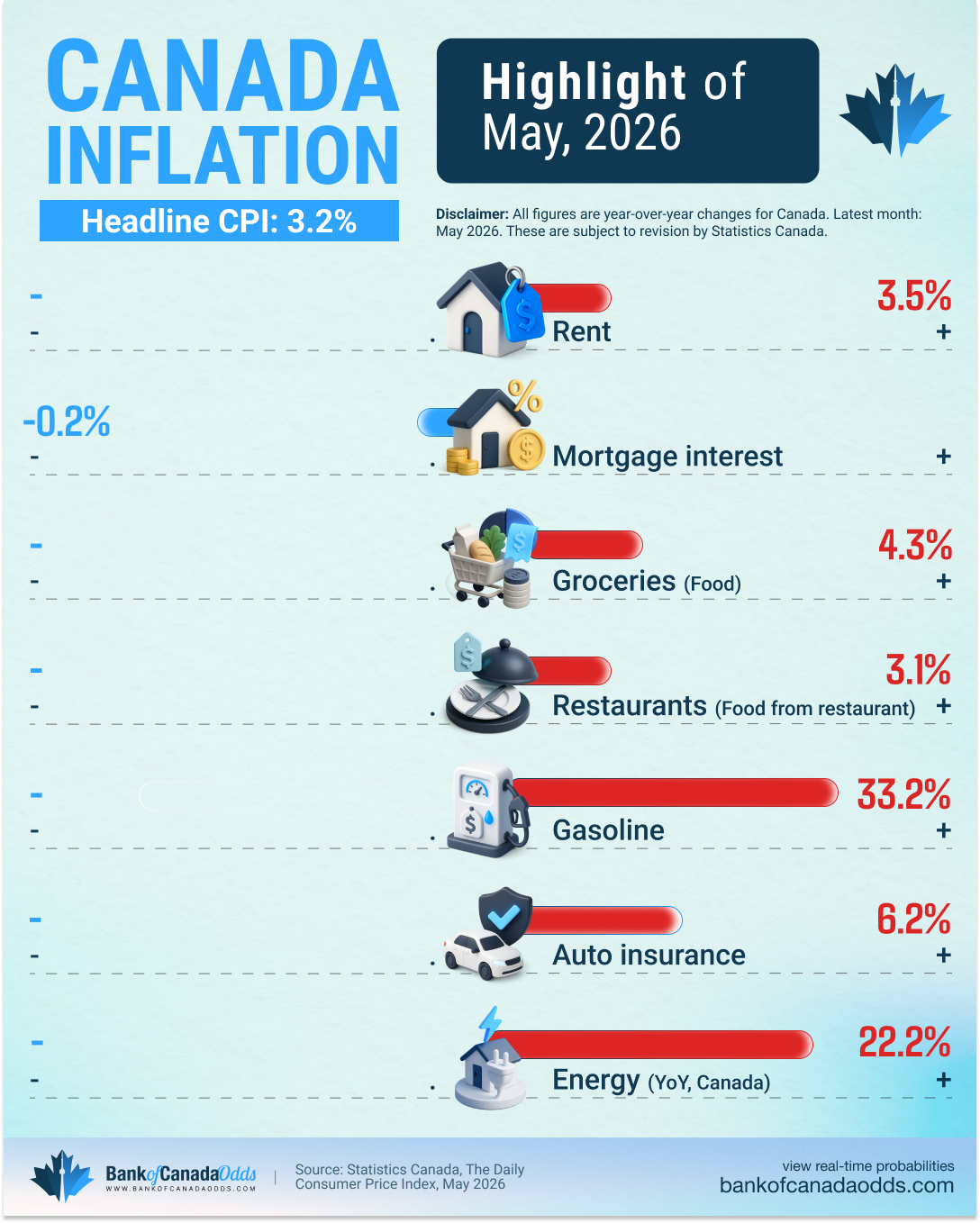
Gasoline drove the biggest shock
The standout number in the report was gasoline, which surged 33.2% from a year earlier. The infographic also shows energy up 22.2%, reinforcing how fuel remained the clearest inflation hotspot in May.
That matters because sharp fuel increases can quickly show up in everyday life. They raise commuting costs, add pressure to transport expenses and weigh on consumer confidence.
Groceries and rent stayed in focus
Food inflation also remained firm. Groceries rose 4.3%, keeping pressure on everyday spending and continuing to outpace the headline inflation rate. For many households, food prices remain one of the most visible parts of the cost-of-living story.
Housing costs were mixed. The infographic shows rent up 3.5%, while mortgage interest dipped 0.2%, offering only slight relief. Other regular expenses also moved higher, including restaurant prices up 3.1% and auto insurance up 6.2%.
Broader inflation pressure remained
The official release also showed that transportation prices rose 9.0%, food purchased from stores increased 4.3%, and shelter rose 1.7% year over year. Excluding gasoline, the CPI climbed 2.2% in May, up from 2.0% in April. That suggests inflation pressure did not come from one volatile category alone.
What it means
Gasoline delivered the biggest shock, while groceries, rent, energy and insurance kept the pressure visible in daily budgets. For households, inflation remains more than an economic statistic. It is still a daily budget story.