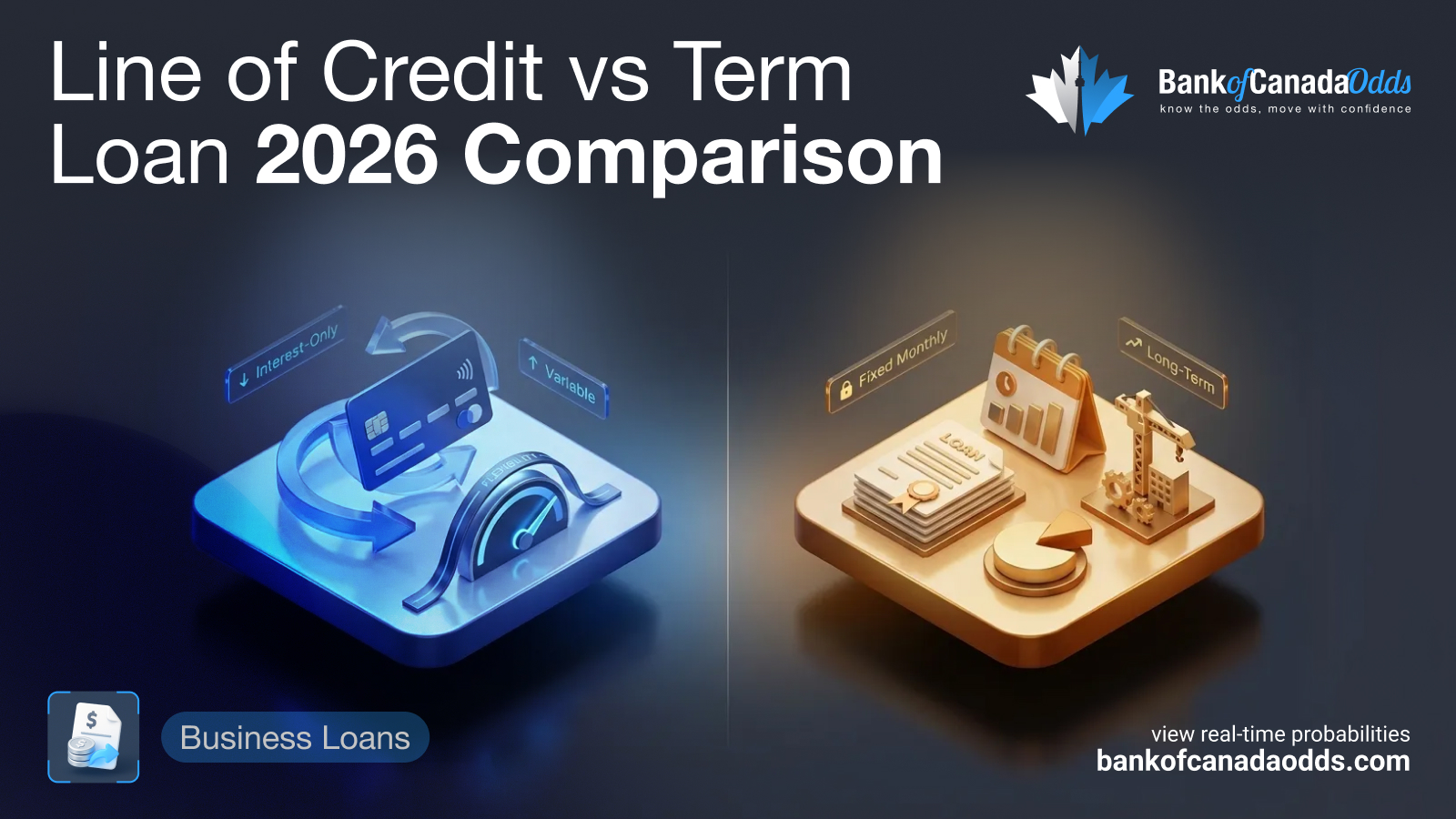
Both the Line of Credit vs Term Loan are popular funding options for small businesses. They help manage cash flow, fund growth, or cover operating needs. However, they serve two very different purposes. Furthermore, they have different cost structures and fit different business environments.
This article outlines the main differences between the Line of Credit and the Term Loan. This comparison will assist business owners in selecting the correct financing option for their needs in 2026.
Key Take-Aways
- Lines of Credit are ideal for short-term, repetitive cash-flow requirements. Conversely, Term Loans are suitable for long-term, one-time investment requirements.
- Lines of Credit charge interest only on the amount borrowed. In contrast, Term Loans charge interest on the entire loan amount, usually with a fixed schedule.
- Lines of Credit have variable rates based on Prime. However, Term Loans can have fixed rates or variable rates.
- Term Loans provide predictable repayment schedules. On the other hand, Lines of Credit provide greater flexibility but less certainty.
- Credit history, revenue stability, and collateral all impact the borrower’s qualifications.
What is a Line of Credit?
A Line of Credit (LOC) is a revolving credit facility. A business can draw upon the funds as needed. Essentially, a LOC operates similarly to a credit card. However, it typically offers lower interest rates and larger limits.
Key Features
- Revolving credit: You can borrow, repay, and borrow again.
- Interest-only payments: You pay interest only on the amount used.
- Variable interest rates: These are usually Prime + margin.
- Flexible use: It is good for inventory, payroll, emergencies, and seasonal shortages.
When to Use a Line of Credit
- To manage fluctuations in cash flow.
- To fund working capital needs.
- To handle emergencies or low-revenue periods.
- To support seasonal business operations.
What is a Term Loan?
A Term Loan is a single sum of money loaned to a business. You must repay this amount over a predetermined period, which is typically 1 to 10 years.
Key Features
- Single loan amount: The lender provides funds upfront.
- Scheduled payments: You pay monthly principal + interest.
- Fixed or variable rates: Predictable options are available.
- Extended repayment: This is ideal for long-term assets.
When to Use a Term Loan
- To purchase equipment or vehicles.
- To renovate or improve premises.
- To make long-term investments.
- To consolidate debt.
Comparing a Line of Credit to a Term Loan
Purpose of Use
- LOC: Best for short-term, repeat use.
- Term Loan: Best for long-term, one-time financing.
Interest Costs
- LOC: You pay interest only on borrowed funds. Rates are variable.
- Term Loan: You pay interest on the full amount. Rates can be fixed or variable.
Repayment Schedule
- LOC: Payments are flexible and often interest-only.
- Term Loan: Payments are fixed and monthly.
Cost Predictability
- LOC: Predictability is low due to Prime-based rates. Check the Bank of Canada dashboard to see how Prime might move in 2026.
- Term Loan: Predictability is high, especially with fixed rates.
Impact on Cash Flow
- LOC: This is flexible for short-term needs.
- Term Loan: This is better for long-term budgeting.
Pros and Cons
Line of Credit – Pros
- You have flexible access to funds.
- You pay interest only on the borrowed amount.
- It is ideal for cash-flow fluctuations.
- You can reuse the funds.
Line of Credit – Cons
- Rates fluctuate with Prime.
- It is easy to overuse if you are not disciplined.
- Lenders often review the loan annually.
Term Loan – Pros
- You have fixed monthly payments.
- It is suitable for long-term assets.
- You get longer repayment terms.
- It often has a lower total cost than a LOC.
Term Loan – Cons
- It is less flexible.
- You pay interest on the entire loan amount.
- It requires stronger documentation.
Which Option Should You Select?
Choose a Line of Credit if your business needs:
- Frequent short-term funding.
- Flexibility for cash-flow changes.
- Emergency capital.
Choose a Term Loan if your business needs:
- Capital for a large purchase.
- Predictable monthly payments.
- A long-term repayment structure.
Many businesses use both. For more details on government-backed options for these loans, you can review the Canada Small Business Financing Program.
Considerations in 2026
The interest rate environment in 2026 is distinct from previous years. After the volatility seen in 2024 and 2025, rates have stabilized significantly. Consequently, banks tend to prefer Term Loans due to predictable repayment. This benefits businesses looking to lock in costs. On the other hand, fintech lenders often prefer Lines of Credit or hybrid working-capital loans for those needing speed.
Your industry, revenue model, and credit profile may determine which loan type lenders are most willing to provide. If you want updates on rate announcements that affect these loans, subscribe to our newsletter.
Examples
Example 1: Seasonal Retail Store
- The store purchases inventory before busy periods.
- It covers payroll during slow months.
- This avoids long-term debt for short-term needs.
Example 2: Expansion-Based Construction Company
- The company uses a Term Loan to purchase long-term equipment.
- Payments are spread across several years.
- Fixed rates improve budgeting.
Example 3: Consulting Agency with Irregular Billing
- The agency uses a LOC for operating cash flow.
- It uses a Term Loan for office expansion.
Comparison Chart – Line of Credit vs Term Loan
| Feature | Line of Credit | Term Loan |
| Best For | Short-term needs | Long-term investments |
| Interest Rate Type | Variable (Prime + margin) | Fixed or Variable |
| Payment Structure | Interest-only | Fixed monthly payments |
| Use | Flexible | Moderate |
| Cost Predictability | Low | High |
| Typical Uses | Inventory, payroll, shortages | Equipment, renovations, expansion |
Frequently Asked Questions (FAQ)
Which is more economical long-term?
Generally, Term Loans are more economical due to fixed rates and structured repayment.
Can I roll a LOC into a Term Loan?
Yes, some lenders allow it. Contact us if you need help finding a lender.
Do both require collateral?
Not always. Banks often require collateral for Term Loans. However, many LOCs are unsecured. You can learn more about secured options at the Business Development Bank of Canada (BDC).
Is one easier to qualify for?
LOCs may be easier for strong-revenue businesses. Meanwhile, Term Loans usually require more documentation.
Conclusion
Both Lines of Credit and Term Loans are effective financing tools that serve different business needs. In the stable rate environment of 2026, your choice depends on whether flexibility (LOC) or predictability (Term Loan) is more important. Understanding the characteristics of each option will help business owners secure the right financing and support stable cash flow.
For more answers on business financing, visit our FAQ section.