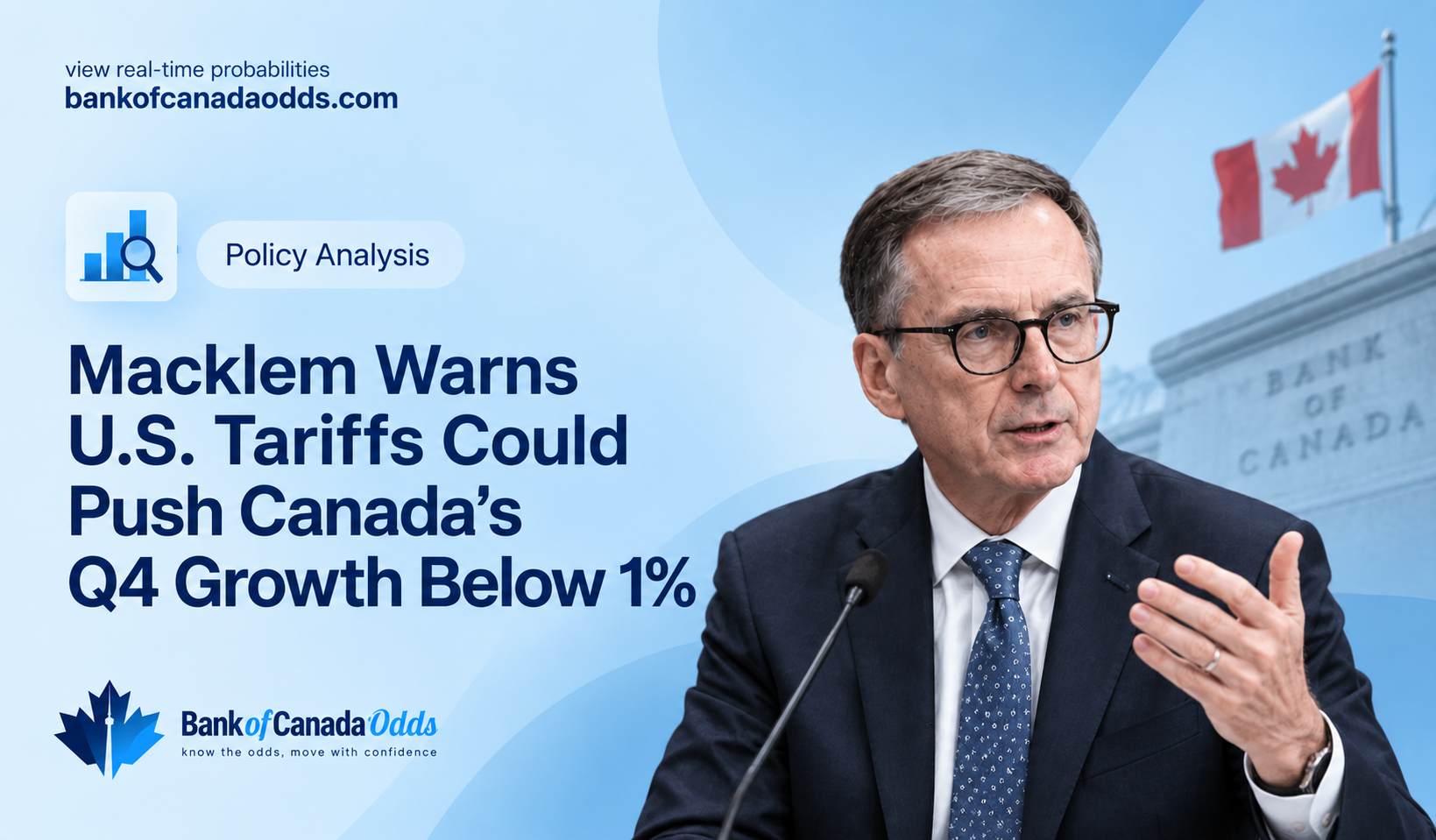
Bank of Canada Governor Tiff Macklem warned that artificial intelligence (AI) may create economic winners and losers, emphasizing the importance of supporting workers affected by technological change.
Speaking on Friday, October 16, at the International Monetary Fund (IMF) Annual Meetings in Bangkok, Thailand, Macklem discussed the opportunities and risks of AI during a panel titled AI and the Global Economy: From Risk to Opportunity.
The discussion brought together policymakers and business leaders to examine AI’s impact on productivity, employment and economic growth.
Macklem Compares AI Disruption to Globalization
Macklem compared the potential economic impact of AI with globalization, which generated substantial wealth and lifted millions out of poverty while disrupting employment in manufacturing industries.
He acknowledged that technological progress can benefit the broader economy, even when those gains are not shared equally.
“There will be winners and losers,” Macklem said, according to the Associated Press.
He emphasized the importance of supporting people whose livelihoods are disrupted as technology reshapes the labour market.
“You have to find a way to help the losers,” Macklem said.
He also warned that without systems to help affected workers manage economic losses, technological change may generate public backlash.
His remarks highlighted the challenge of pursuing productivity improvements while ensuring workers are not left behind.
IMF Calls for Stronger AI Safeguards
During the same discussion, IMF Managing Director Kristalina Georgieva warned that AI’s risks may outweigh its opportunities without adequate safeguards and an ethical framework.
Georgieva compared rapid AI development to a Formula One car racing without sufficient safety protections, stressing the importance of effective oversight.
She supported a combination of industry self-regulation and government involvement to address emerging risks.
The discussion also explored AI’s potential impact on employment, financial stability and economic growth.
A New Challenge for Canadian Monetary Policy
Macklem’s October 16 remarks did not provide direct guidance on the Bank of Canada’s upcoming October 28 interest-rate decision.
However, AI’s broader economic impact may become increasingly relevant to monetary policy over the longer term.
Higher productivity may help businesses reduce costs and ease inflationary pressure, while job displacement may affect household incomes, consumer spending and economic growth.
For now, the Bank’s near-term monetary policy decisions remain focused on inflation, employment and broader economic conditions.
Macklem’s remarks underscored the importance of managing the economic transition as AI adoption accelerates.