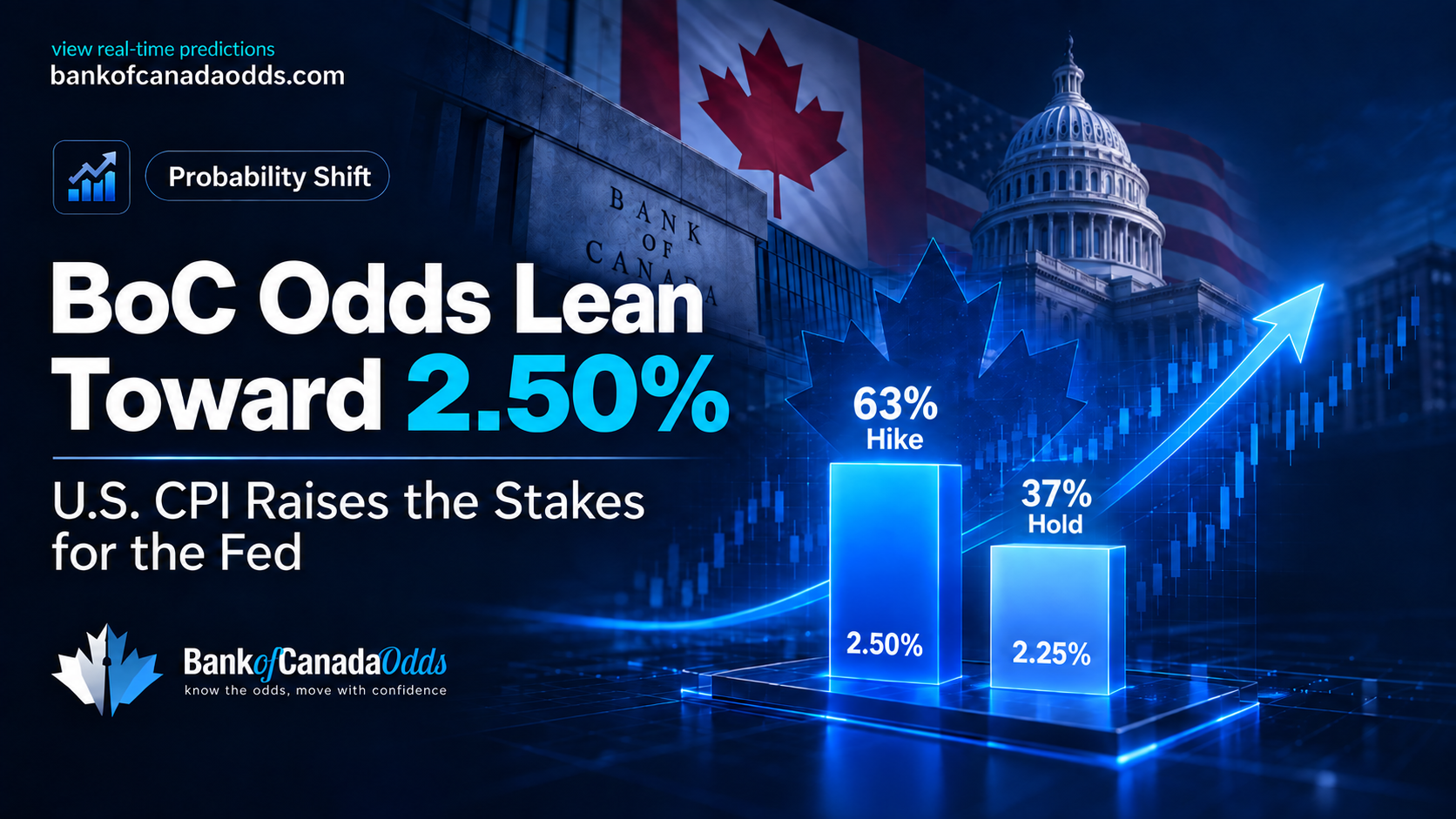
New U.S. tariffs are adding fresh pressure to Canada’s economy just weeks before the Bank of Canada’s next interest-rate decision.
Governor Tiff Macklem said that if the latest tariffs remain in place, fourth-quarter growth could be roughly halved to below 1%. The affected products account for about 5% of Canada’s goods exports to the United States.
At the same time, higher energy prices are keeping inflation elevated, leaving the Bank to balance weaker growth against persistent price pressures.
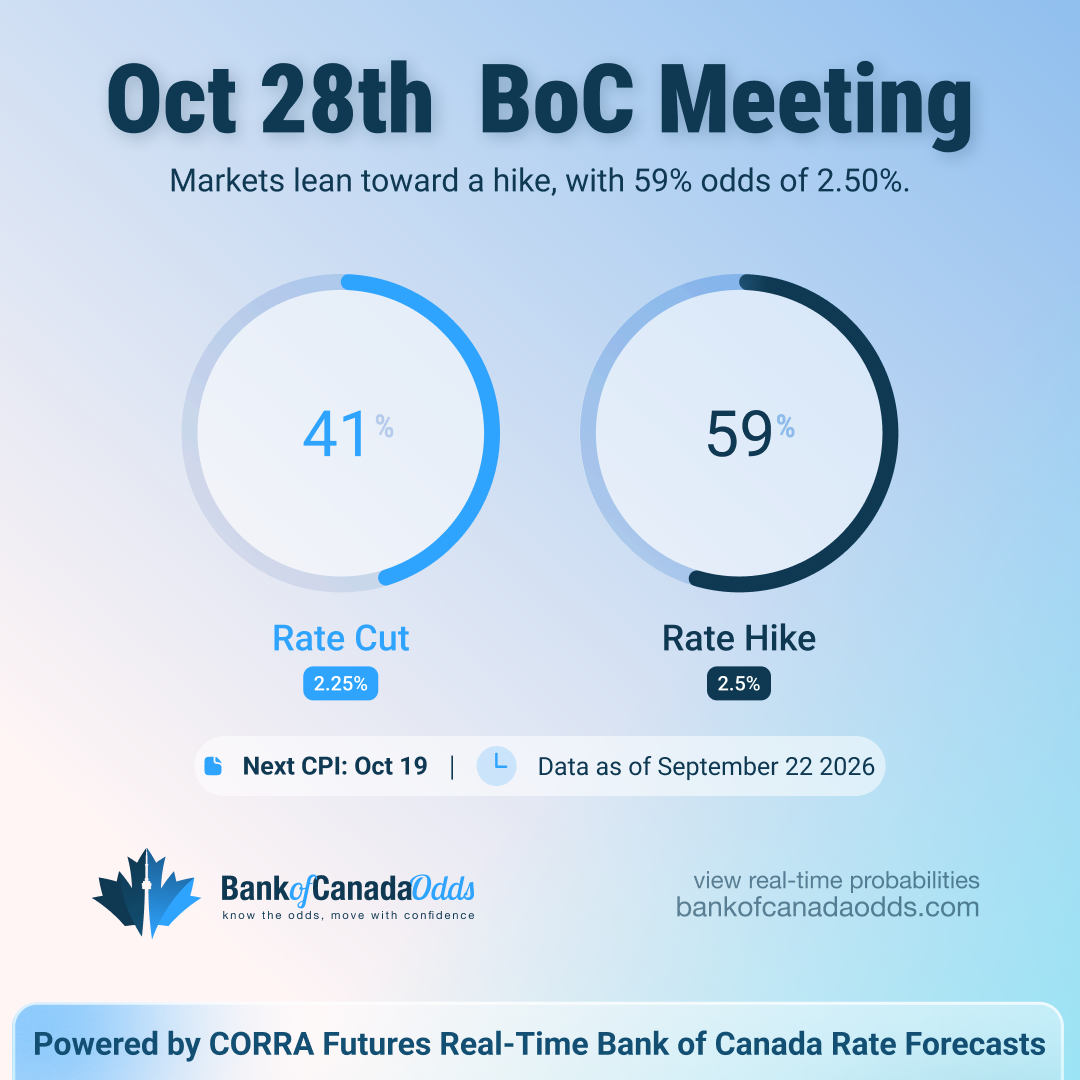
As of September 22, CORRA futures pricing tracked by BankofCanadaOdds shows a 59% probability of a 25-basis-point increase to 2.50% at the October 28 meeting, compared with a 41% probability of another hold at 2.25%.
Tariffs Put Canada’s Growth Outlook Under Pressure
Macklem said the Bank does not expect the new tariffs to create a large direct hit to the overall economy, but the uncertainty surrounding U.S. trade policy remains a bigger concern.
Businesses have already spent much of the past year adjusting to higher tariffs. Another escalation could prompt companies to delay investment and hiring, slowing the progress seen earlier this year.
Canada entered the summer on stronger footing, with growth resuming and investment picking up. But if the latest tariffs remain in place, the Bank estimates that Q4 growth could fall below 1%.
Energy Prices Keep Inflation Elevated
While tariffs threaten growth, energy prices are pushing inflation in the opposite direction.
Macklem said that under normal conditions, every 10% increase in oil prices adds about 0.2 percentage points to CPI inflation. Damage to global refining capacity and disrupted shipping routes have also lifted gasoline and diesel prices more than crude oil prices alone would normally suggest.
Higher fuel prices have kept CPI inflation around 3% in recent months. Macklem also said that if oil prices remain near US$100 per barrel, inflation would likely edge higher in the coming months.
So far, however, the Bank has seen limited evidence that higher energy costs are spreading broadly into other goods and services. That gives policymakers some room to look through the direct impact of the energy shock for now.
October Still Looks Wide Open
The Bank of Canada held its policy rate at 2.25% on September 2, while noting that upside inflation risks had increased and new tariffs had made the growth outlook more uncertain.
The Bank will announce its next rate decision on October 28 and publish its latest Monetary Policy Report the same day.
For now, markets are only modestly leaning toward another increase. BankofCanadaOdds’ CORRA pricing shows a 59% chance of a move to 2.50%, against a 41% chance of another hold.
The economic signals are pulling in opposite directions. Tariffs are threatening growth and investment, while energy prices continue to keep inflation pressure alive.
With several weeks of data still to come before October 28, that balance could shift quickly. For now, the meeting remains very much in play.