Canada’s labour market weakened sharply in September, losing 68,000 jobs as the unemployment rate edged up to 6.5%, according to Statistics Canada data released Friday.
The latest Canada jobs September 2026 report marked the second consecutive monthly employment decline, following a loss of 42,000 positions in August.
The figures highlight growing labour-market weakness ahead of the Bank of Canada’s October 28 interest-rate decision.
Canada Jobs September 2026: Employment Falls Again
Employment declined by 0.3% in September, pushing the national employment rate down to 60.6%, from 60.8% in August.
The unemployment rate rose from 6.4% to 6.5%, while labour-force participation slipped to 64.8%, its lowest level since December 1997, excluding the pandemic period.
Key figures from September’s report:
| Labour Market Indicator | September 2026 |
|---|---|
| Employment change | -68,000 (-0.3%) |
| Unemployment rate | 6.5% |
| Employment rate | 60.6% |
| Labour-force participation | 64.8% |
| Full-time employment | -35,000 |
| Part-time employment | -33,000 |
| Average hourly wage growth | +2.3% YoY |
Despite weaker employment, average hourly wages rose 2.3% year over year to $37.64, compared with 2.0% growth in August.
Public-Sector Weakness Drives Job Losses
September’s employment decline was concentrated in the public sector, with substantial losses in education and healthcare.
The largest industry declines included:
- Educational services: -35,000 jobs
- Health care and social assistance: -23,000 jobs
- Manufacturing: -13,000 jobs
Public-sector employment fell by 70,000, marking its fourth consecutive monthly decline.
Young Canadians were also hit hard, with employment among those aged 15 to 24 falling by 48,000.
Regionally, Quebec lost 49,000 jobs and British Columbia shed 20,000, while Alberta added 23,000 positions.
Jobs Raise Questions, CPI May Bring Answers
September’s sharp job losses add pressure on the Bank of Canada as it weighs a weakening labour market against persistent inflation risks.
Ahead of Friday’s report, BankOfCanadaOdds.com showed a 61% probability of rates holding at 2.25%, compared with a 39% chance of a hike to 2.50%.
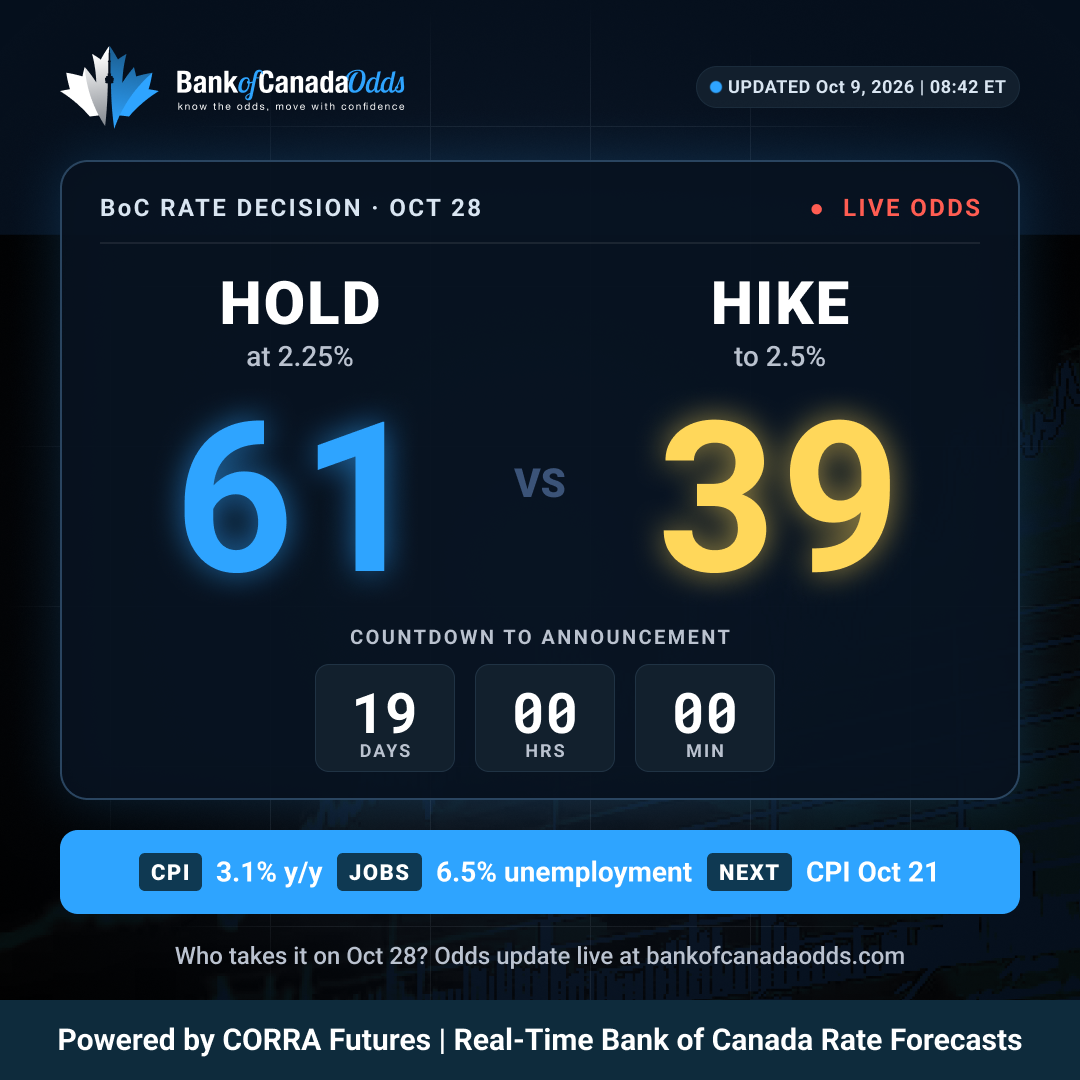
While weaker employment could strengthen the case for a rate hold, August inflation stood at 3.0%, above the Bank’s 2% target.
Attention now turns to Canada’s September CPI report on October 19, followed by the Bank of Canada’s rate decision on October 28.
Will weaker jobs data outweigh inflation concerns in the BoC’s next decision?