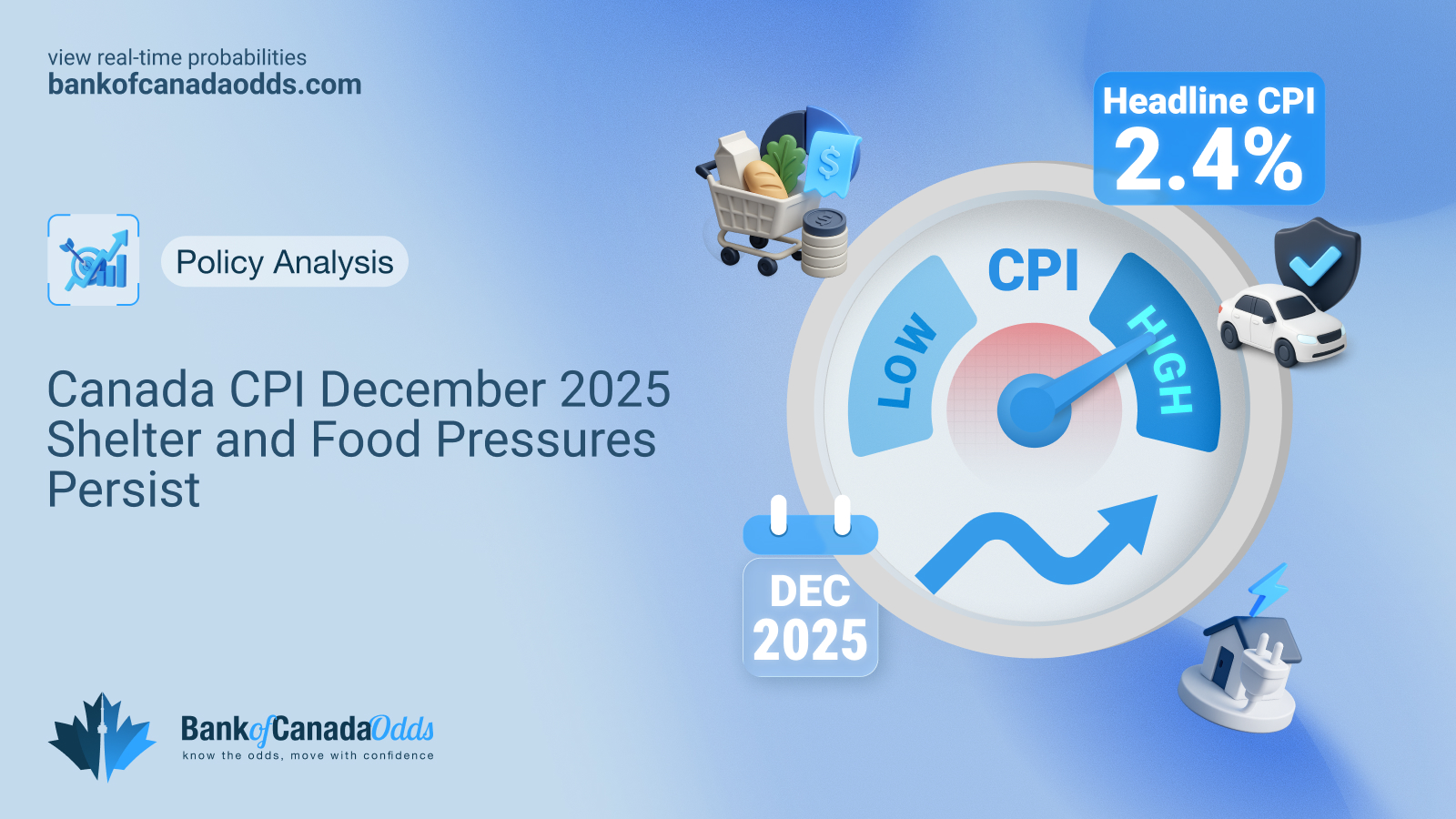
Canada CPI December 2025 rose 2.4% year over year, according to the latest Consumer Price Index release from Statistics Canada.
The data show inflation remaining close to the Bank of Canada’s target range, while underlying pressures tied to shelter and food costs continue to weigh on household budgets.
The December report highlights a familiar divergence within the CPI basket. Essential services and shelter-related categories remain elevated, while energy prices continue to provide downward pressure on overall inflation.
What Is the Consumer Price Index and Why It Matters
The Consumer Price Index measures the average change in prices paid by Canadian households for a fixed basket of goods and services. It is the primary inflation gauge used by the Bank of Canada when setting monetary policy.
Because CPI directly influences interest rate decisions, each release plays a central role in shaping market expectations. Persistent price growth in shelter and services can delay policy easing, while broad-based moderation increases confidence that inflation is returning sustainably toward target.
Market-implied rate expectations are tracked daily on #boc_meeting_dashboard.
Canada CPI December 2025 Highlights
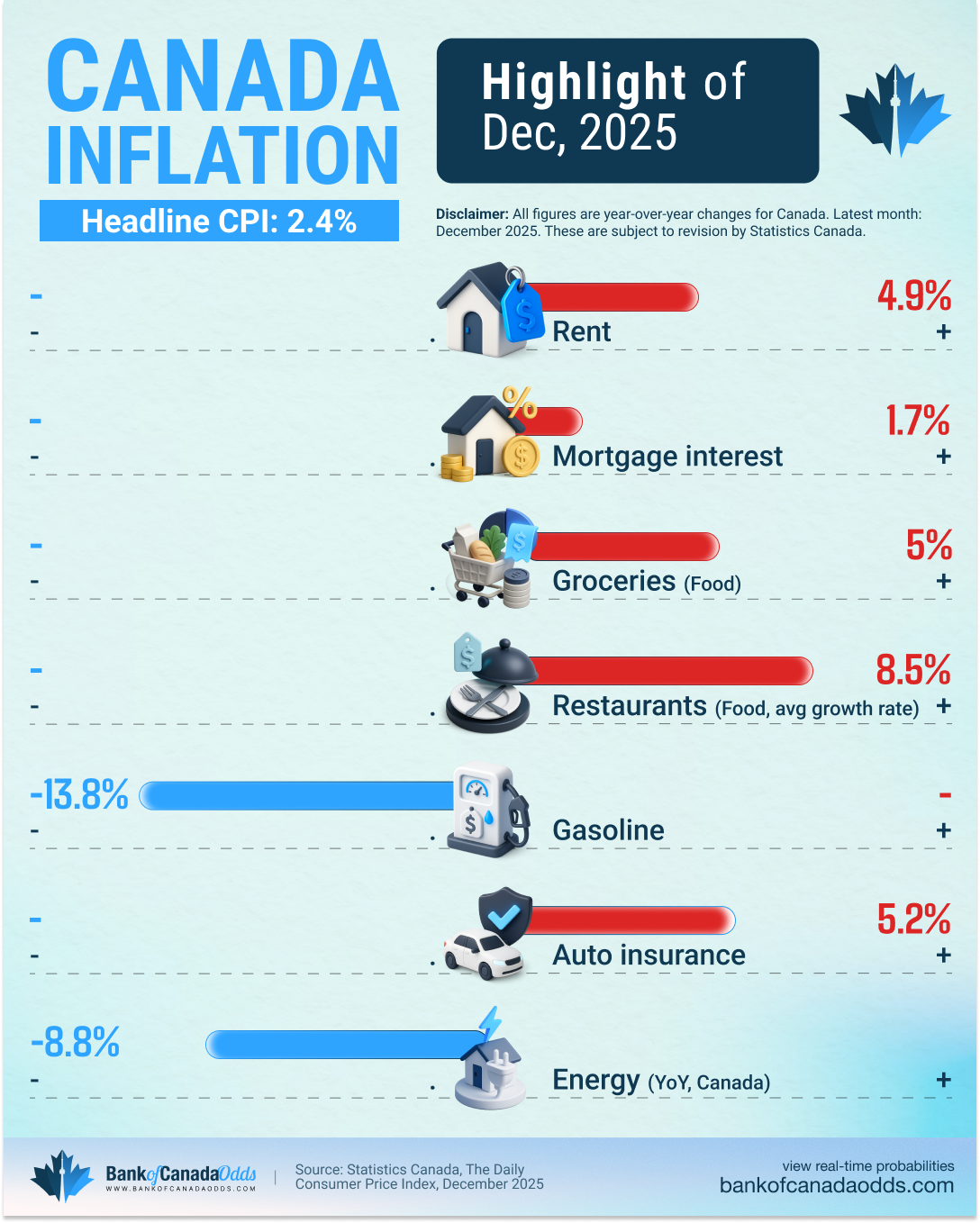
Headline CPI increased 2.4% year over year in December, with notable variation across major spending categories.
Shelter and food remained the largest sources of upward pressure:
-
Rent: +4.9% year over year
-
Mortgage interest cost: +1.7%
-
Groceries (food purchased from stores): +5.0%
-
Food purchased from restaurants: +8.5%
-
Auto insurance: +5.2%
Energy-related categories continued to ease:
-
Gasoline: −13.8% year over year
-
Energy (overall): −8.8%
This contrast underscores how inflation is increasingly concentrated in services and housing-related costs rather than goods and energy.
Shelter Inflation Remains a Key Constraint
Rent inflation remained elevated in December, reflecting ongoing supply constraints and strong demand in rental markets across major urban centres. While mortgage interest costs have slowed substantially from earlier peaks, they remain positive on a year-over-year basis, continuing to contribute to shelter inflation.
Shelter prices tend to adjust slowly compared with other CPI components, which helps explain why overall inflation remains sticky even as headline pressures moderate.
Additional context on housing-related inflation is available in #home_how_it.
Food Prices Continue to Outpace Headline Inflation
Food inflation remained well above the headline CPI rate in December. Grocery prices increased five percent year over year, while restaurant food prices rose at an even faster pace.
Restaurant inflation remains one of the most persistent components of the CPI basket, reflecting higher operating costs and wage pressures in the service sector. This category continues to contribute disproportionately to inflation felt by households.
Market Impact and Rate Expectations
From a market perspective, the December CPI report supports the view that inflation is easing gradually rather than cooling rapidly. Declines in gasoline and broader energy prices helped contain headline inflation, but firm shelter and food costs kept underlying pressures elevated.
This balance helps explain why interest rate expectations remain cautious. Markets continue to focus on whether service-sector inflation can cool further before policymakers gain confidence that inflation is firmly on a path back to target.
Live market-based rate probabilities are updated daily on BankofCanadaOdds.com.
Key Takeaway
The Canada CPI December 2025 report reinforces that inflation pressures are increasingly concentrated in shelter and services rather than energy. Inflation is no longer broad-based, but it remains uneven. Energy prices are pulling inflation lower, while rent, food, and insurance costs continue to move in the opposite direction.
As 2026 begins, the inflation outlook will depend on whether shelter and service prices show further moderation without renewed pressure elsewhere in the economy.
For ongoing inflation coverage and interest rate tracking, readers can see to BankofCanadaOdds.com.
The Canada CPI December 2025 report reinforces that inflation pressures are increasingly concentrated in shelter and services rather than energy.