Canada CPI April 2026 delivered a hotter headline, but the details underneath were more complicated than a simple inflation rebound.
Statistics Canada reported that the Consumer Price Index rose 2.8% year over year in April, up from 2.4% in March. The acceleration was led mainly by energy, especially gasoline, while inflation excluding gasoline slowed to 2.0%, down from 2.2% in March.
Gasoline Took the Wheel
April’s inflation story started at the pump.
Gasoline prices surged 28.6% year over year, compared with a 5.9% increase in March. Energy prices rose 19.2%, up sharply from 3.9% one month earlier.
Statistics Canada said the jump reflected a base-year effect from the removal of the consumer carbon levy in April 2025, higher oil prices tied to supply uncertainty caused by the conflict in the Middle East, and the seasonal switch to more expensive summer fuel blends.
That made April CPI look hotter at first glance. But because much of the pressure came from gasoline, the broader inflation signal was less aggressive than the headline number suggests.
The Household Squeeze in One Snapshot
The infographic shows that Canadians were still facing pressure across several everyday categories:
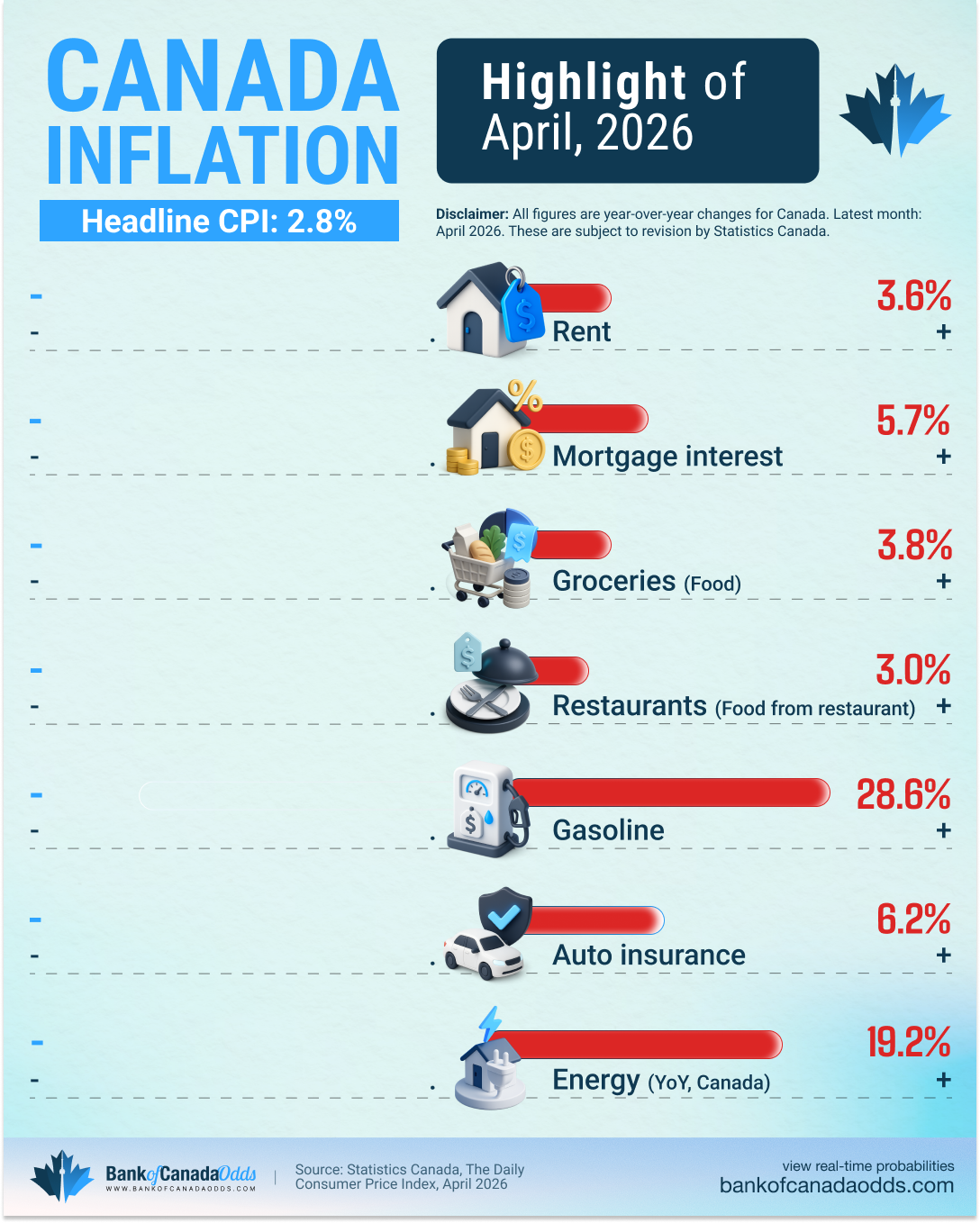
Food from stores rose 3.8%, transportation prices increased 7.6%, and shelter rose 1.8% year over year. Rent inflation slowed to 3.6% from 4.2% in March, although rents remained 30.8% higher than April 2021.
A Hot CPI Print With a Cooler Core Signal
Beneath the gasoline-driven jump, April’s inflation report looked less overheated.
The Bank of Canada’s core measures all moved lower in April. CPI-common eased to 2.5%, CPI-median slowed to 2.1%, and CPI-trim fell to 2.0%.
That matters because the headline CPI number captured the pump shock, while the core readings suggested price pressure was not spreading with the same force across the broader basket. In other words, April looked more like an energy-led inflation flare-up than a full inflation breakout.
April CPI Keeps the BoC in Wait-and-See Mode
For the Bank of Canada, April CPI does not give a clean policy signal.
The headline number moved higher, but the source matters. Gasoline and energy did most of the heavy lifting, while inflation excluding gasoline and the Bank’s core measures moved lower.
That leaves policymakers in a cautious position. A rate cut is harder to argue while headline inflation is rising, but softer core data does not make a strong case for a hike either.
With the next rate decision scheduled for June 10, 2026, the key question is whether April’s energy shock fades, or starts spreading into the wider inflation picture.