📋 What Is the Mortgage Stress Test?
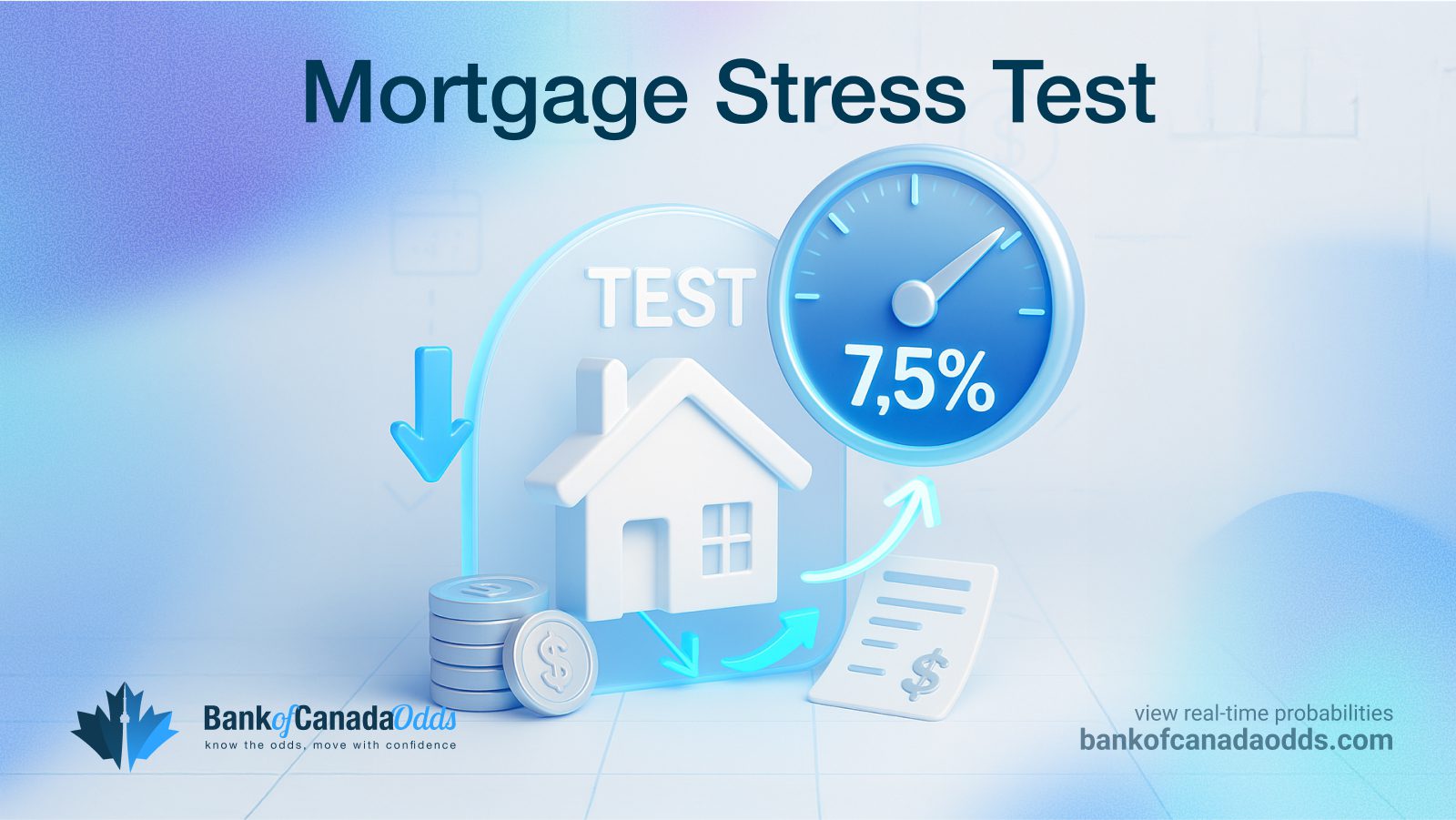
The stress test requires you to qualify for a mortgage at the higher of:
- The Bank of Canada’s qualifying rate (currently 5.25%)
- Your lender’s offered rate + 2%
For example, if your lender offers a 5.5% rate, you must prove you can afford payments at 7.5%. Even if your actual monthly cost would be lower, you’re tested at this higher rate.
🏠 Impact of the Mortgage Stress Test in 2025
- Reduced borrowing power: Buyers qualify for smaller mortgages. A family that could afford $600,000 before may now be limited to $500,000.
- Stricter refinancing: Even homeowners who never missed a payment face hurdles at renewal if their income or debt levels have changed.
- Delayed homeownership: First-time buyers may need to settle for smaller units or wait longer to enter the market.
📉 Why the Stress Test Matters
By limiting how much buyers can borrow, the mortgage stress test cools demand in overheated housing markets. However, it can also make it harder for Canadians—especially young or middle-income households—to secure a home loan.
The rule also reduces financial risk by building in a buffer against future interest rate hikes. This protects both borrowers and lenders in the event of economic shocks.
🧠 Bottom Line
In 2025, Canada’s mortgage stress test remains a key factor shaping home affordability. Before house hunting, make sure you understand how the test works—and how it affects your true borrowing power.