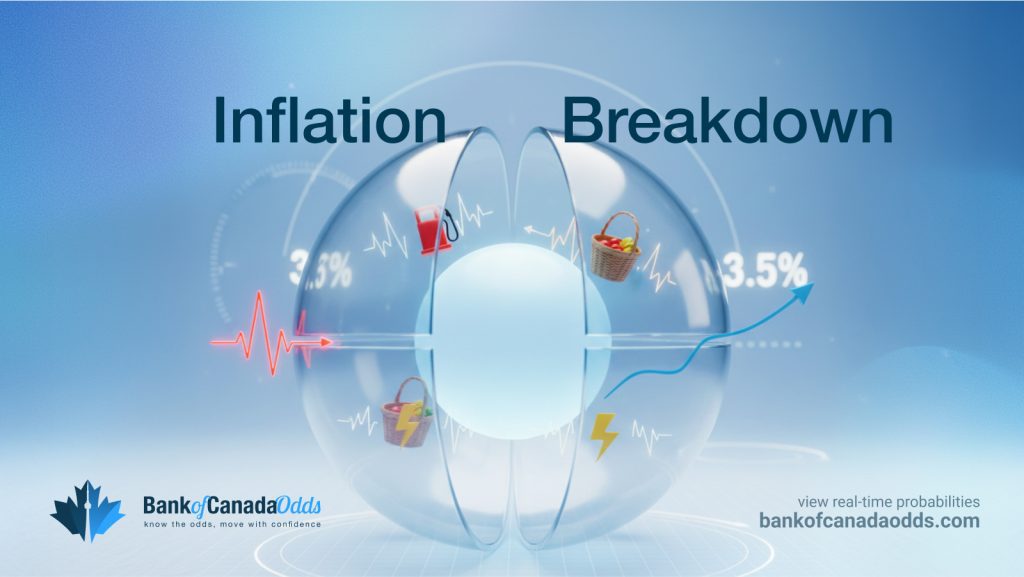
🧾 What Is Headline CPI?
Headline inflation reflects the total change in consumer prices, including volatile categories like food and energy. If gas prices jump 20%, headline CPI spikes—even if rent, healthcare, or services stay flat. It’s the number most people see in the news.
📉 What Is Core CPI?
Core CPI strips out food and energy to show more stable inflation trends. The BoC monitors core measures like CPI-trim, CPI-median, and CPI-common. These give policymakers a clearer sense of whether inflation is deeply embedded in the economy.
🎯 Why the Core vs Headline CPI Split Matters
- Headline CPI can cause short-term overreactions in markets.
- Core CPI guides long-term monetary policy.
- If core inflation stays above target, the BoC may delay rate cuts—even if headline CPI falls.
📊 Inflation Snapshot: 2025
After peaking above 8% during the pandemic recovery, Canada’s headline CPI has eased to near 3%. But core CPI is still around 3.5%—well above the BoC’s 2% target. That gap explains why interest rates remain elevated despite falling grocery bills.
🧠 Easy Analogy: Grocery vs Rent
Think of headline CPI like your grocery bill—it jumps around week to week. Core CPI is more like your rent or childcare—slower to change, but a bigger chunk of your budget. The BoC watches both, but acts based on the core.
Bottom Line: In 2025, core vs headline CPI in Canada is a crucial distinction. To predict rate moves, watch what’s behind the numbers—not just the headline.