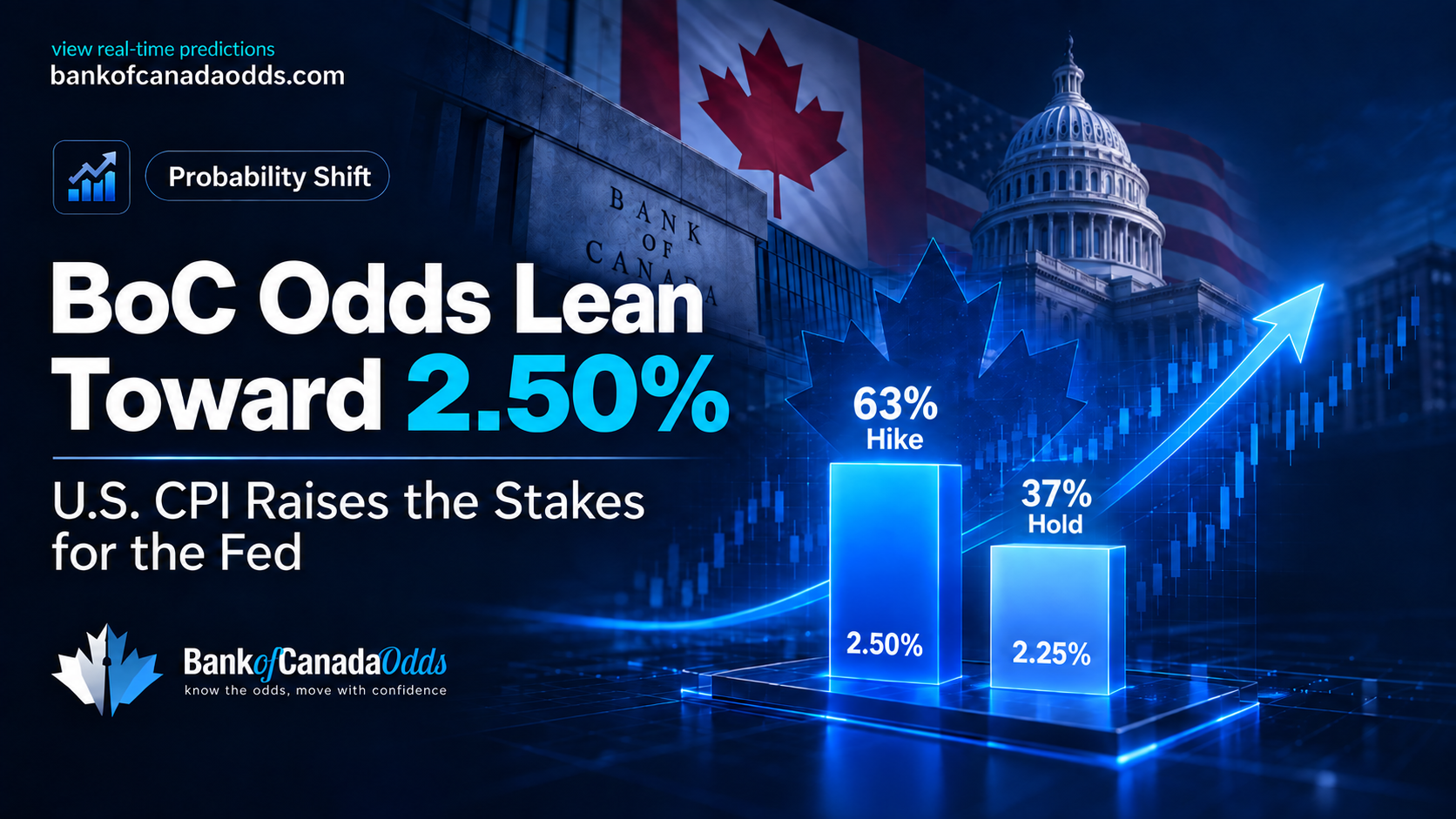
Canada’s annual inflation rate held at 3.0% in August 2026, unchanged from July, as slower gasoline inflation was offset by higher rent and travel-tour prices.
Statistics Canada said the Consumer Price Index fell 0.1% month over month, while the seasonally adjusted CPI rose 0.2%. Excluding gasoline, inflation accelerated to 2.4% from 2.2% in July, suggesting price pressures outside fuel remained somewhat firmer.
Gas Prices Cool, but Energy Still Runs Hot
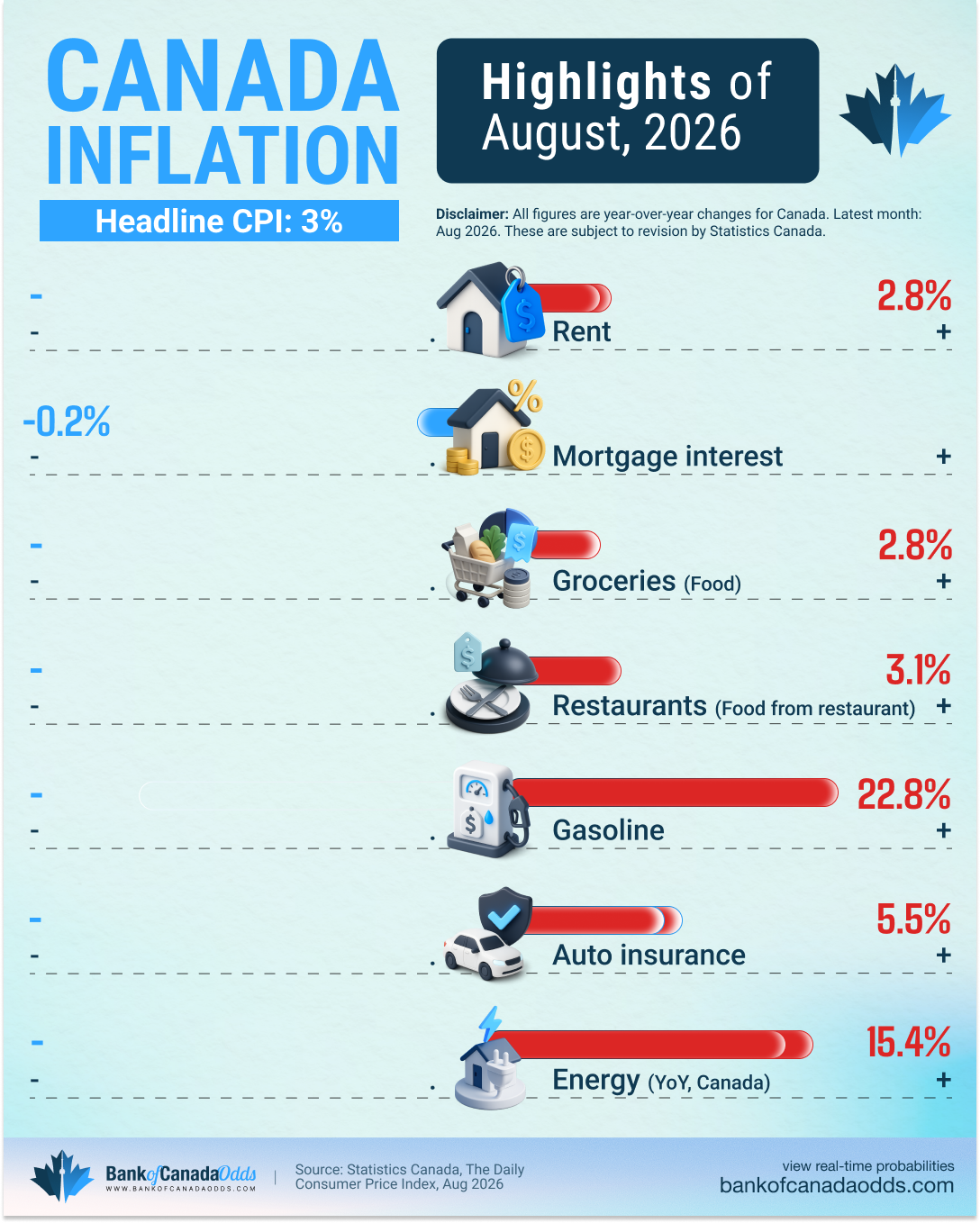
Gasoline remained one of the biggest inflation pressures, rising 22.8% year over year in August, but that was slower than the 25.7% increase in July.
The moderation in gasoline helped keep headline inflation from moving higher, even as broader energy prices remained elevated. Canada’s overall energy index rose 15.4% year over year in August.
That gives August a slightly different inflation mix from July: the headline number did not change, but the pressure underneath it shifted.
Groceries Offer a Rare Bit of Relief
Grocery prices rose 2.8% year over year, slowing from 3.1% in July. It was the first time since July 2024 that grocery inflation came in below Canada’s overall CPI rate.
Dairy prices played a major role in the slowdown, rising just 0.7%, compared with 3.1% in July.
Still, the longer-term picture remains difficult for households: grocery prices are now 29.0% higher than in August 2021.
Rent Moves Higher
National rent inflation accelerated to 2.8% in August from 2.5% in July, with higher prices in Manitoba and Ontario helping drive the increase.
Meanwhile, food purchased from restaurants rose 3.1%, while auto insurance increased 5.5% year over year.
Travel tours were another major mover, jumping 26.1% from a year earlier, compared with 15.2% in July, partly reflecting a base-year effect and higher fuel-related costs.
Same 3%, Different Signals, Is the BoC Outlook Changing?
CPI-median held at 2.0%, CPI-trim stayed at 1.9%, and CPI-common eased to 2.6% from 2.7%.
But beneath the unchanged 3.0% headline rate, the mix shifted: gasoline and grocery inflation cooled, while rent accelerated and CPI excluding gasoline rose to 2.4% from 2.2%.
That leaves the BoC with a mixed picture. Attention now turns to the Fed’s September decision, another Canadian jobs report in October, and the BoC’s October rate decision.
The next few weeks could reshape expectations for where Canadian rates go next.