Canada inflation February 2026 downed to 1.8% year over year, from 2.3% in January, according to the latest Consumer Price Index data released by Statistics Canada.
The softer reading reflects lower gasoline prices and a favourable base-year comparison from early 2025, which eased the annual inflation calculation.
Despite the cooling in inflation, several everyday expenses continued to rise, including food, rent and insurance costs.
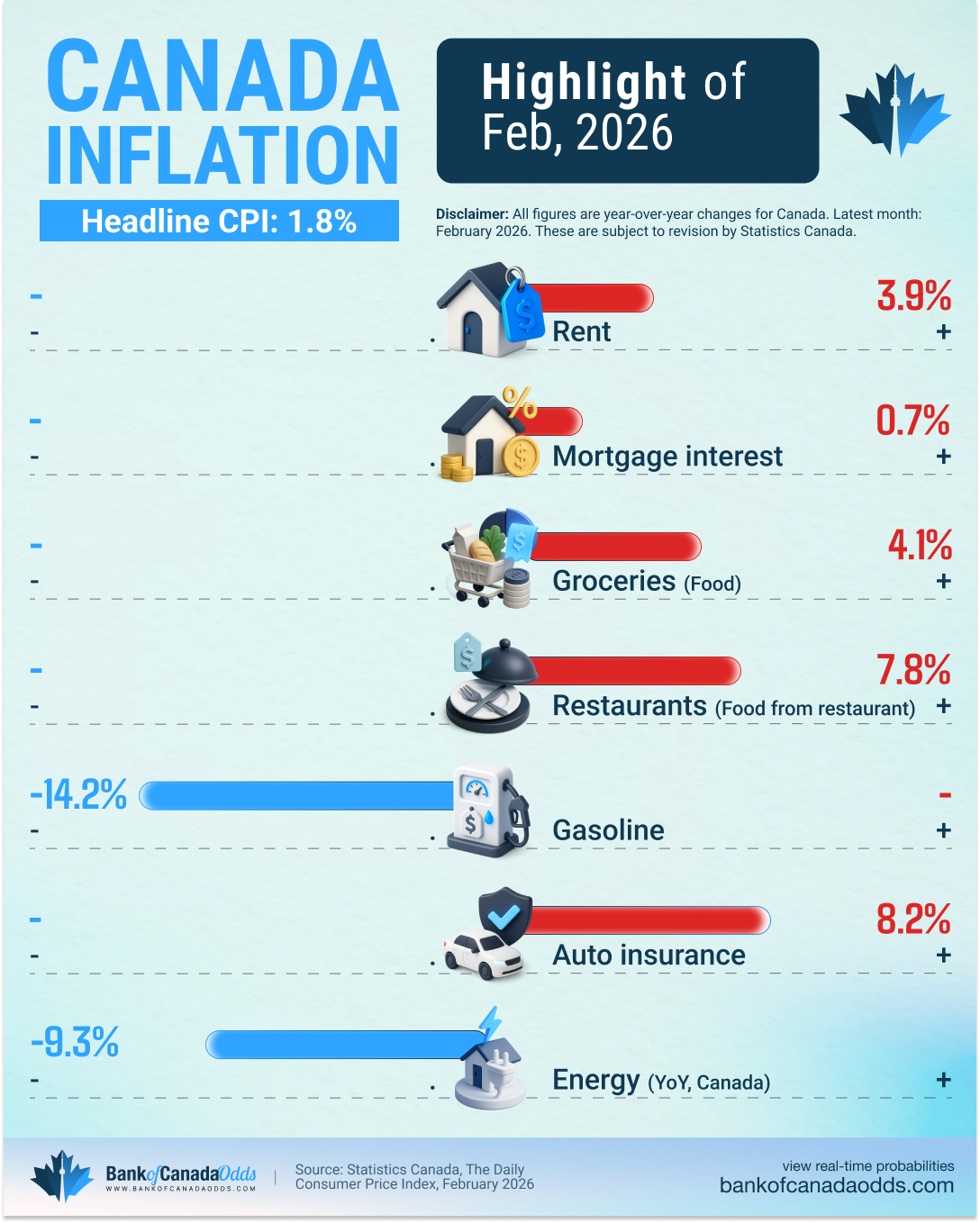
Source:
Statistics Canada Consumer Price Index release
https://www150.statcan.gc.ca/n1/daily-quotidien/260316/dq260316a-eng.htm
Energy prices weigh on inflation
Lower energy prices helped pull overall inflation lower.
Gasoline prices fell 14.2% compared with a year earlier, continuing to place downward pressure on the overall Consumer Price Index. Energy prices overall were 9.3% lower year over year.
The decline in fuel costs helped offset increases in other parts of the consumer basket.
Food prices remain elevated
Food inflation continued to run above the headline inflation rate.
-
Food purchased from stores: +4.1% year over year
-
Food purchased from restaurants: +7.8%
Although grocery inflation has declined from earlier peaks, food prices remain elevated for many households.
Housing and services remain sticky
Housing and service-related costs continued to rise in February.
Key price movements included:
-
Rent: +3.9%
-
Mortgage interest cost: +0.7%
-
Auto insurance: +8.2%
These categories remain among the stronger contributors to inflation even as overall price growth moderates.
Canada inflation February 2026 trend
The Canada inflation February 2026 report shows inflation easing slightly at the start of the year.
-
January 2026: 2.3%
-
February 2026: 1.8%
The decline reflects lower energy prices and base effects from last year’s price movements. However, continued increases in housing and services suggest inflation pressures remain uneven across the economy.
Market impact
The February inflation reading places overall price growth slightly below the Bank of Canada’s 2% target midpoint.
A softer inflation print may give policymakers additional room to keep interest rates steady while monitoring developments in housing, food and services prices.
Real-time policy expectations can be tracked on the Bank of Canada rate odds dashboard.
Key takeaway
Canada inflation February 2026 eased to 1.8% year over year, reflecting lower gasoline prices and favourable base effects.
However, food, housing and insurance costs continued to rise, highlighting uneven price pressures across the economy.