Canada CPI January 2026 increased 2.3% year over year, according to new data released by Statistics Canada on February 17.
The January inflation reading reflects continued strength in shelter and food prices, while sharp declines in gasoline and overall energy prices helped limit broader acceleration.
The data reinforce a pattern seen in recent months: energy prices are providing relief, but core household costs remain comparatively firm.
Canada CPI January 2026: Inflation at 2.3%
What Is Driving Canada CPI January 2026
The January breakdown shows diverging trends across major components of the Consumer Price Index.
Shelter
Shelter continues to exert upward pressure on inflation.
-
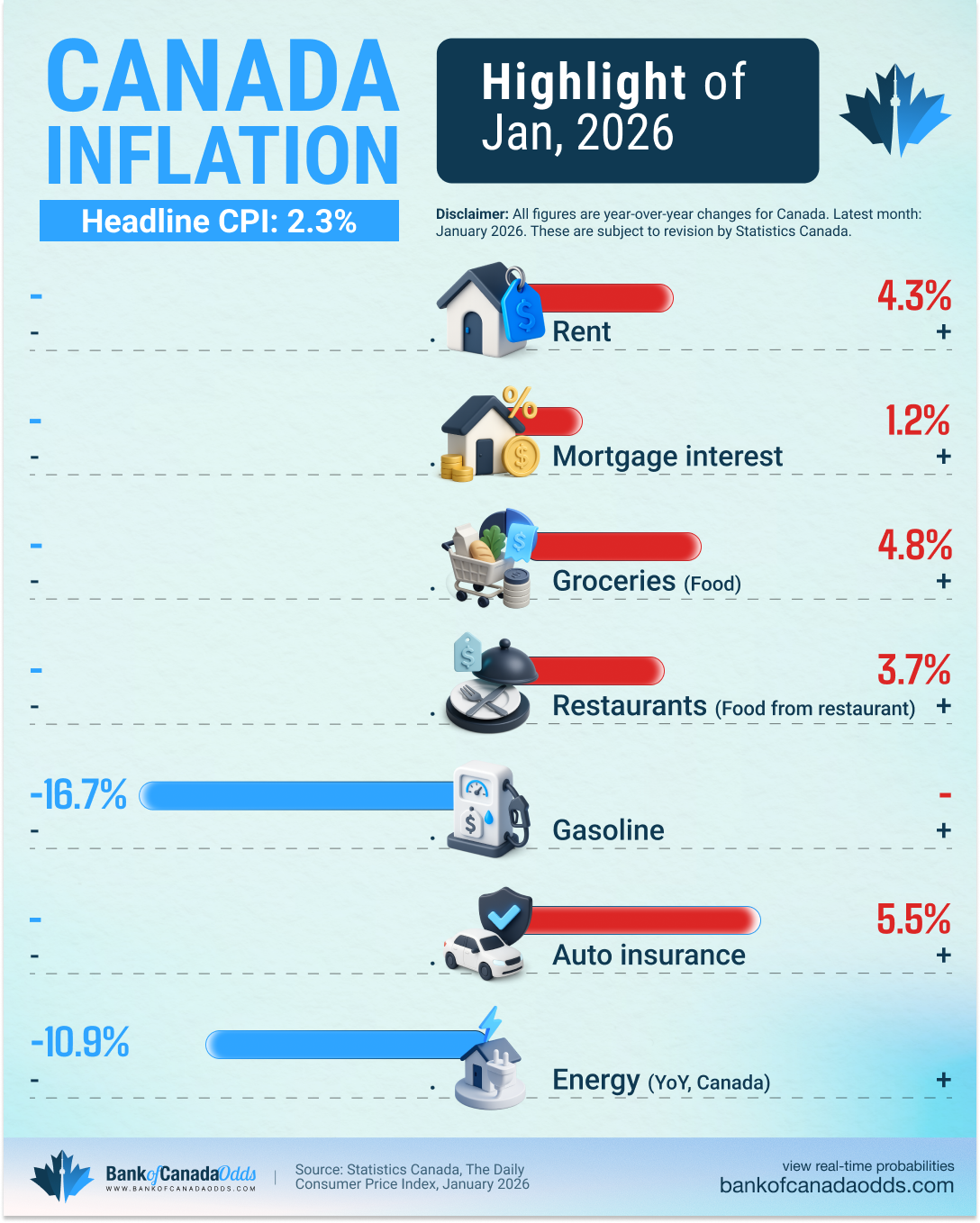
Rent rose 4.3% year over year
-
Mortgage interest cost increased 1.2% year over year
Rent remains one of the stronger contributors to headline CPI, outpacing the overall 2.3% inflation rate.
Food Prices
Food inflation remains elevated relative to headline inflation.
-
Food purchased from stores increased 4.8%
-
Food purchased from restaurants rose 3.7%
Grocery prices in particular were among the larger contributors to the year-over-year increase in January.
Energy and Gasoline
Energy prices moved in the opposite direction.
-
Gasoline prices fell 16.7% year over year
-
Overall energy prices declined 10.9%
The decline in gasoline was a significant offset to rising shelter and food costs, helping offset upward pressure from shelter and food components.
Why Canada CPI January 2026 Matters
At 2.3%, inflation remains slightly above the Bank of Canada’s 2% target midpoint. The composition of inflation is increasingly important.
Energy-related relief may prove volatile month to month. Meanwhile, shelter and food prices represent ongoing household expenses that tend to carry more persistence.
Markets monitor these category shifts closely when assessing the path of monetary policy.
Recent Inflation Context
Inflation has moderated significantly from prior cycle highs. However, January’s data highlight that price pressures have become more concentrated rather than broad-based.
Goods-related energy components declined sharply. Services-related components such as rent and restaurant prices continued to rise above the headline pace.
This uneven structure will likely remain a focal point in upcoming data releases.
Key Takeaway
Canada CPI January 2026 rose 2.3% year over year. Rent and grocery prices continued to increase at a faster pace than headline inflation, while gasoline and overall energy prices declined sharply.
The inflation rate remains contained but uneven, with shelter and food driving gains and energy providing offsetting relief.