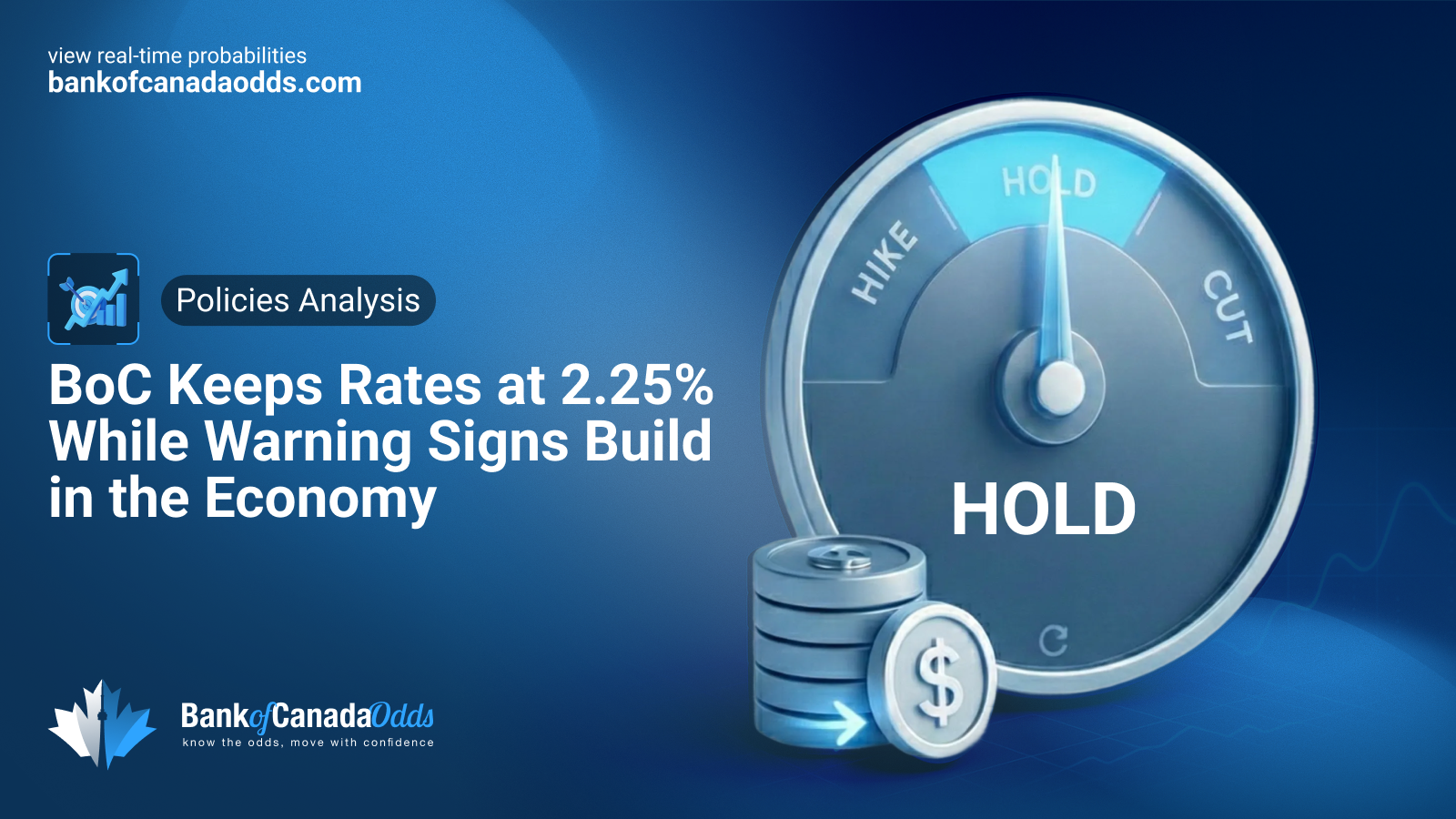
The Bank Canada rate outlook increasingly points toward policy stability as 2026 approaches. With the policy rate currently at 2.25%, several economists expect the central bank to remain on hold as inflation eases and economic growth stays soft but resilient. Current conditions do not show strong pressure for either renewed rate cuts or a return to tightening.
What Is the Bank Canada rate outlook?
The Bank Canada rate outlook refers to expectations for monetary policy based on inflation trends, economic growth, labour market conditions, and financial stability risks. These expectations are shaped by economist forecasts, macroeconomic data, and market pricing that together indicate whether rate hikes, cuts, or a prolonged pause are most likely.
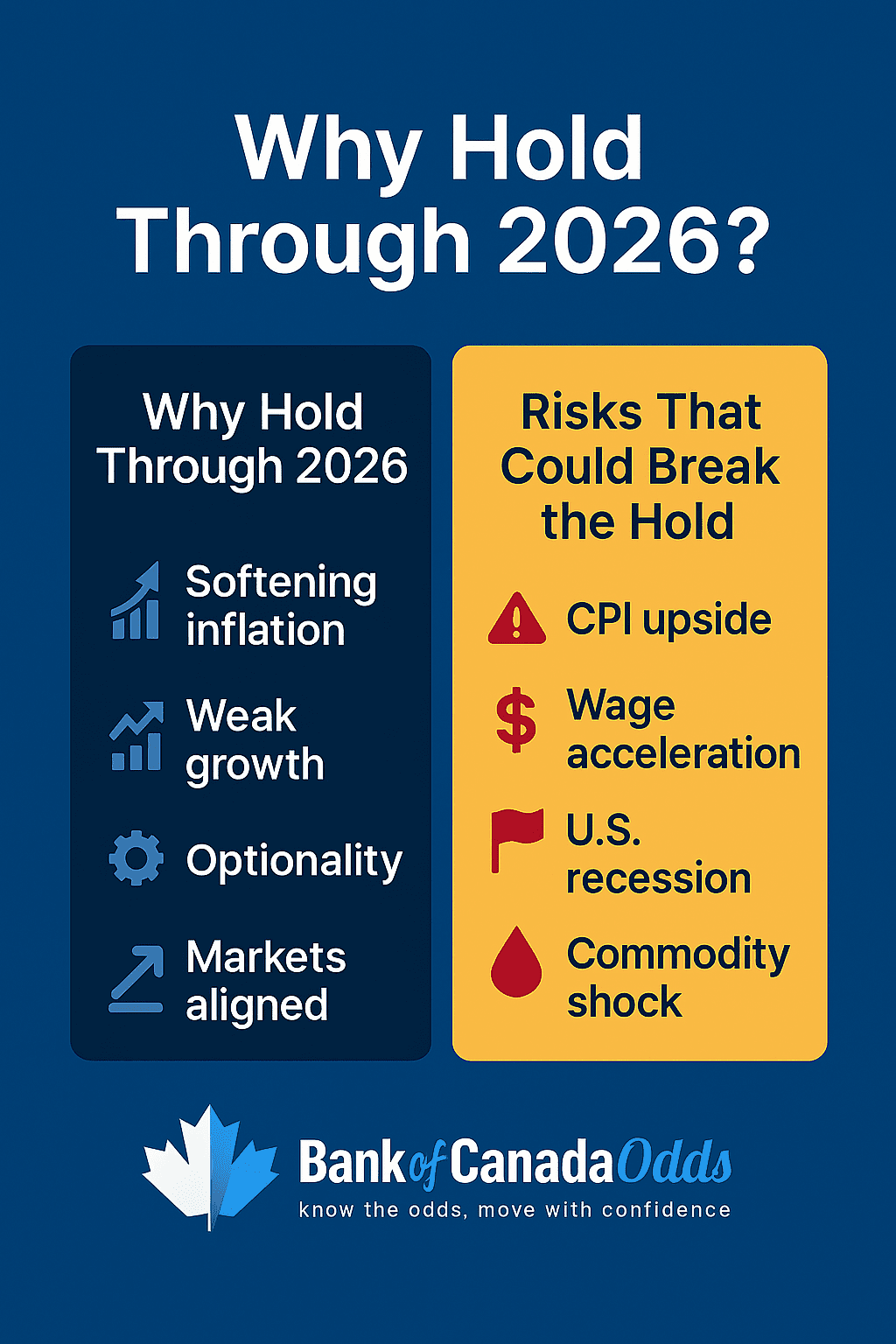
Why It Matters for Markets and Policy
A prolonged hold would signal that policymakers see current economic conditions as broadly aligned with their inflation mandate. Inflation pressures have moderated from earlier peaks, while economic growth remains subdued. This balance supports a cautious approach that prioritizes data dependence rather than pre-committed policy moves.
Recent Trends or Data Points
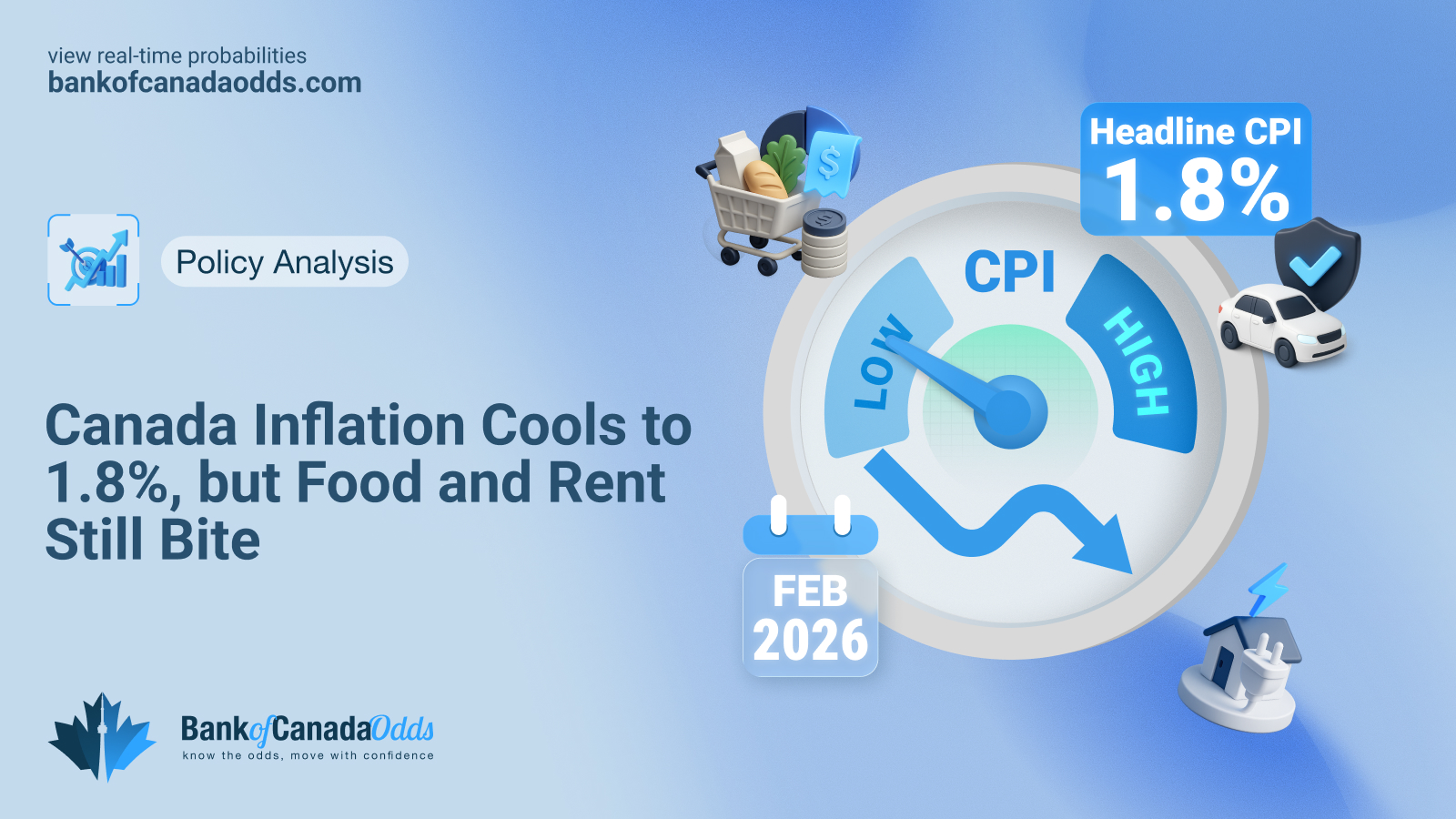
Recent inflation readings show headline measures moving closer to the Bank’s target range, with core indicators also easing modestly. However, shelter-related components such as rent and insurance costs remain elevated, reinforcing the case for patience.
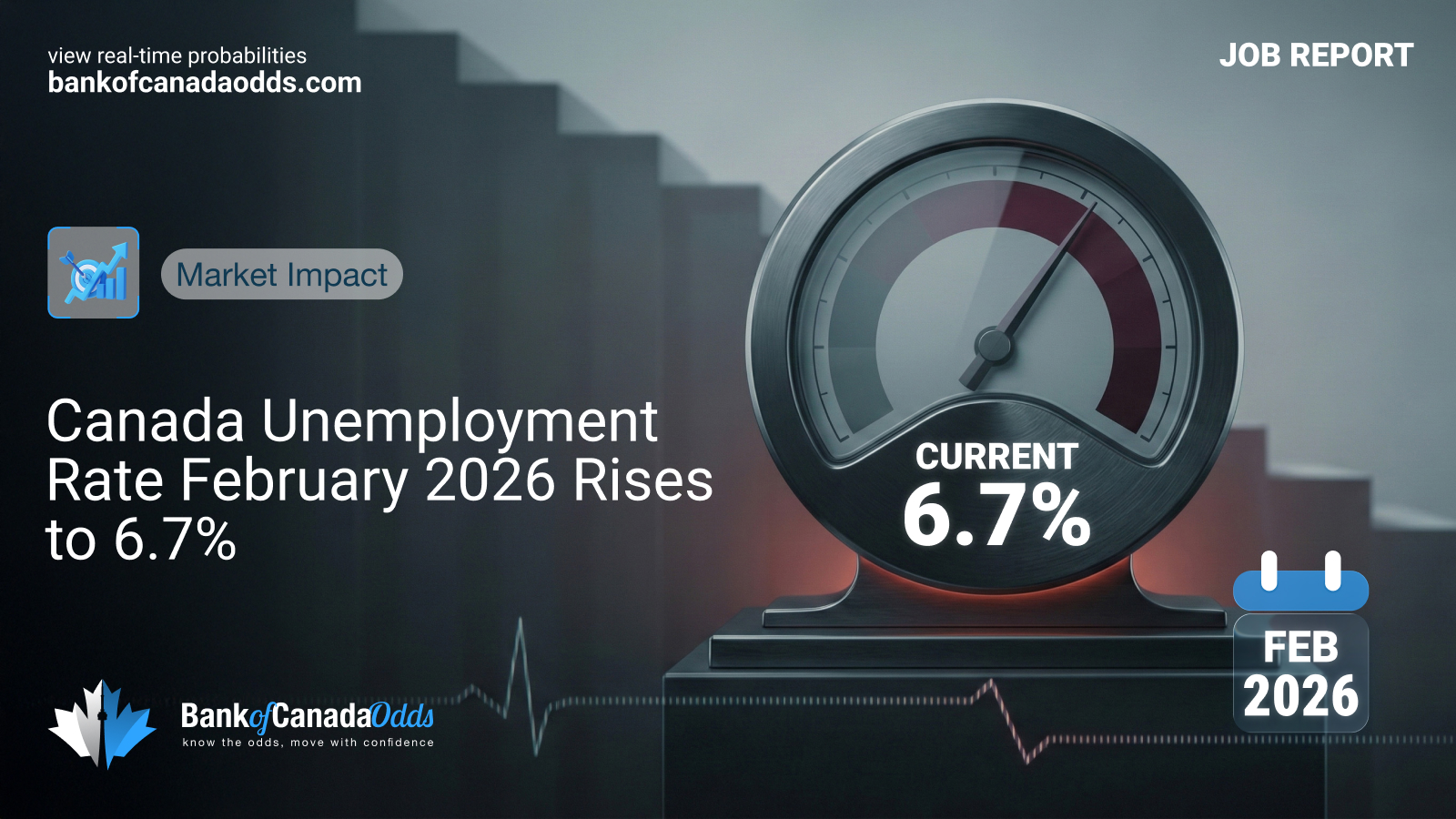
Economic growth remains weak but stable. Hiring has slowed, consumer spending has moderated, and housing activity remains soft. At the same time, the data do not indicate recession-level stress. These conditions underpin expectations reflected on the #boc_meeting_dashboard, where a prolonged pause continues to dominate rate odds.
How It Affects Borrowers and Investors
For borrowers, a stable rate environment improves predictability around mortgage payments and financing decisions, even if lower borrowing costs take longer to materialize.
For investors, the Bank Canada rate outlook shifts attention toward incoming inflation data, wage growth, and labour market releases. Market reactions are increasingly driven by macroeconomic indicators rather than near-term policy changes.
The Bank of Canada’s View
Bank of Canada officials have emphasized that inflation must return sustainably to target before any further easing is considered. While progress has been made, policymakers continue to monitor shelter inflation, wage growth, and broader price pressures, reinforcing a cautious and data-driven stance.
Key Takeaway or Next Steps
The Bank Canada rate outlook supports a prolonged hold as the base case heading into 2026. Inflation has cooled but remains uneven across components, while economic growth is neither strong enough to justify rate hikes nor weak enough to force additional cuts. Unless there is a material shift in inflation dynamics or economic momentum, holding the policy rate at 2.25% remains the most likely outcome.