Renter vs homeowner inflation highlights how housing costs affect Canadians differently, even when overall inflation is easing. While headline CPI has slowed, housing-related components continue to move unevenly depending on whether households rent or own.
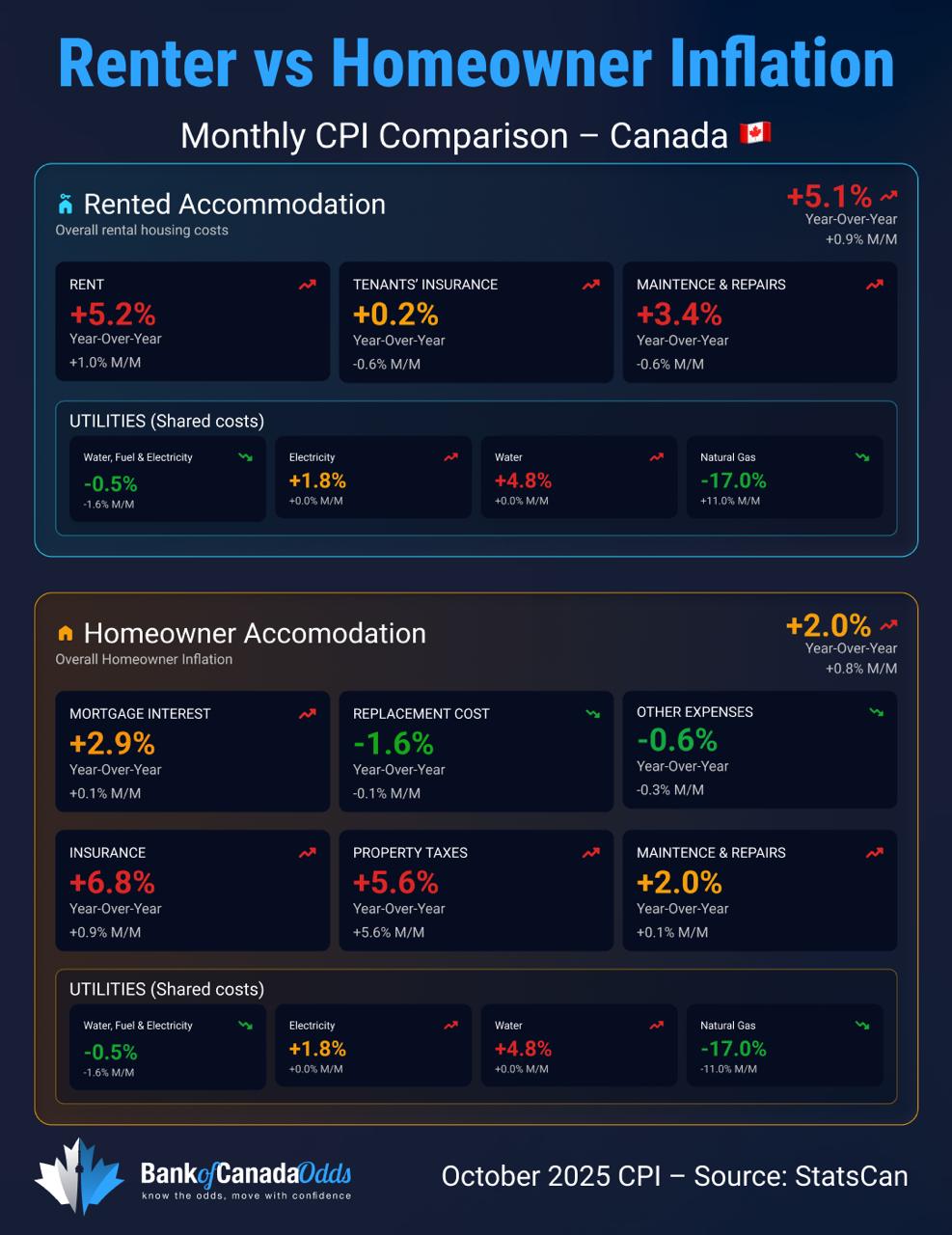
In recent inflation data, renters have faced faster price increases tied to rent, utilities, and related services. Homeowners, by contrast, experience inflation through mortgage interest costs, property taxes, and maintenance expenses.
Source: Statistics Canada
Renter vs Homeowner Inflation in Canada
For renters, inflation has been driven primarily by rising rent and tight housing supply. In many regions, strong demand and limited availability have kept upward pressure on rental costs, even as other price categories cool.
At the same time, renter inflation tends to respond more directly to market conditions. Changes in demand, population growth, and vacancy rates can quickly influence rent growth and, in turn, CPI readings for tenant households.
For homeowners, inflation shows up differently. Mortgage interest costs, insurance, and repair expenses play a larger role in owner-related inflation measures. Higher interest rates over the past cycle have pushed mortgage interest costs higher, keeping homeowner inflation elevated.
Why the Gap Matters for Inflation Analysis
As a result, renter vs homeowner inflation can move in opposite directions at the same time. This divergence helps explain why headline inflation may slow while housing-related pressures remain persistent.
For policymakers, these differences matter. Housing costs are a large and visible part of household spending, and sustained inflation in either category can influence inflation expectations.
Implications for Policy and the Outlook
For the Bank of Canada, renter vs homeowner inflation provides important context when assessing underlying price pressures. Even if headline CPI moderates, uneven housing inflation can complicate the path back to target.
Looking ahead, the gap between renter and homeowner inflation will depend on interest rates, housing supply, and broader economic conditions. Monitoring both sides of the housing market remains essential for understanding where inflation pressures truly lie.