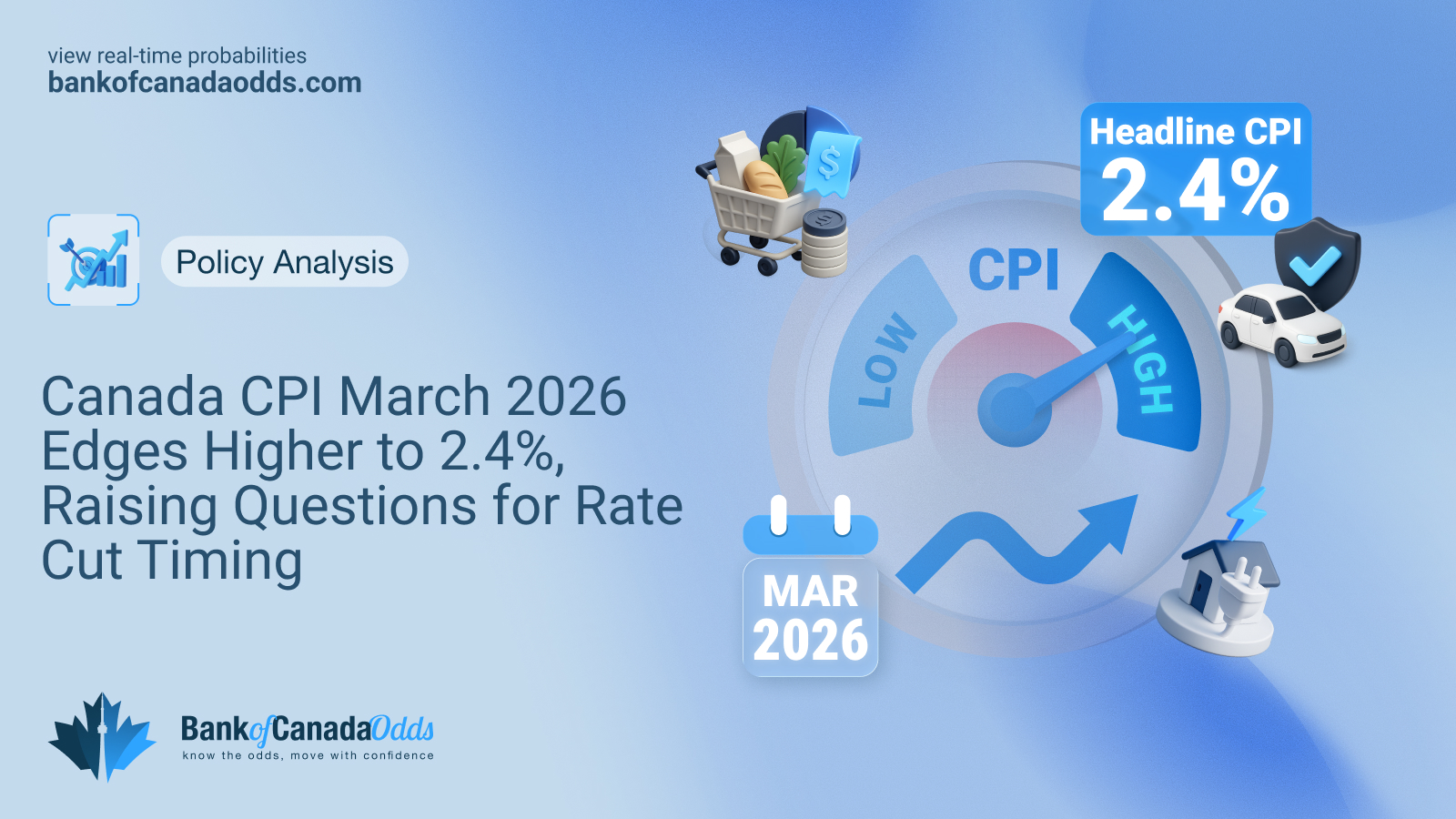
Canada CPI March 2026 rose to 2.4% year over year, up from 1.8% in February, as price pressures reappeared across several categories that matter most to households. Statistics Canada noted that the acceleration in headline inflation was largely driven by higher energy prices, particularly gasoline.
Rather than a broad-based surge, the March report points to renewed pressure in key household categories even as some areas showed signs of moderation. The overall picture suggests inflation is not rising across the board, but is becoming more concentrated in essential spending.
Inflation Is Showing Up Where It Matters Most
The March data points to a clear pattern, with inflation concentrated in everyday expenses.
Gasoline prices rose 5.9% year over year, helping push overall energy costs up 3.9%. Energy remains one of the most visible drivers of inflation, influencing both transportation costs and overall price sentiment.
Food prices also stayed elevated. Grocery costs increased 4.4%, while restaurant prices rose 3.2%, indicating continued pressure both at home and when dining out.
Housing-related costs continued to contribute. Rent increased 4.2%, maintaining its steady upward trend. Passenger vehicle insurance premiums rose 7.0%, reflecting ongoing structural pressures in the insurance market.
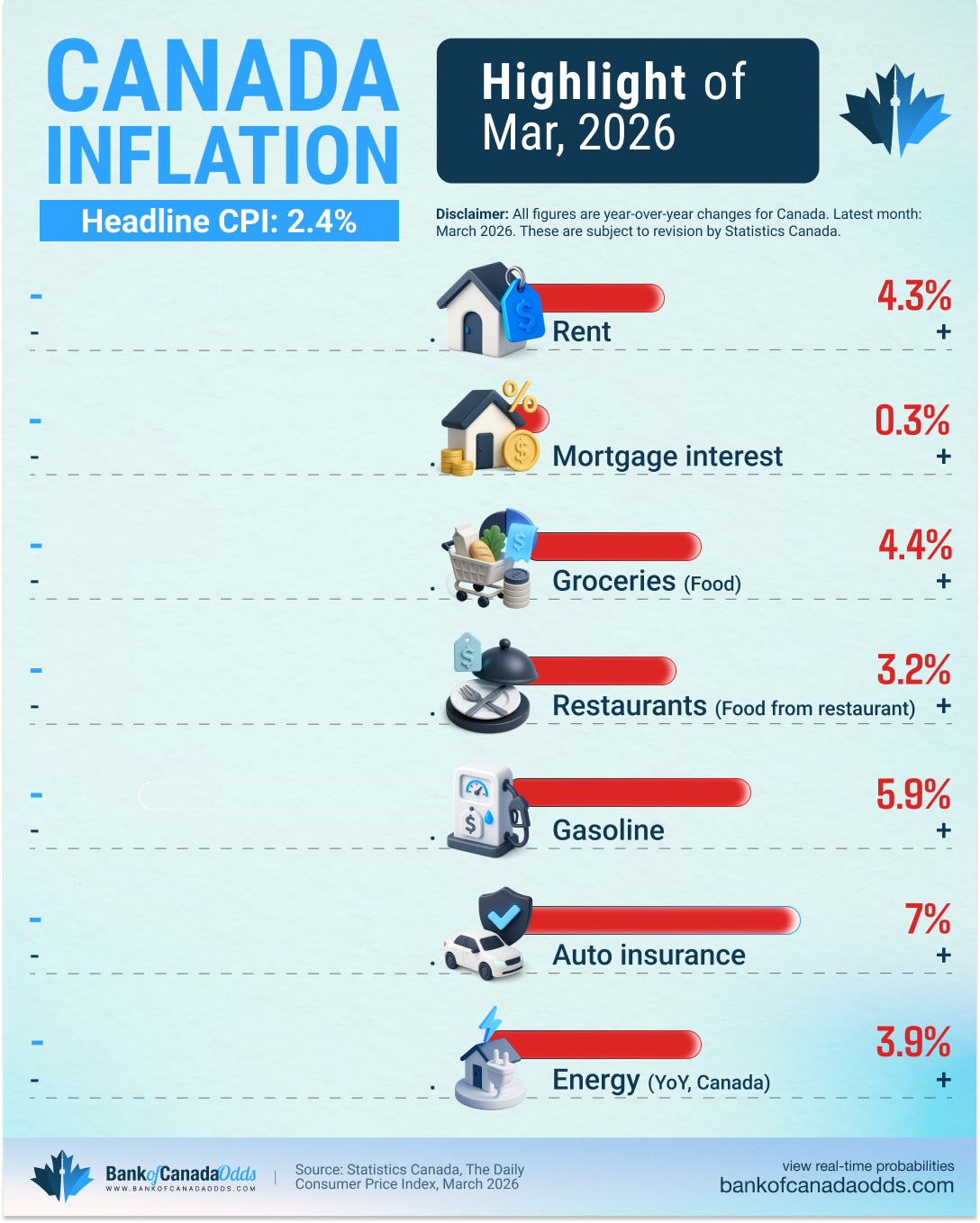
Source: Statistics Canada Consumer Price Index release
https://www150.statcan.gc.ca/n1/daily-quotidien/260420/dq260420a-eng.htm?HPA=1&indid=3665-1&indgeo=0
A Less Certain Path for Inflation and Policy
Earlier in 2026, inflation appeared to be easing steadily, with February pointing to a smoother disinflation trend. March challenged that view.
Price pressures picked up again in categories such as energy, food, and insurance, suggesting the path lower may be uneven and more sensitive to sector-specific dynamics.
For markets, this introduces a more cautious backdrop. Expectations for rate cuts may become increasingly dependent on incoming data, while financial conditions could remain reactive as the inflation outlook evolves.
The Signal Beneath the Number
Beneath the headline, March revealed a more persistent layer of inflation. The pressure came from categories such as gasoline, groceries, rent, and auto insurance rather than from a broad-based surge across the economy.
This creates a more uneven inflation backdrop, where overall progress continues but key household costs remain firm. The broader trend is still moving in the right direction, but the final stretch appears less smooth than earlier in the year.
If this is what the final phase looks like, does the Bank stay patient longer than expected, or does another upside move shift the timing once again ahead of the April 29 rate decision?