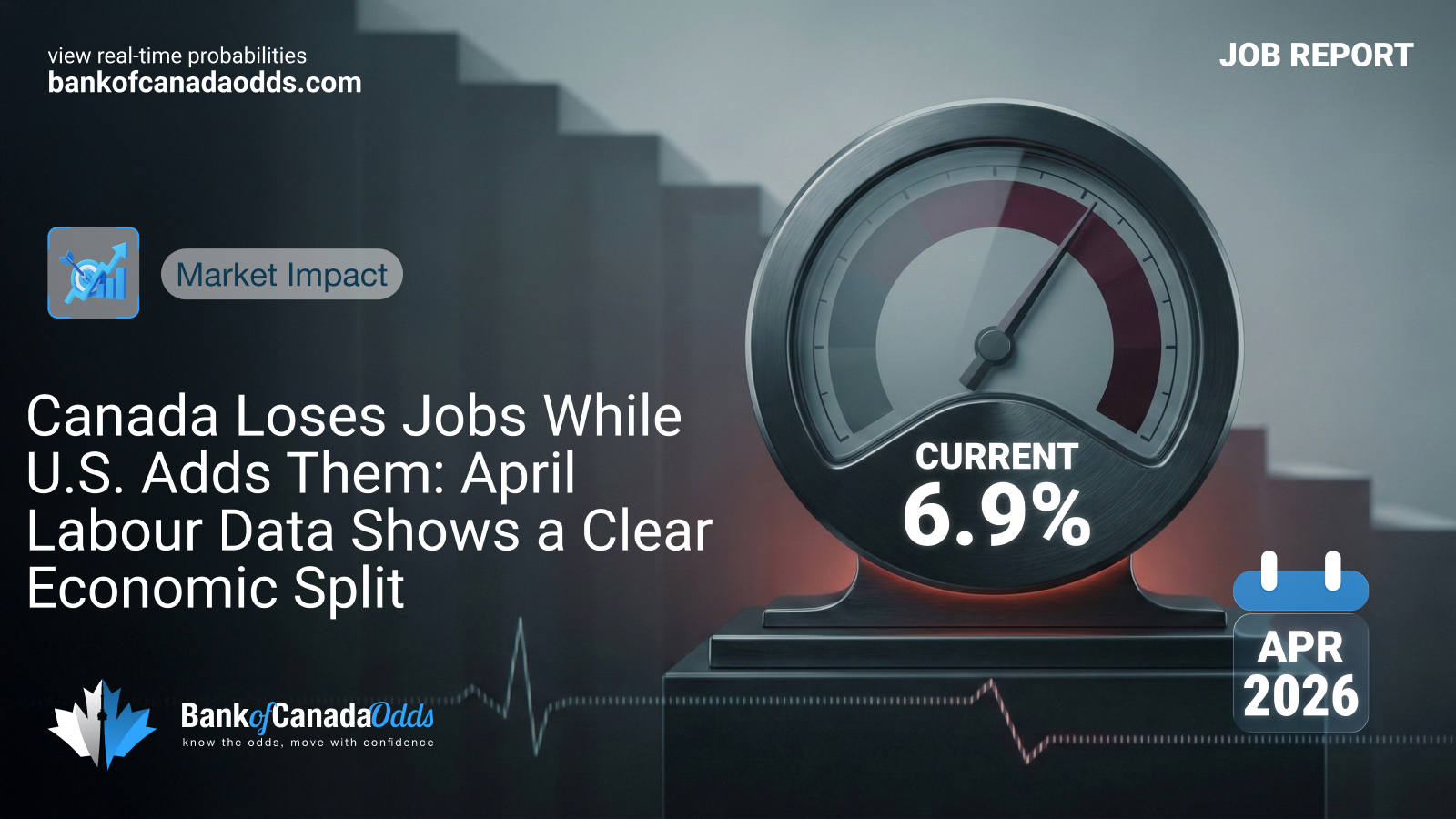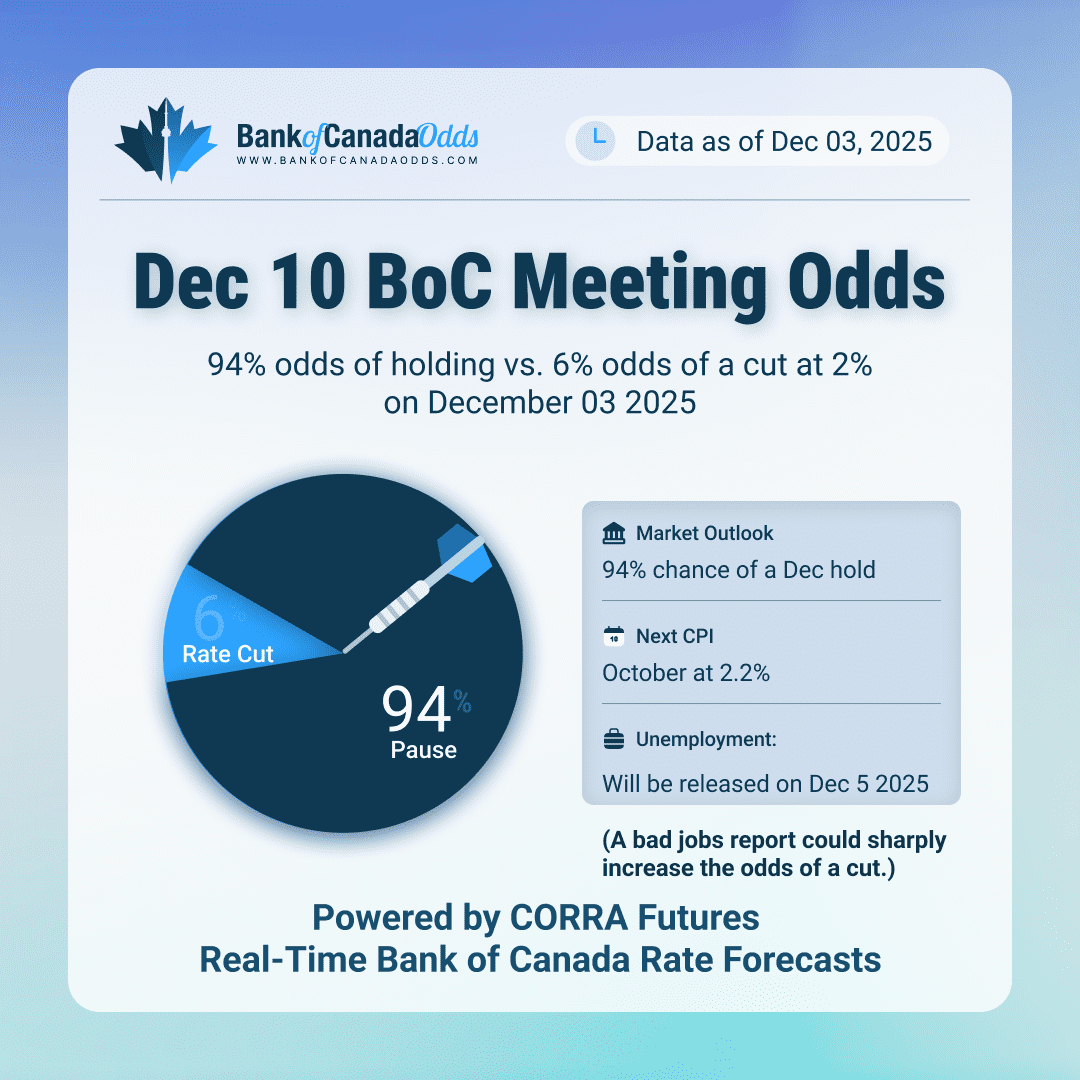
RBC Economics’ latest Forward Guidance preview points to softer labour conditions heading into the December Bank of Canada meeting. With employment growth expected to be flat and the unemployment rate holding at 6.9%, RBC describes Canadian labour markets as soft but not showing broad deterioration. These conditions support a cautious Bank of Canada rate outlook.
What Is the Bank of Canada Rate Outlook?
The Bank of Canada rate outlook reflects how upcoming economic data especially labour and inflation shapes expectations for future policy decisions. This week’s RBC preview focuses on November’s Labour Force Survey, the final key release before the December interest rate announcement.
Why It Matters
Labour data is one of the Bank of Canada’s most important short-term inputs because:
- Flat hiring signals a softening labour market
- A 6.9% unemployment rate remains elevated compared with pre-slowdown norms
- The Bank of Canada has already cut rates once and signaled policy is near the lower end of its neutral range
Recent Trends Shaping the Outlook
RBC highlights several labour-market developments:
- Employment growth is expected to be flat in November, following larger-than-expected gains in September and October
- The unemployment rate is expected to remain at 6.9%, which would be the first month since May 2023 without a year-over-year increase
- Trade-exposed sectors such as manufacturing and transportation showed significant improvement in October, and that weakness has not spread more broadly
- Hours worked are expected to rebound after an October decline linked largely to a teacher strike in Alberta
- Wage growth rose unexpectedly in October but is expected to moderate as firms plan smaller wage increases over the coming months
How It Affects Borrowers & Investors
Borrowers:
A soft but stable labour backdrop aligns with the Bank of Canada’s message that it is not in a hurry to adjust policy again immediately after October’s cut. Borrowing costs and mortgage renewals are unlikely to shift meaningfully in the near term.
Investors:
Rate-sensitive market sectors may respond to whether Friday’s labour data confirms RBC’s expectation of flat job growth.
The Bank of Canada’s View
RBC notes that after the October rate cut, the Bank of Canada indicated that the policy rate had moved to the lower end of its estimated neutral range. Additional reductions would require more significant downside surprises in growth or inflation, rather than mild labour-market softness.
Key Takeaway
RBC’s preview suggests the Bank of Canada rate outlook remains cautious. Flat employment and a steady 6.9% unemployment rate point to a labour market that is soft, but not weakening quickly enough to justify another immediate move.
The timing is important as well. Friday’s Labour Force Survey is the last major data release before the December meeting, and RBC expects little change in the headline numbers. How that report lands will help set the tone heading into the decision window.