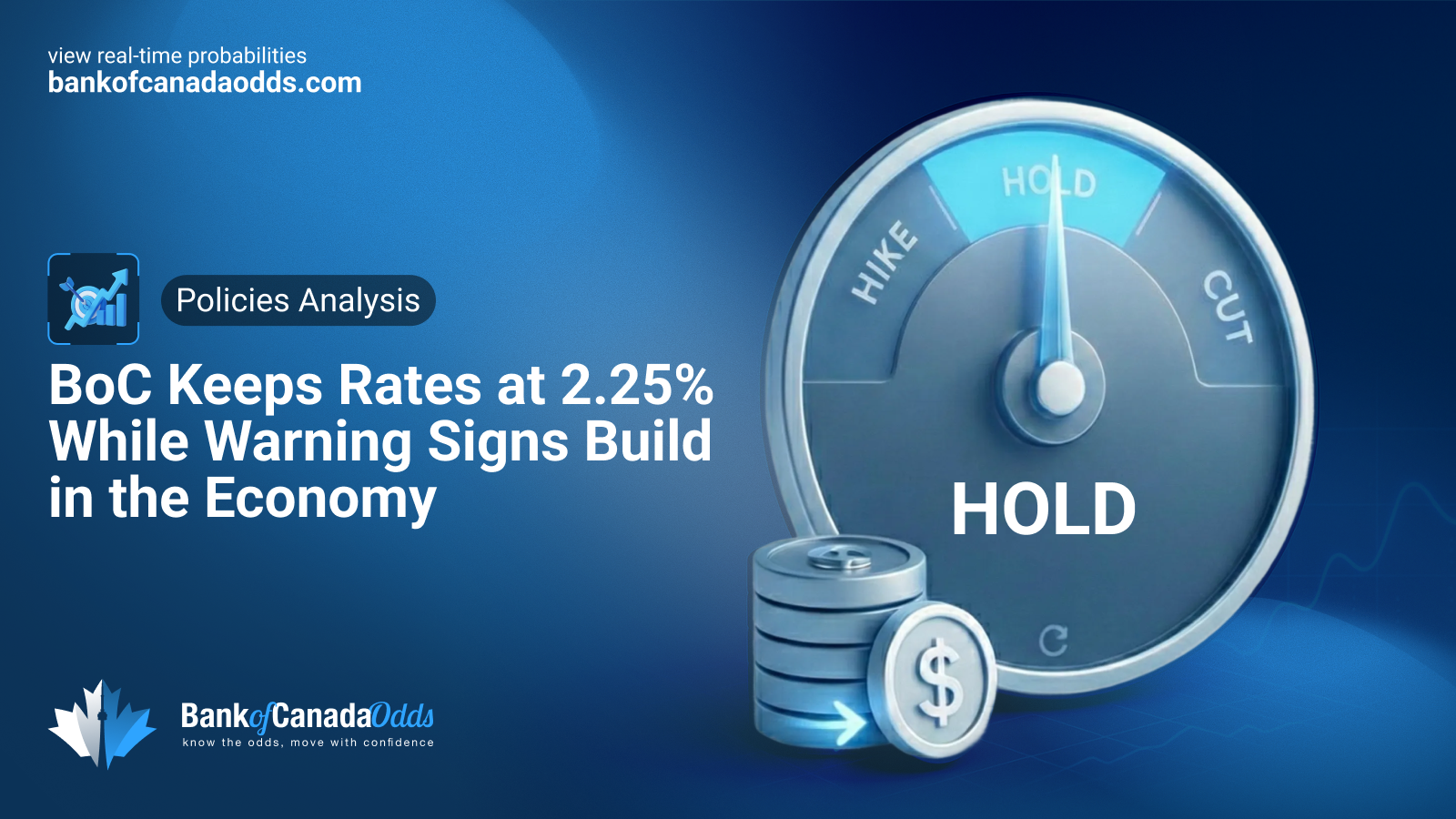
Markets are heading into the Bank of Canada rate decision, the first policy decision of 2026, with expectations firmly pointing to a hold. The overnight rate currently sits at 2.25%.
As inflation pressures ease, market pricing suggests policymakers are comfortable pausing. Earlier rate cuts are still working through the economy.
The Bank of Canada enters 2026 with a cautious, data-dependent stance after easing policy through 2025. With inflation closer to target, attention has shifted away from immediate rate action.
Instead, markets are focused on how risks are framed for the year ahead.
Why Markets Expect a Hold at the Bank of Canada Rate Decision
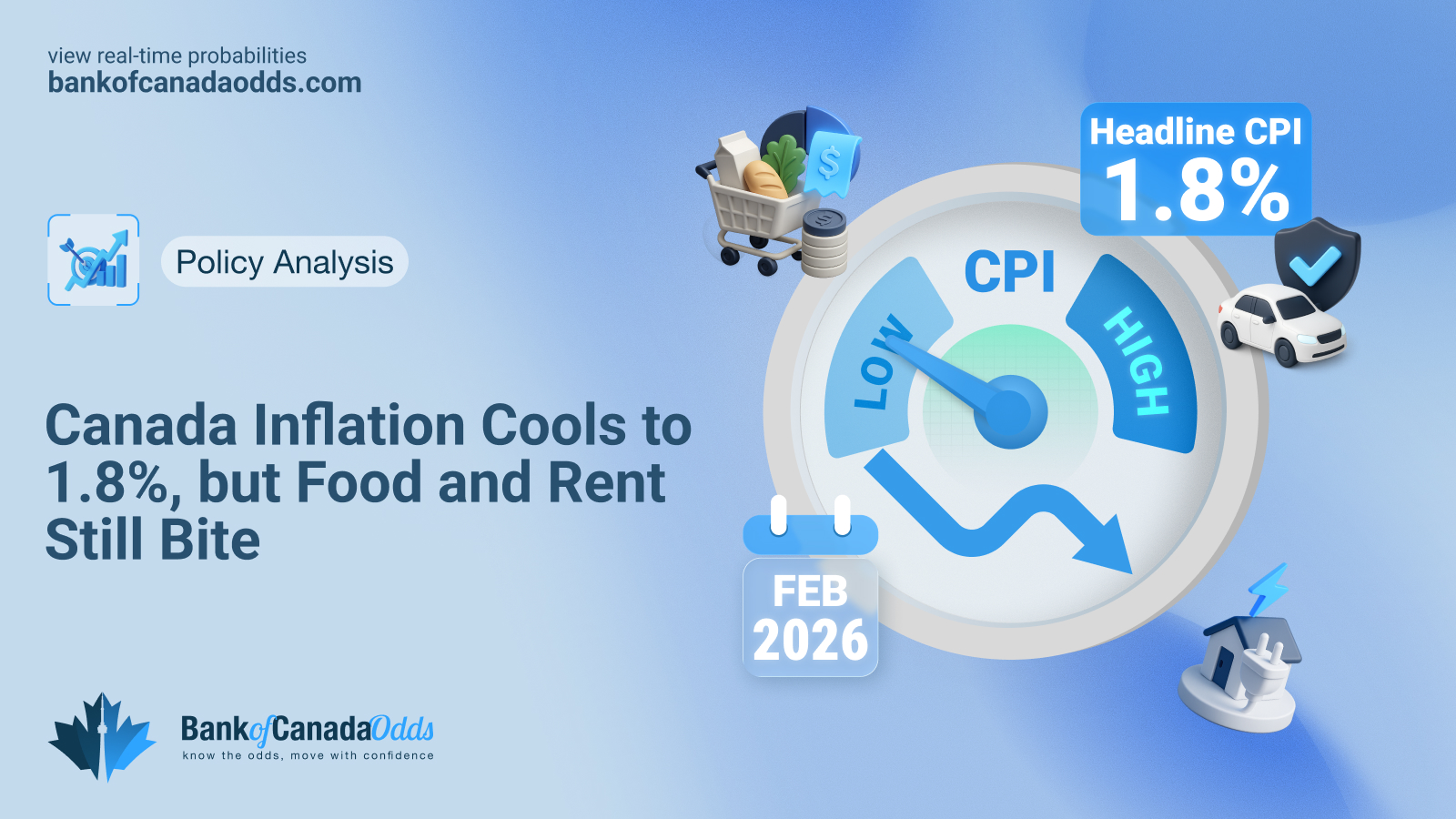
Recent inflation data shows headline consumer prices rising 2.4% year over year in December. At the same time, measures of underlying inflation have eased.
As a result, price pressures no longer appear broad-based. This reduces the urgency for further policy adjustments at the Bank of Canada rate decision.
Economic momentum also remains uneven. Softer consumer spending and cautious business investment support a pause rather than a near-term rate change.
Housing Costs Remain the Key Constraint
Despite progress on overall inflation, shelter-related costs continue to stand out. Rent and mortgage interest expenses remain elevated compared with other CPI components.
For policymakers, housing affordability remains a key concern. As long as shelter costs stay sticky, policy flexibility is likely to remain limited.
Markets Focus on Guidance More Than the Rate
With a rate hold widely expected, attention has shifted toward messaging rather than the decision itself. As a result, the Bank of Canada rate decision is expected to hinge more on guidance.
Investors will watch how officials describe inflation persistence, labour market conditions, and economic risks. Even small changes in tone could shift expectations later in 2026.
Key Takeaway
The first Bank of Canada rate decision of 2026 is expected to deliver stability rather than action. Inflation has moved closer to target, but housing costs remain a constraint.
For now, markets remain focused on guidance and signals that could define the policy path ahead.