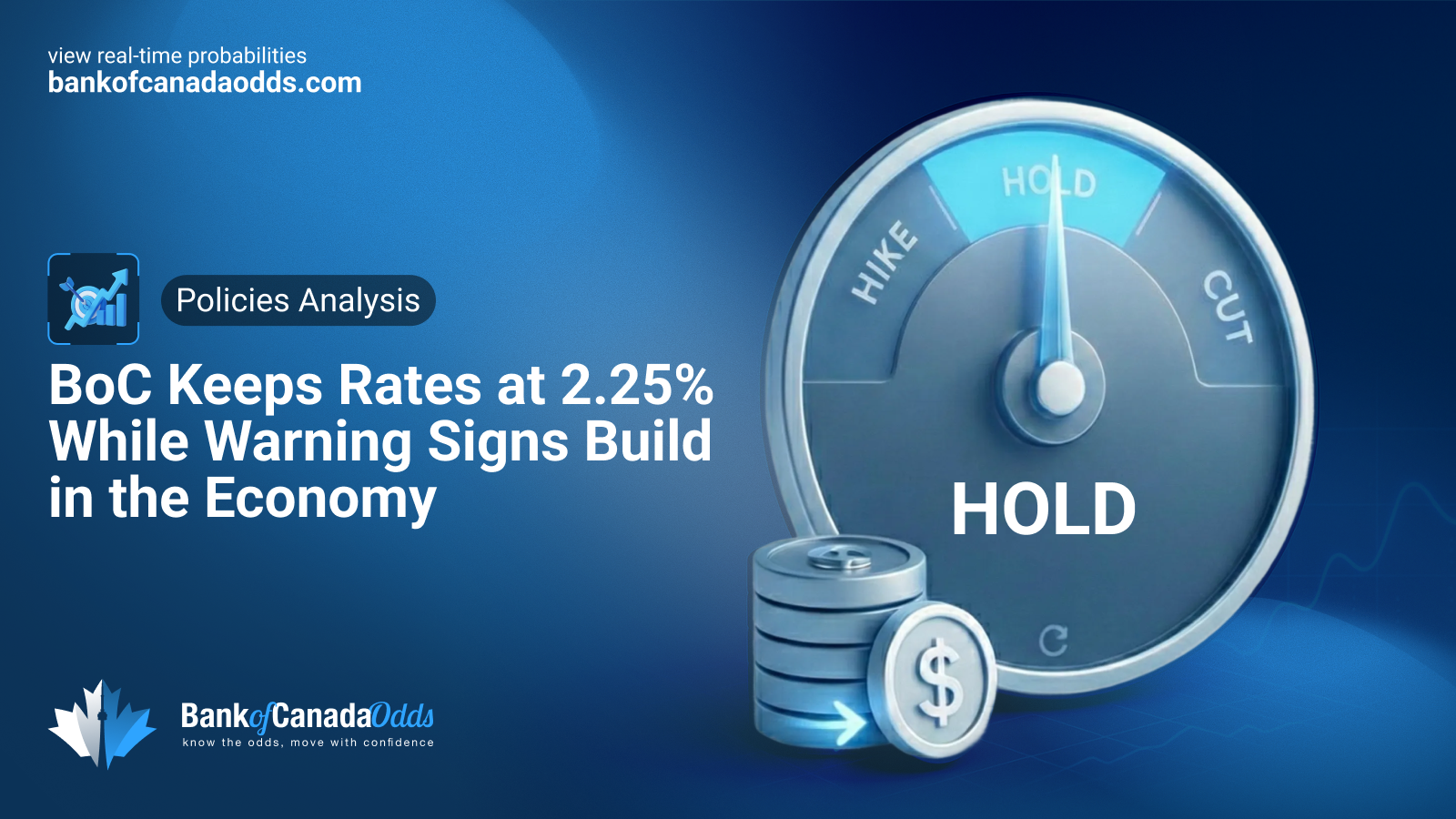
The Bank of Canada kept its benchmark interest rate unchanged at 2.25% in the March 2026 decision, choosing caution as inflation moves closer to target while signs of softening emerge in the labour market.
The move was widely expected, but it comes at a time when the economic picture is becoming less straightforward. While headline inflation is easing, underlying pressures and employment trends suggest the Bank is not ready to shift direction just yet.
What Happened in the March 2026 Decision
The Bank of Canada held its overnight rate at 2.25%, maintaining its current policy stance as it evaluates whether recent progress on inflation can be sustained.
The decision reflects a wait-and-see approach. Policymakers appear increasingly focused on balancing the risk of cutting too early against the possibility that the economy is beginning to lose momentum.
Why the Bank Chose to Hold
The latest data presents a mixed but telling backdrop:
-
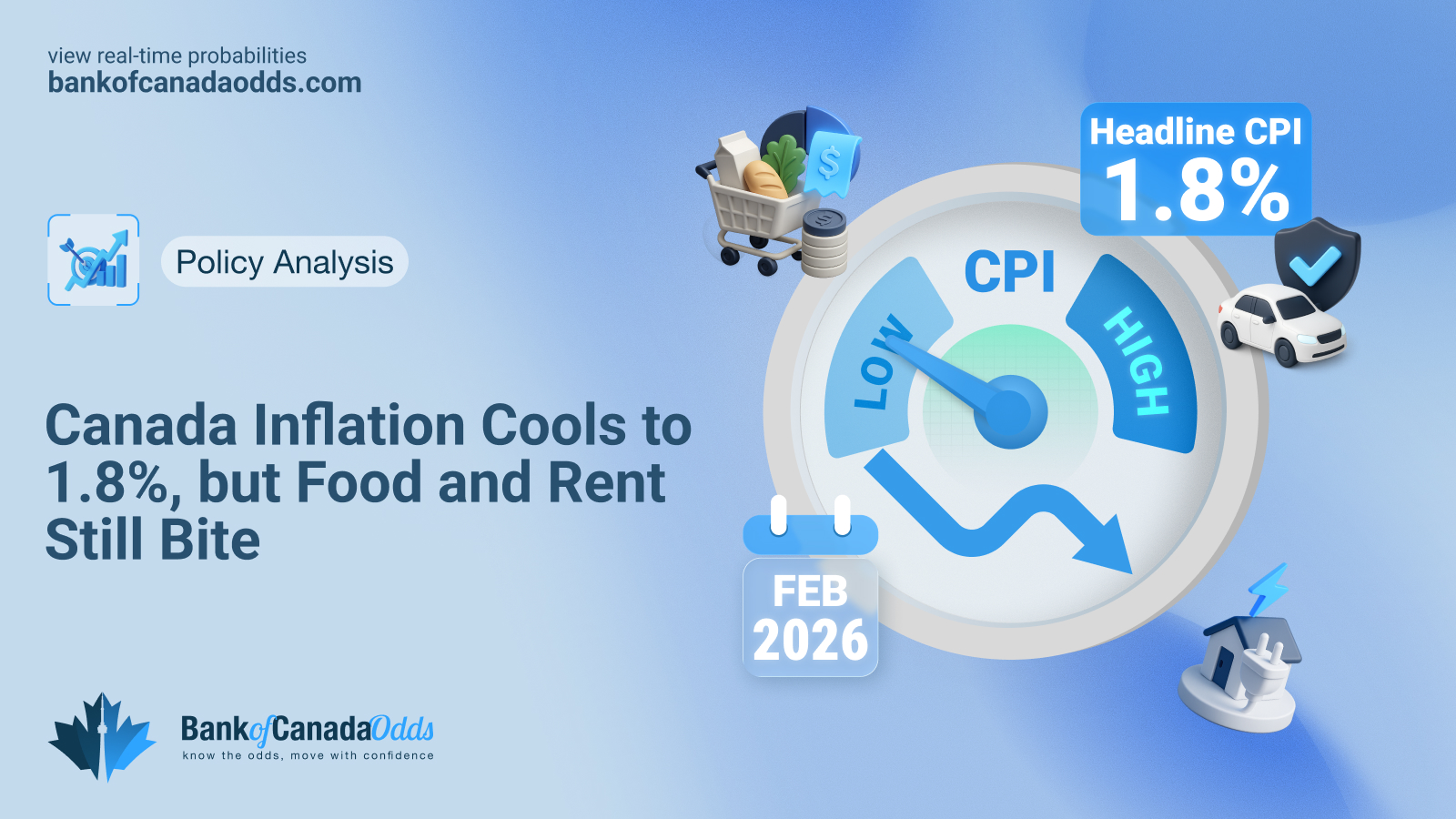
Inflation is easing: Consumer prices rose 1.8% year over year in February, moving closer to the Bank’s 2% target
-
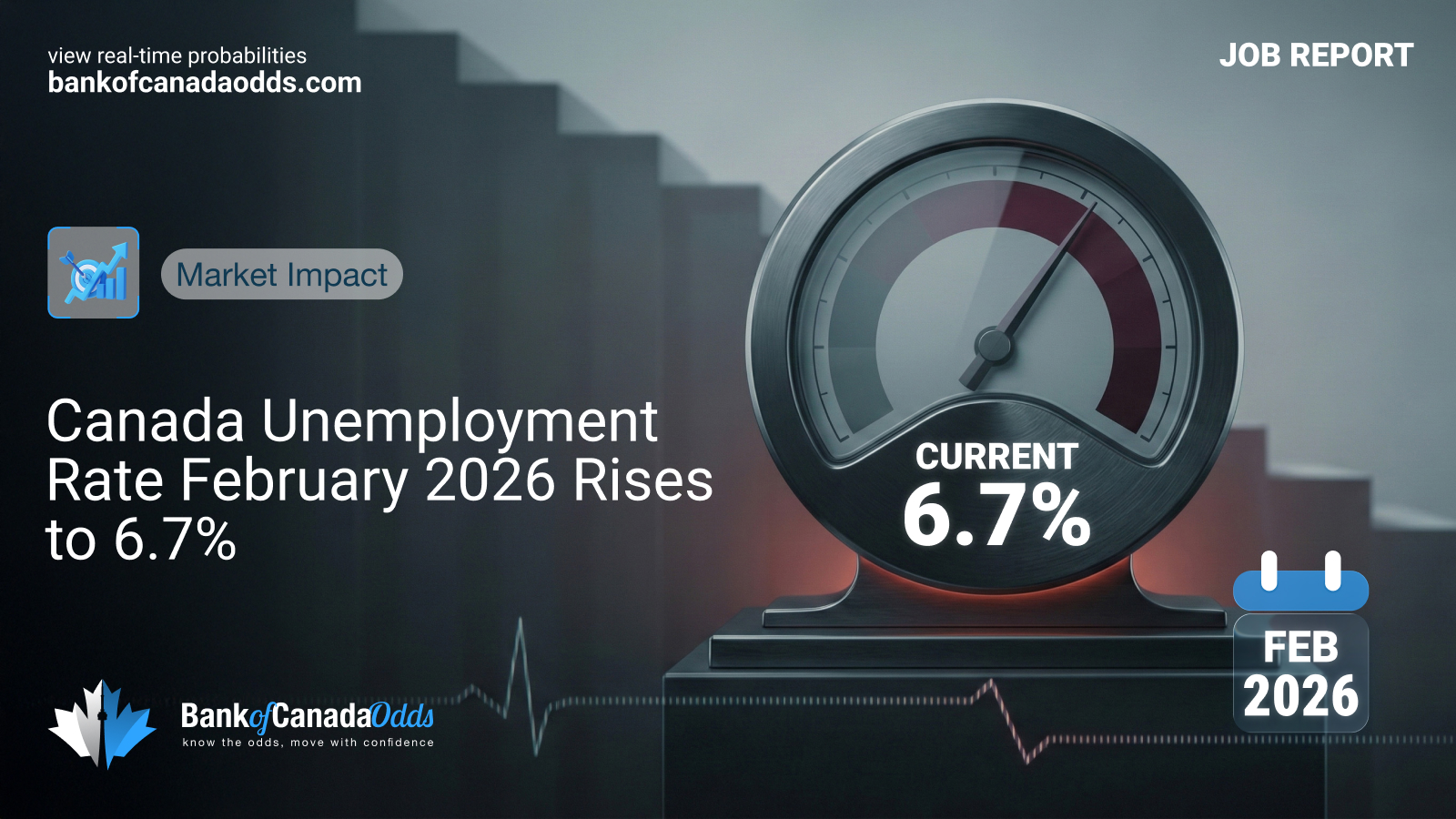
The labour market is softening: The unemployment rate climbed to 6.7%, with notable job losses during the month
-
Everyday costs remain elevated: Food, rent and insurance continue to put pressure on households, even as energy prices decline
The Governing Council also noted that the Canadian economy is showing signs of excess supply as growth moderates.
Taken together, the data shows progress on inflation, but not enough consistency for the Bank to feel confident about moving toward rate cuts.
Policy Outlook and Market Reaction
By holding at 2.25%, the Bank of Canada is signalling that policy decisions will remain firmly data-dependent.
Markets are now shifting their focus to when not if rate cuts could begin. Expectations have gradually moved toward later in 2026, as policymakers wait for clearer confirmation that inflation is sustainably under control.
The next moves will likely hinge on:
-
Future inflation readings
-
Whether labour market weakness deepens
-
Global factors, including energy prices and economic conditions
What This Means for Borrowers and Investors
For now, the message is clear: rates are likely to remain elevated in the near term.
Borrowing costs remain high, and while inflation is cooling, the Bank is not yet convinced that the job is done. That leaves both borrowers and investors navigating a period where each new data release could shift expectations.
For markets, this creates a more reactive environment. As a result, sentiment can turn quickly as the economic narrative evolves.
Key Takeaway
The March 2026 decision highlights a growing tension in the Canadian economy. By holding the policy rate at 2.25%, the Bank of Canada is choosing stability for now, waiting for clearer signals before making its next move.