The Bank of Canada economic rebound outlook has improved, but officials are still questioning whether the recovery has staying power.
A deliberation summary released by the Bank of Canada on July 29, 2026, provides a closer look at the Governing Council’s internal discussions leading up to its July 15 interest-rate decision.
After a year of little growth, exports and hiring are beginning to improve. However, officials held a range of views on whether that momentum could continue beyond the near term.
The Bank ultimately maintained its policy interest rate at 2.25%, with growth expected to strengthen and inflation projected to return to target.
A fragile rebound
Governing Council members expected economic growth to rebound to approximately 2.5% in the second quarter of 2026. Exports and job growth resumed, while businesses reported adapting to the changing US trade environment.
The unemployment rate declined to 6.5% in June, but officials agreed that the labour market remained soft.
Other risks could also slow the recovery. Export and investment growth may disappoint, housing activity could stall, and consumer spending could weaken if hiring does not improve.
The Bank projects growth of 0.7% in 2026, followed by 1.8% in both 2027 and 2028.
Trade and inflation pull in opposite directions
The possibility of new US tariffs remains an ongoing downside risk to Canadian growth. Further disruption could hurt exports, investment and employment.
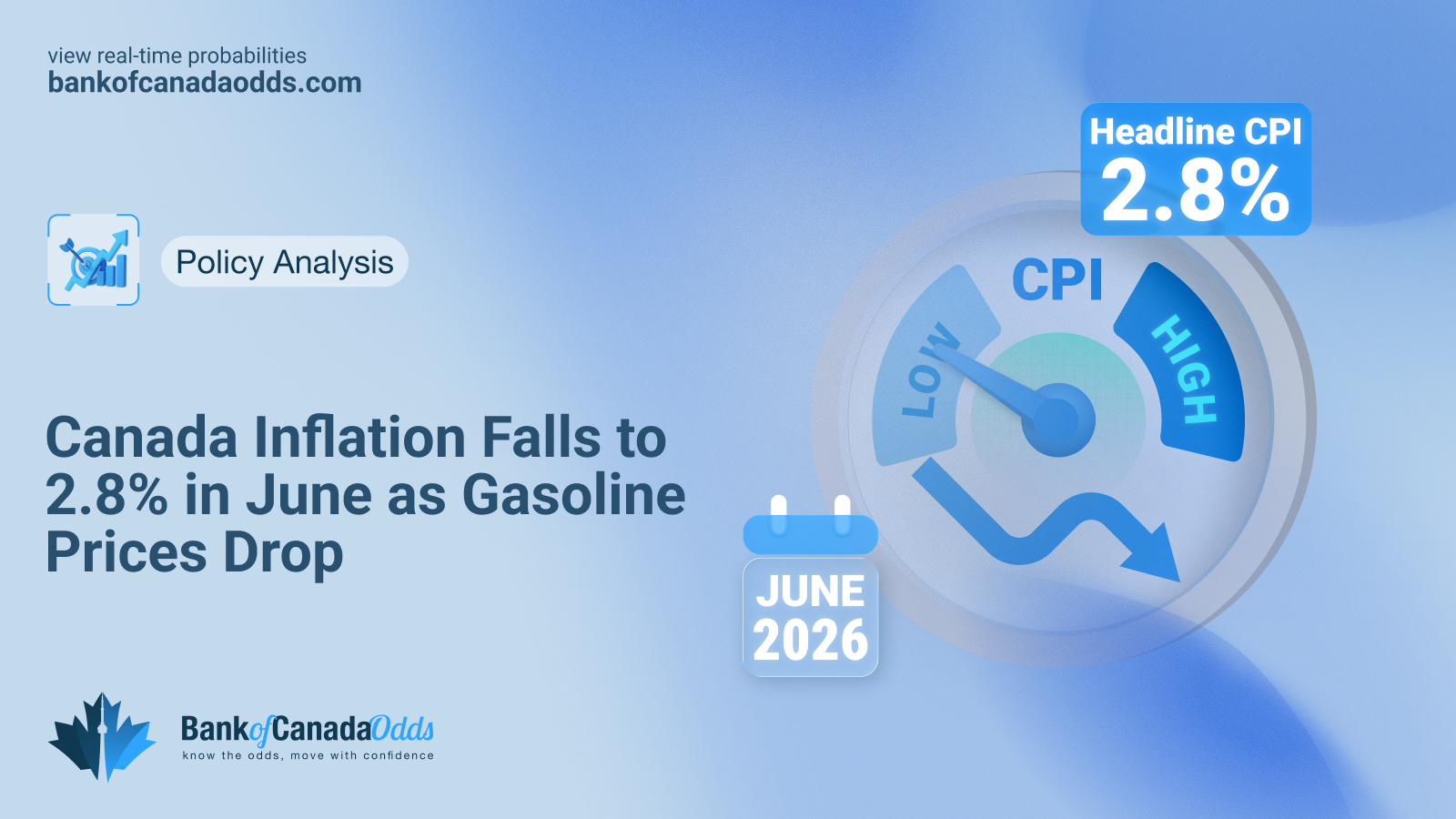
Inflation presents a different challenge. Headline inflation reached 3.2% in May, largely because of higher gasoline prices. Inflation excluding gasoline was 2.2%, while core measures remained around 2%.
The Bank expects inflation to ease to approximately 2.5% in the second half of 2026 and reach its 2% target in early 2027, assuming oil prices and refinery margins decline.
Officials agreed to look through the direct effects of higher oil prices. However, if those costs begin spreading into other goods and services, they said a monetary policy response would likely be required.
What Could Tip the BoC’s September Decision?
The Bank may be on hold, but the debate is not.
Before its next scheduled rate decision on September 2, 2026, officials will be looking for evidence that the recovery is broadening and that energy costs are not creating persistent inflation.
There will be no Monetary Policy Report accompanying the September announcement. The Bank’s next full economic outlook is scheduled for October 28, 2026.
For now, the rate path rests between two competing stories: a recovery running out of steam and inflation finding a second wind.
Which one do you think will shape the Bank’s next move?