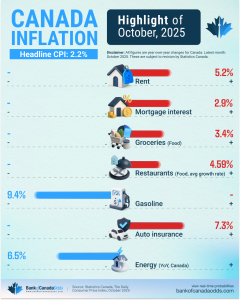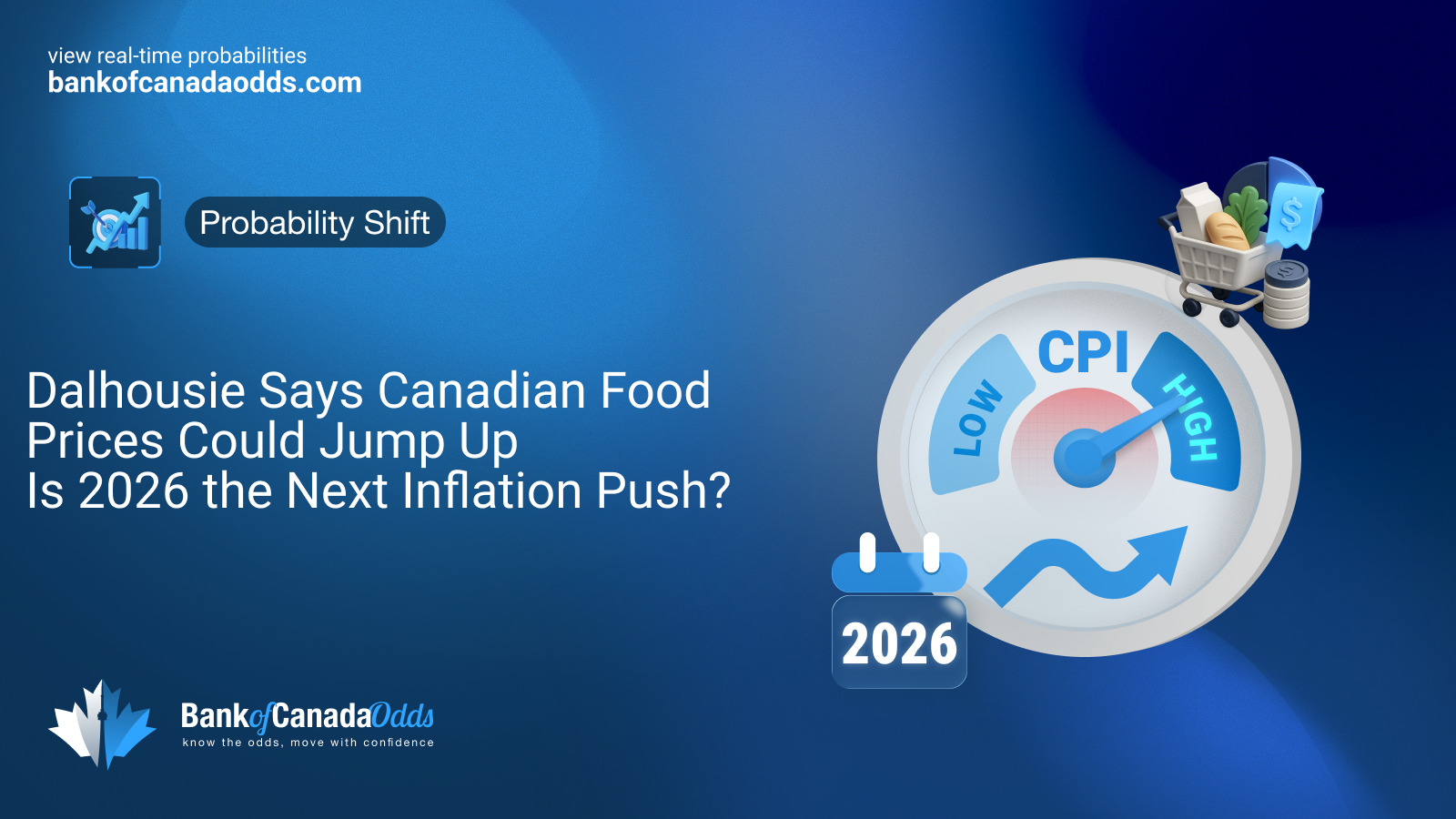
Canadian food price inflation in 2026 could reach up to 6%, according to research from Dalhousie University. The outlook reflects ongoing cost pressures across the food supply chain, even as overall inflation continues to cool.
As a result, food prices may remain an important source of household cost pressure next year. While some input costs have eased, others remain elevated, limiting the pace of price relief for consumers.
Canadian Food Price Inflation 2026 Outlook
According to Dalhousie researchers, several factors could contribute to higher food prices in 2026. These include labour costs, climate-related disruptions, and ongoing adjustments in supply chains.
At the same time, price increases are expected to vary by category. Some food items may see more modest increases, while others could face sharper upward pressure depending on production and transportation costs.
Why This Matters for Consumers and the Bank of Canada
For consumers, persistent food price inflation affects household budgets and spending behaviour. Even moderate increases can weigh on confidence, especially after several years of elevated grocery costs.
For the Bank of Canada, food inflation remains an important signal. While food prices are volatile, sustained increases can influence inflation expectations. Policymakers will continue to monitor food costs alongside broader inflation data as they assess conditions heading into 2026.