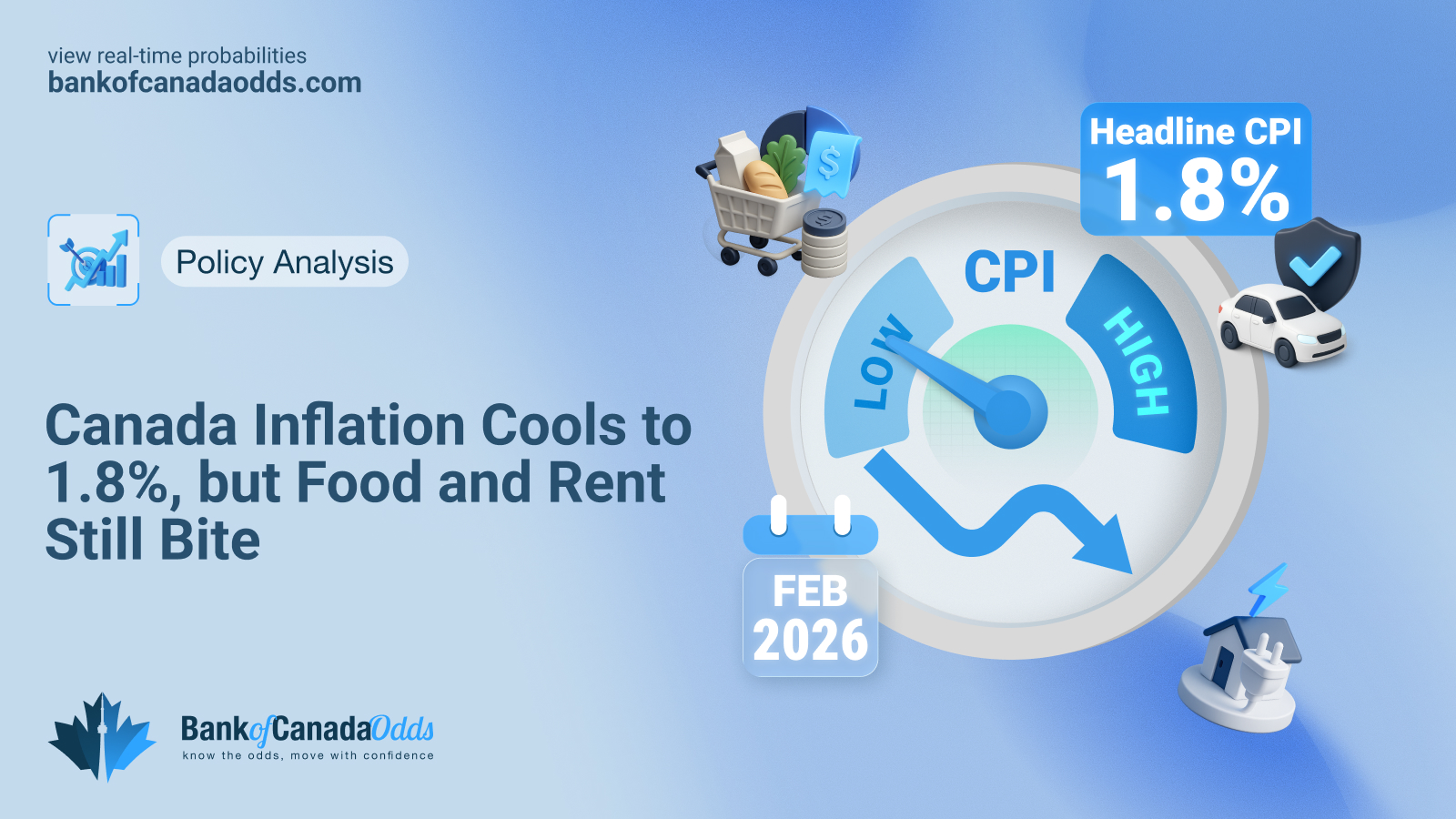
Live rate hike cut probabilities show how financial markets are pricing upcoming Bank of Canada policy decisions in real time.
Understanding how Canada’s rate path compares globally is essential when tracking mortgage trends. Canada doesn’t operate in a vacuum. Every Bank of Canada decision reflects both domestic economic conditions and international pressures. If you’re watching for rate hikes or cuts, global central bank activity offers crucial context.
🇨🇦📊 Where Does Canada Stand Today?
- Current BoC Overnight Target: 4.75%
- Next BoC Decision Date: BoC Event Calendar
- Market-Implied Path: Moderately dovish (as of latest data)
🌍 Global Comparison Table – Policy Benchmarks
To understand how Canada’s rate path compares globally, here’s a quick snapshot of major central banks:
| Country | Central Bank | Policy Rate | Direction | Notes |
|---|---|---|---|---|
| 🇨🇦 Canada | Bank of Canada | 4.75% | ↘️ | Markets pricing cuts in 2025 |
| 🇺🇸 U.S. | Federal Reserve | 5.25–5.50% | ↔️ | Holding pattern, sticky inflation |
| 🇬🇧 UK | Bank of England | 5.25% | ↘️ | Cautious softening |
| 🇪🇺 Eurozone | European Central Bank | 4.25% | ↘️ | Mid-year cuts expected |
| 🇦🇺 Australia | RBA | 4.35% | ↗️ | Inflation still elevated |
| 🇯🇵 Japan | Bank of Japan | 0.10% | ↗️ | Leaving negative rates |
| 🇨🇭 Switzerland | Swiss National Bank | 1.50% | ↘️ | First among peers to cut |
💡 Why This Global Context Matters
- Investor Impact: Global divergence shifts currencies, bonds, and equity risk.
- Mortgage Rates: Canadian borrowing costs often mirror international changes.
- Policy Timing: If the Fed holds, the BoC may also delay cuts despite weaker domestic data.
🗺️ Global Rate Visual

🧠 Analyst Summary
“We may be entering a coo/insight/📊-live-rate-hike-cut-probabilities/rdinated global rate-cut cycle. Yet each central bank responds to its own economy. While Canada is among the first movers, U.S. inflation or commodity shocks could shift this path.”
Want to see what the market is pricing in? Track live BoC rate odds or read how we calculate them.