BankofCanadaOdds.com | Live BoC Odds | Subscribe
Understanding how personal loans boc rate changes occur is essential for borrowers using credit products such as personal lines of credit, installment loans, and debt consolidation loans. When the Bank of Canada adjusts its policy rate, the effects move through the financial system and ultimately influence how much you pay on unsecured borrowing. This guide explains how those changes happen and what they mean for your loan costs.
Why BoC Policy Impacts Personal Loans
The Bank of Canada policy rate anchors borrowing costs across the country. When the central bank increases or decreases its benchmark rate, it influences pricing for unsecured credit products including:
- Personal lines of credit
- Installment loans
- Debt consolidation loans
- Car loans in some cases
Most of these credit products either move directly with the lender’s prime rate or are priced based on trends in the broader interest rate environment. You can review the official overnight rate series on the Bank of Canada policy rate page.
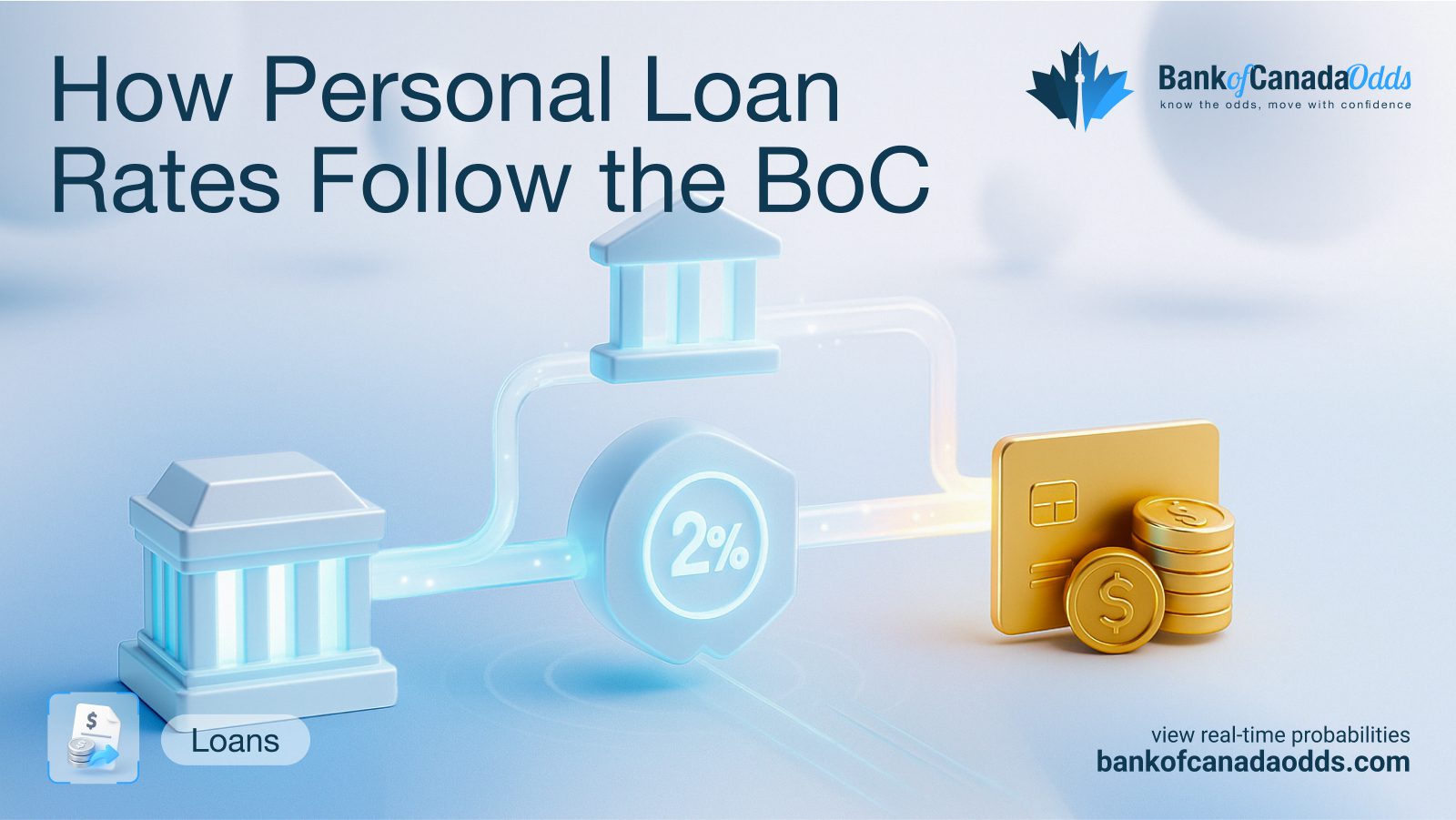
The Chain Reaction: From BoC to Borrowers
| Step | What Happens |
| 1 | The Bank of Canada adjusts its overnight target rate |
| 2 | Commercial banks update their prime lending rates |
| 3 | Lenders reprice personal loan products linked to prime |
| 4 | Your personal loan interest rate rises or falls accordingly |
Floating personal loans react quickly to BoC decisions, while fixed loans change primarily for new borrowers. Borrowers can monitor expectations for the next rate decision using our BoC odds dashboard.
Fixed vs Floating Loan Rates
| Feature | Fixed Loan Rate | Floating Loan Rate |
| Rate stability | Stays the same for the term | Moves with prime and BoC rate changes |
| Cost predictability | Predictable payments | Costs vary over time |
| BoC impact timing | Changes affect future borrowers | Changes affect current borrowers almost immediately |
| Risk level | Lower rate risk | Higher rate exposure |
Recent Example
When the Bank of Canada reduced its policy rate by 25 basis points in June, major lenders lowered their prime rate from 6.70 percent to 6.45 percent. This change translated into lower payments for borrowers with floating personal lines of credit and made new fixed personal loans more affordable.
For additional context on current prime rate levels, see the lender prime rate listings published by major banks such as RBC. This source is stable and updated regularly.
Should You Borrow Now or Wait?
The right timing depends on your situation:
- Debt consolidation: Lower rates may reduce your overall interest burden
- Large upcoming purchase: Review the rate cut odds before committing
- Floating loan already in place: Ongoing cuts could reduce your payments soon
You can learn more about how we track probabilities in the How it Works section or review additional insights in FAQ, What Drives Us, and The Six Drivers.