Canada’s annual inflation rate held steady at 3.1% in October, unchanged from September but slightly below economists’ expectations of 3.2%, according to Statistics Canada.
Yet beneath the steady headline, gasoline, grocery and clothing prices accelerated, creating fresh uncertainty ahead of the Bank of Canada’s December 9 interest rate decision.
From gasoline to housing, here’s how prices shifted across Canada in October.
Gasoline and Grocery Prices Climb
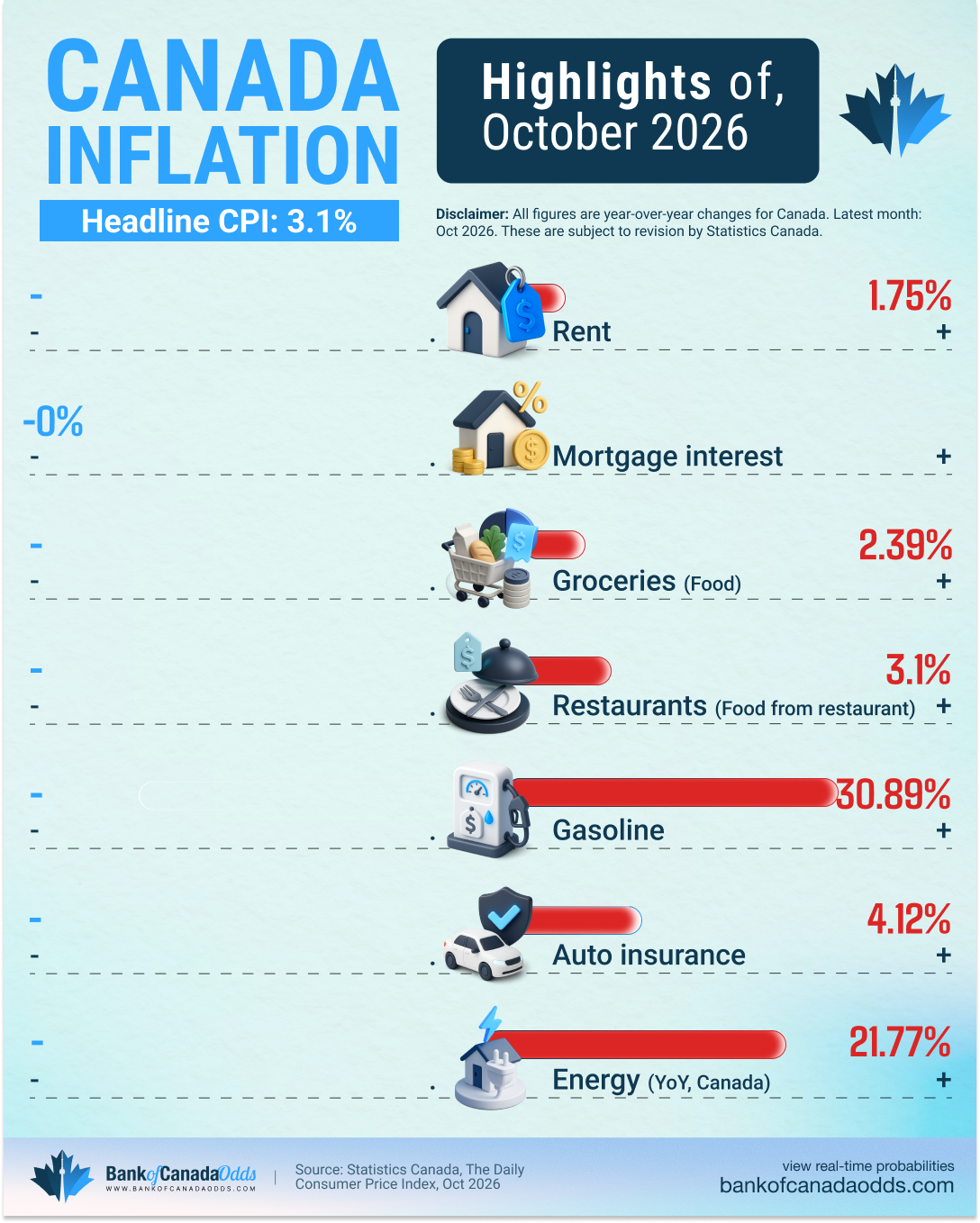
Gasoline prices surged 30.9% year over year, up from 27.8% in September, partly reflecting lower prices a year earlier. Overall energy prices climbed 21.8%, while transportation costs rose 8.9%.
Grocery inflation increased to 2.0% from 1.7%, ending four consecutive months of slower annual price growth. Higher prices for fresh vegetables, sugar and other food products contributed to the increase.
Meanwhile, clothing inflation jumped to 1.8% from -0.3%. Monthly clothing prices rose 3.4%, their largest increase since September 2019, coinciding with higher shipping costs.
The Other Side of Canada’s Inflation
Not all prices accelerated.
Shelter inflation eased to 1.4% from 1.8%, while cellular service prices declined 6.2% year over year. Property tax inflation also slowed to 3.8%, compared with 5.6% a year earlier.
Underlying inflation remained relatively contained:
- CPI excluding energy: 2.0%, down from 2.1%.
- CPI-median: Unchanged at 2.0%.
- CPI-trim: Eased to 1.8% from 1.9%.
- CPI-common: Rose to 2.5% from 2.4%.
The contrast suggests that energy remains a major source of inflation pressure, even as broader price growth shows signs of stability.
Inflation Complicates December
The Bank of Canada raised its benchmark interest rate to 2.50% on October 28, aiming to prevent persistent energy costs from spreading into broader inflation.
October’s CPI report now presents a difficult choice. Rising gasoline and grocery prices reinforce inflation concerns, while easing shelter costs and relatively stable core measures support the case for holding rates.
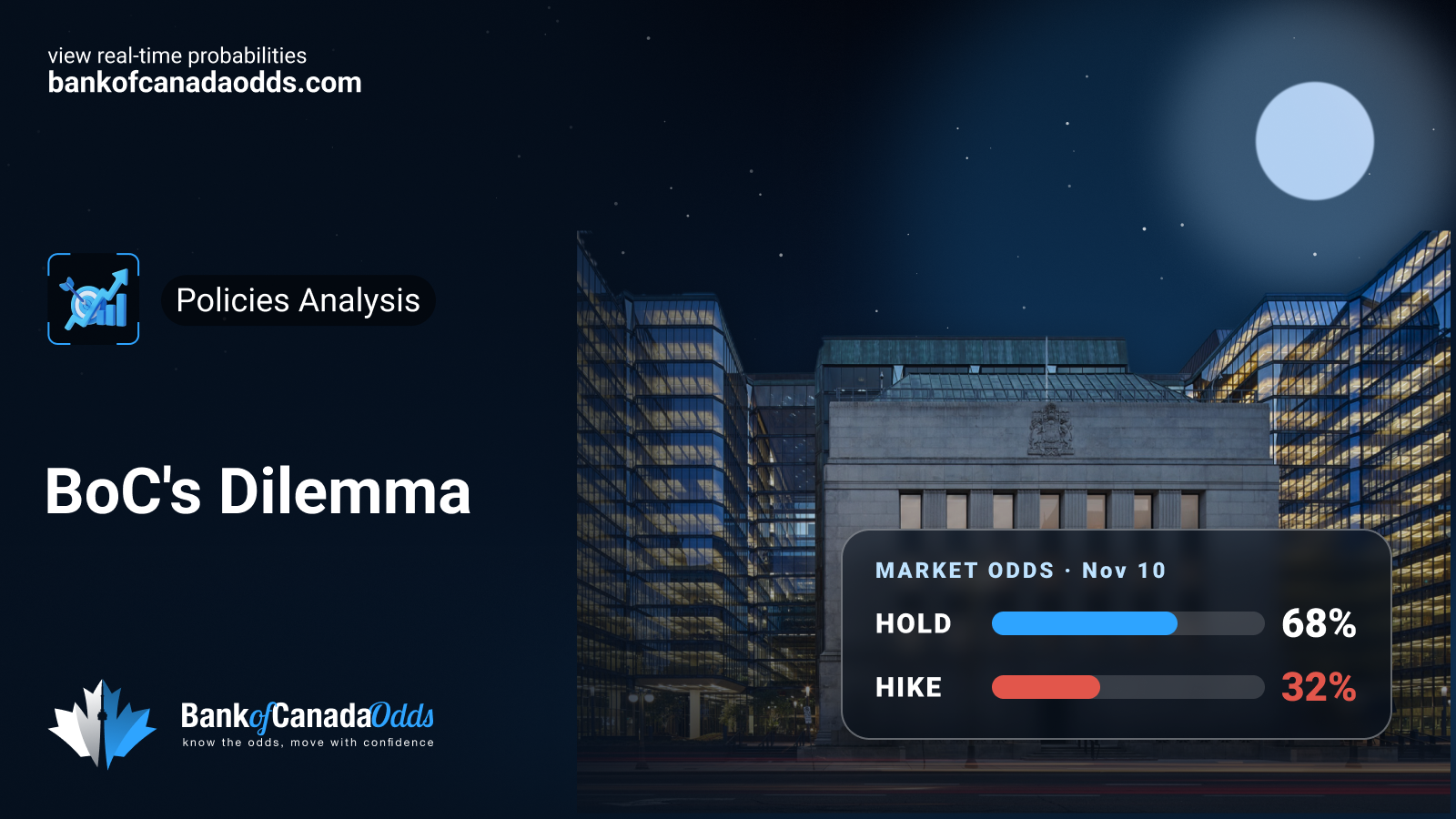
That leaves the BoC facing a potential inflation trap: another hike risks weighing on economic growth, while holding rates may leave persistent price pressures unchecked.
With the Bank’s next decision set for December 9, policymakers must weigh these competing risks without another monthly CPI report, which is scheduled for December 14.
Will the BoC hit the brakes or tighten the screws again?
The inflation rate hasn’t changed. But the decision has become more complicated.
Sources: Statistics Canada — Consumer Price Index, October 2026; Bank of Canada — October 28 Rate Announcement; Bank of Canada — Governing Council Deliberations.