The Bank of Canada’s latest rate hike is already putting pressure on Canadian homeowners. But the biggest financial risk may be the one they don’t notice.
A Rate Hike at the Worst Time?
On October 28, the Bank of Canada raised its policy rate by 25 basis points to 2.50%, its first hike in more than three years.
The twist? Canada’s economy was barely moving.
August GDP showed zero growth, while preliminary September figures pointed to a 0.1% decline.
Yet inflation is keeping the BoC on alert. September CPI reached 3.1%, driven partly by a 27.8% jump in gasoline prices.
With inflation forecast to reach around 3.5% by year-end, the central bank is prioritizing inflation control despite signs of economic weakness.
The Mortgage Trap Homeowners May Miss
Following the hike, major Canadian banks raised their prime lending rates from 4.45% to 4.70%.
For homeowners with variable-rate mortgages, borrowing just became more expensive.
But here’s where things get tricky.
For homeowners with fixed-payment variable-rate mortgages, monthly payments may stay exactly the same while more money goes toward interest instead of paying off the loan.
For every C$100,000 in prime-linked debt, the hike adds roughly C$250 in annualized interest, assuming the balance remains unchanged and the full rate increase passes through.
That’s the hidden risk financial experts are warning homeowners not to ignore.
December 9: More Pain or a Pause?
The October hike may not be the final increase of 2026.
The BoC’s November 10 meeting minutes reinforced that possibility. Policymakers acknowledged that further increases may be necessary but emphasized proceeding cautiously, one meeting at a time.
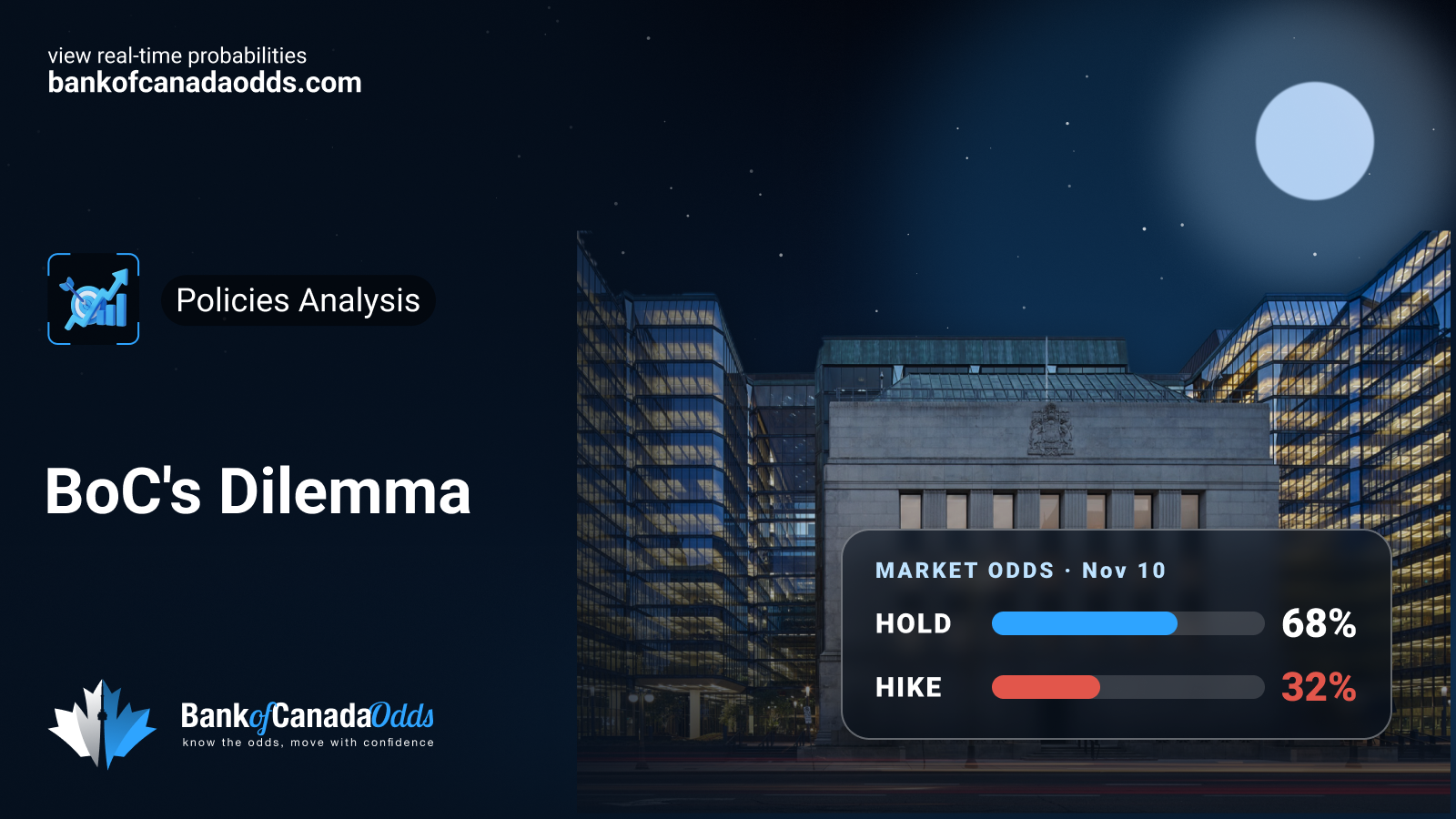
According to BoCOdds’ latest probabilities, a hold remains the more likely outcome for the December 9 decision:
- 65% probability: Hold rates at 2.50%.
- 35% probability: Raise rates by 25 basis points to 2.75%.
While the odds favour a hold, another hike remains a possibility.
Persistent inflation supports the case for higher rates, while Canada’s weakening economic growth gives the BoC a reason to pause.
For homeowners, reviewing mortgage terms and preparing for renewals matters more than predicting the BoC’s next move, especially when the real cost isn’t always a higher payment, but how little of it actually reduces the mortgage.
Follow BoCOdds for the latest Bank of Canada rate outlook.